




How Geopolitics Is Redrawing The Map
By
5 months ago
When parts of the world become unreachable, curiosity about the world doesn’t disappear – it reroutes
As conflict reshapes the Middle East and airspace closures scramble winter sun plans, geopolitics is constantly changing how we travel. Here Kerry Smith explores the destinations slipping out of reach – and the ones rising in their place
From Iran To Rwanda: The Countries Slipping Off (And Back Onto) The Travel Map
In 2016, I was working on a feature called Iran for Beginners. For four decades, Iran had been shrouded in mystery for Western visitors but was tentatively inching back onto the map. British Airways was relaunching its Tehran route, suspended four years earlier amid sanctions and political instability. My beginner’s guide took me to Balochistan, improbably home to a fledgling surf scene. Tālā, the London-raised singer-producer, recalled how her Iranian father played Googoosh over her mother’s Tom Jones LPs. Meanwhile, Jonny Bealby’s Wild Frontiers had introduced a walking tour through The Valleys of the Assassins, staying with Shahsevan nomads.
A few months later, I was writing about Noga in south Tel Aviv – a grid of cobbled streets and the place to eat Levantine syrup-soaked pastries and shop for minimalist knitwear spun from locally sourced fabrics.
For both countries, it was a moment of possibility. Today, both sit on the Foreign Office’s ‘do not travel’ list, in a region reshaped by war.
For travellers, the map is never fixed. Countries drift in and out of reach. Some disappear for decades under war, sanctions or state collapse. Others flicker briefly into view, tentatively reopening before slipping back again. A place can be culturally alive and administratively open, yet effectively unreachable once airlines withdraw, insurers hesitate or tour operators step back. Others remain technically visitable, but no longer feel imaginable.
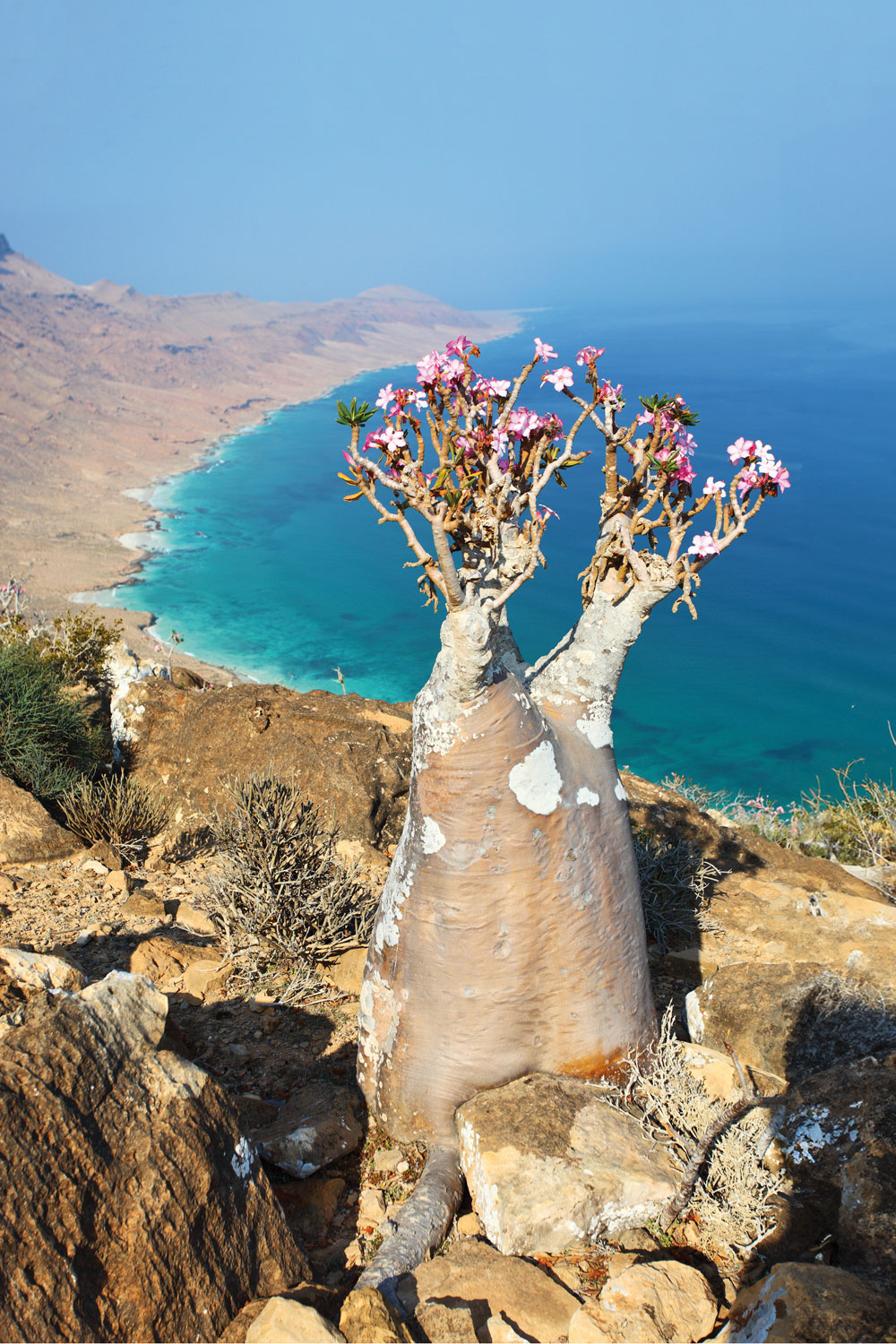
Yemen has been on my travel wish list for years, ever since discovering the otherworldly photographs of one of its islands, Socotra, taken by the award-winning Dutch photographer Marsel van Oosten. The size of Cornwall, Socotra lies adrift in the Indian Ocean – a landscape of red mountains, bone-white beaches, time-twisted bottle trees and a biodiversity to rival the Galápagos. As a destination, Yemen was always niche but firmly on the serious traveller’s map until it became off limits in 2011. Likewise, Syria and Afghanistan, once sold on Silk Road romance and ancient cities, have been absent for more than a decade.
Getty Images
The Comebacks
Then there are the returns. Since the 1980s, the map has steadily widened. China and much of Southeast Asia have moved from closed to accessible. South Africa, Botswana and Namibia have re-emerged. I was one of the first Westerners to visit Moldova and Romania after the Iron Curtain fell – a thrilling, slightly edgy trip that took us inside Ceaușescu’s palace.
More recently, Rwanda, long defined in the global imagination by the 1994 genocide, has rebuilt itself into one of Africa’s most tightly managed wildlife destinations. It is a country that has moved decisively back into view. And Saudi Arabia, once largely closed to outsiders, has opened its doors.
The human tragedy in the Middle East will inevitably shape the choices of those of us fortunate enough to travel. Fallon Lieberman, a former chief vacation officer turned expert advisor, now curates complex, multi-destination itineraries at Arrival360, part of Internova’s Global Travel Collection. Her clients, she explains, are ‘very aware of geopolitical dynamics and tend to avoid regions with any perceived instability. Israel was a destination we saw meaningful interest in prior to the current conflict, but that demand has paused.’
When one region becomes unreachable, another absorbs the attention. After the Iranian Revolution in 1979, hippies searching for enlightenment hit a geopolitical roadblock and switched to Africa and Latin America, and similar detours are already taking shape now. ‘Demand doesn’t disappear, it simply reroutes,’ Fallon continues. ‘What we often see is a shift towards destinations that offer a similar level of culture or uniqueness but with a greater sense of ease and predictability, or destinations that are closer to home.’ Emerging frontiers give way to established classics; longhaul ambitions contract into closer horizons; complexity cedes to simplicity.
Where Are People Travelling In 2026?
Where is the curiosity of travellers rethinking the Gulf settling this time? Fallon’s ultra-high net worth clients are ‘rerouting to southern Europe, Japan, Indonesia and parts of Africa, where they feel confident in both the experience and the infrastructure’.
Working with a different clientele, Intrepid Travel offers bespoke, small-group adventures that journey beyond the Instagrammable sights. Managing director Zina Bencheikh explains: ‘We haven’t seen the conflict in the Middle East dampen travel demand, but people have become more considered about their choices, thinking more broadly about the destinations they visit.’

The old fishing village of Käsmu, Estonia
If sustained, the shift may favour the undersung over the overrun: the Baltics rather than Barcelona, lesser-known southern fringes. Closer to home, Britain stands to benefit too, not as fallback but as rediscovery – whether that’s Cornwall, the Hebrides or the quiet edges of the Lake District.
In such an uncertain world (and with soaring fuel prices), the temptation might be to never leave home again. Tanzania is one of the most stable and peaceful countries in East Africa. Yet even there, travellers last year found themselves cut off and then stranded when the government shut down the internet during elections as tensions flared. In January, Caribbean winter sun seekers had their plans scrambled after the US closed parts of Caribbean airspace during the Venezuelan military operation. More than 1,100 flights were cancelled across the board. Those disruptions will almost certainly not be the last.
But, Bencheikh says, ‘with so much going on in the world, from Covid to conflict, travellers are becoming more resilient and accustomed to navigating changes to their travel plans’.
If anything, moments like this underline why travel matters. It has never been about escape so much as encounter. As Mark Twain wrote in The Innocents Abroad, the sharp account of his journey through Europe and the Middle East, travel is ‘fatal to prejudice, bigotry, and narrow-mindedness’. More than a century on, that still holds: the more unsettled the world becomes, the more valuable travel feels.