


Why Sustainable Cleaning Brand Neat Wants To Make Refilling The Norm
By
3 months ago
On a mission to make refilling the norm
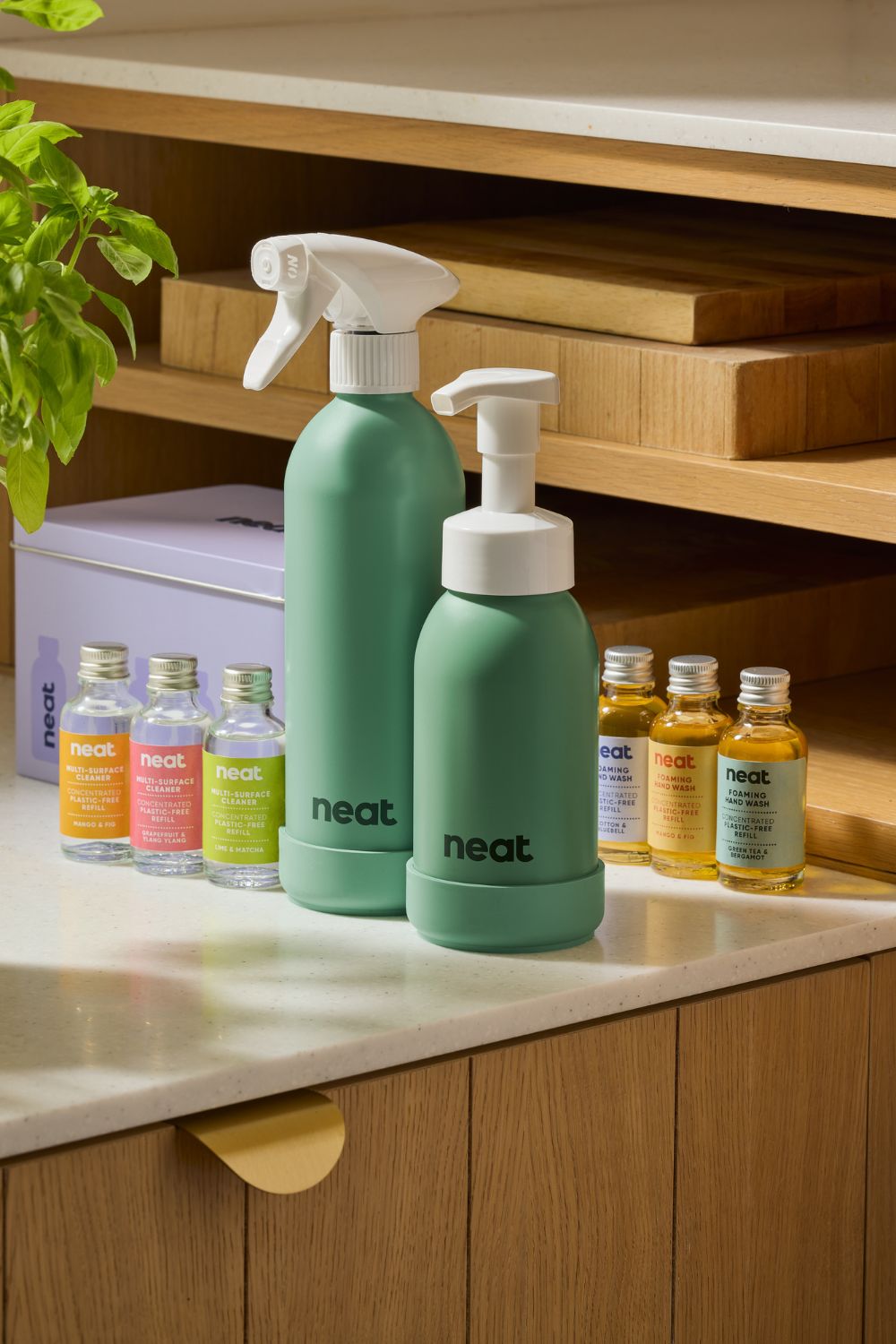
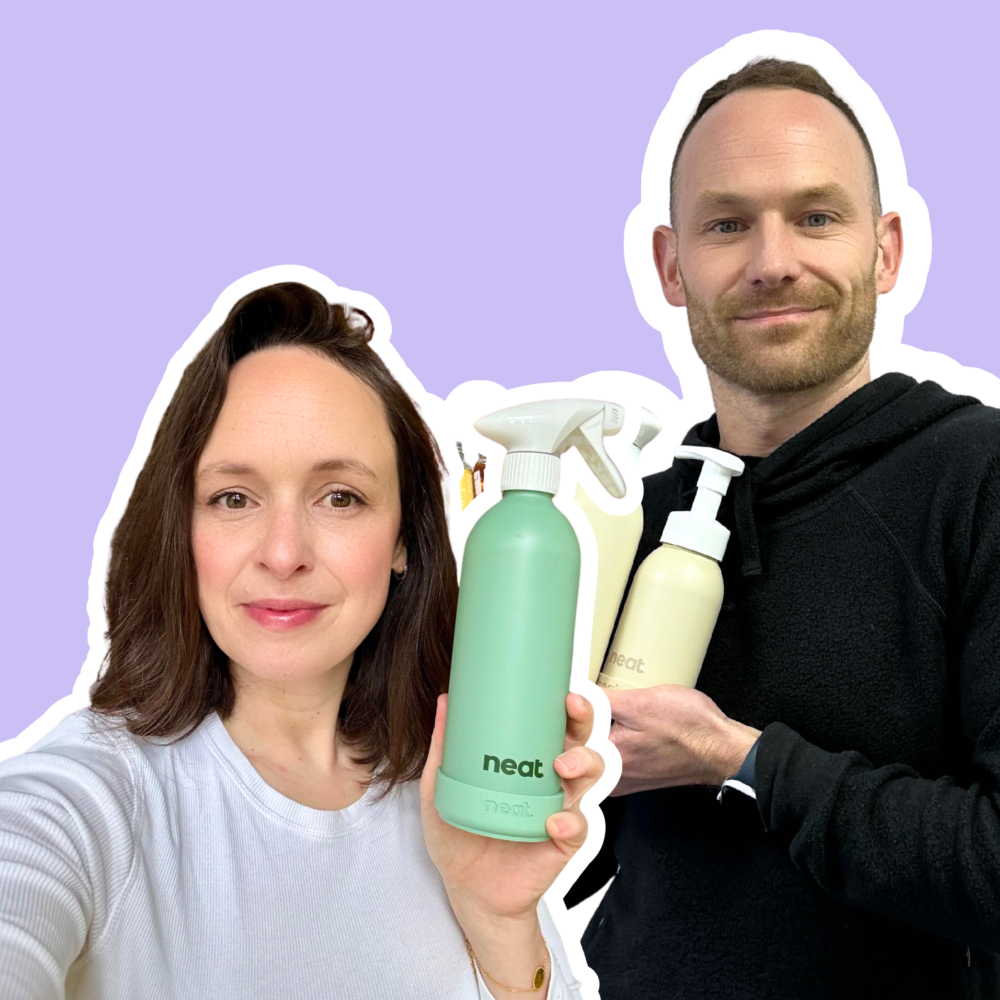
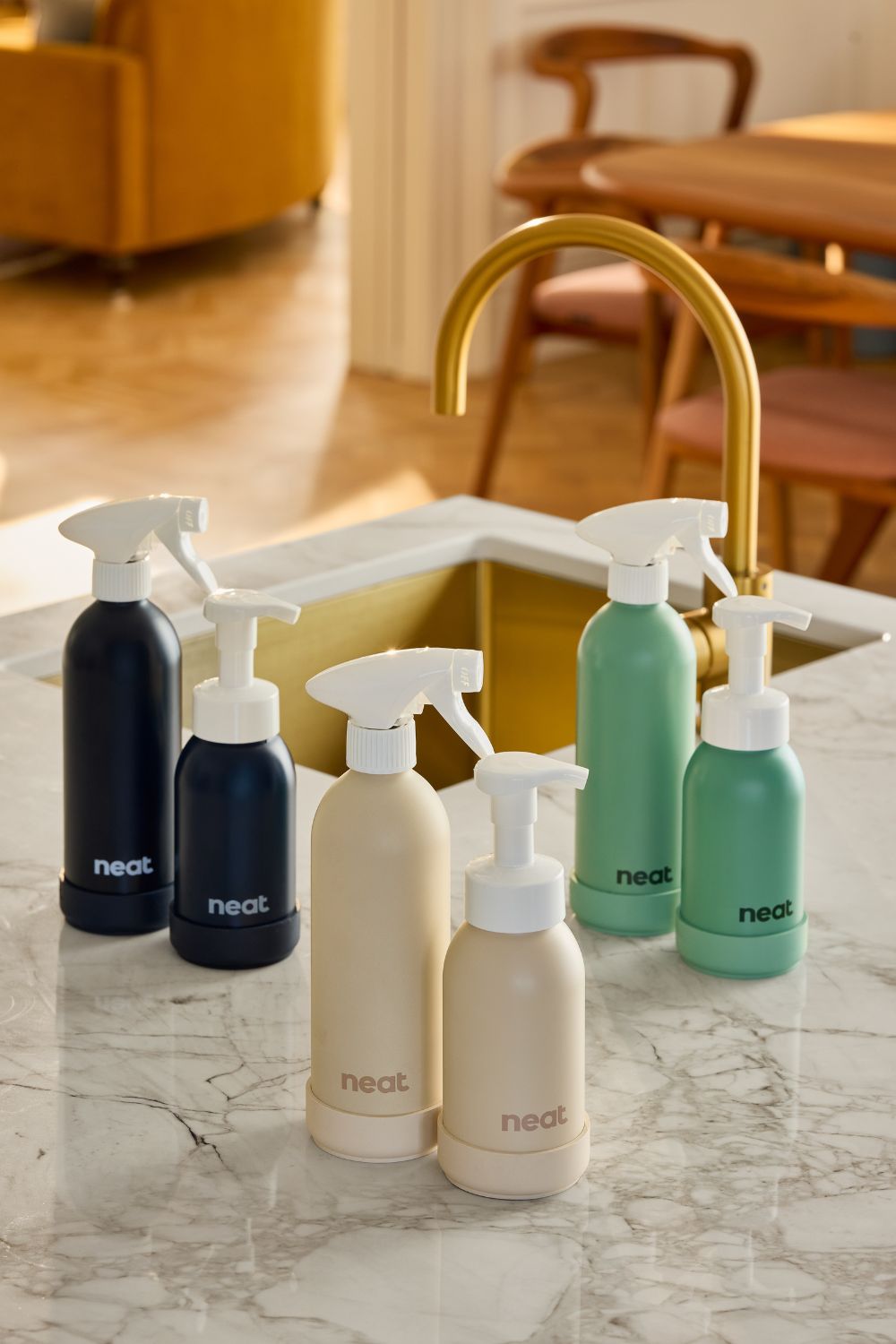
Concerned about the cleaning industry’s overuse of plastic and water, Josie Harfield and Ryan McSorley decided to take matters into their own hands. And so Neat was born. Packaged in refillable bottles that are crafted to last, their cleaning products are made using plant-based and vegan ingredients, which not only smell good but eliminate 99.9 percent bacteria. On top of that they refuse to use any unnecessary water and have saved over 202 tonnes of plastic waste since the launch in 2020. In honour of Plastic Free July, Tia Grazette sits down with the founders of Neat to find out more about their eco cleaning products.
Green Hero: Neat
What motivated you to launch Neat?
Having spent years working in the traditional cleaning industry, we became acutely aware of its massive plastic waste problem and the unnecessary water being shipped around the world. It was clear that the category needed reinvention, but no one was offering a compelling solution. That’s when we decided to take matters into our own hands. At Neat, we believe there’s a better way to care for both our homes and our planet. We set out to create products that show people how easy it can be to live more sustainably without compromising on quality or convenience.
How are you different from most other cleaning products?
Unlike traditional cleaning products, we refuse to ship unnecessary water around the planet. Our concentrated refills are designed to make adopting a refill system effortless, aligning with everyday habits rather than disrupting them. Our bottles are crafted to last, eliminating the need for single-use plastics entirely. Neat makes sustainability seamless and even enjoyable – it’s about designing products that fit into people’s lives while being kinder to the Earth. Our products are powerfully plant based, cruelty free and contain no parabens, phthalates, ammonia or bleach. We pride ourselves on their efficacy, our anti-bac formulas eliminate 99.9 percent of bacteria.
What green business practices are you most proud of?
Sustainability isn’t just an afterthought at Neat; it’s embedded in our DNA. From day one, we built our brand around solving environmental problems. We constantly push ourselves to improve, whether it’s by using 100 percent recycled aluminum for our bottles or refining processes to reduce waste. It’s an ongoing journey, and we take pride in setting the bar higher every day.
What makes you feel positive about a sustainable future?
What gives us hope is seeing how much people care. Consumers genuinely want better solutions – they’re just waiting for businesses and retailers to deliver them. When offered a sustainable, convenient option, they’ll often make the switch. We also find encouragement in the retailers we work with, who are increasingly committed to driving change and giving people the choices they deserve.
And what are the facts that make you fearful?
Economic pressures are a worry. When times get tough, sustainability initiatives often end up on the chopping block. That’s why we focus on creating products that bring joy and satisfaction beyond just their environmental benefits. They need to feel good in every sense – this ensures sustainability remains a priority even when budgets are tight.
Who is your own green hero?
Saskia van Gendt, chief sustainability officer at Blue Yonder, is a huge inspiration [says Ryan]. I had the privilege of working with her at Ecover and Method, where she taught me a great deal about the complexities of sustainability. Visiting a recycling facility with her was eye-opening – it gave me a firsthand understanding of the sheer scale of waste and how vital it is to innovate and improve systems.
Name three other brands you admire for doing the right thing and why.
- Patagonia: Their transparency and commitment to sustainable capitalism are unmatched. I love their simple, effective approach to repairing products to extend their life.
- Allbirds: They’re tackling carbon footprint issues head-on, setting an example for others in the industry.
- Chilly’s Bottles: They’ve made sustainability cool, turning reusable water bottles into a lifestyle choice and encouraging more people to make the switch.
Should we be green-shaming brands that aren’t changing their ways?
Shaming rarely leads to meaningful change. Collaboration is far more effective. Sustainability solutions are evolving all the time, and the only way to make real progress is by working together. If we approach it collectively – as businesses, governments, and individuals – we can drive change much faster.
What are the biggest challenges in running a sustainable business?
The consumer goods industry is incredibly fast-paced, but what we’re offering is a behavior shift. Our products are designed to last and be refilled, making them ‘slow-moving’ in a space dominated by quick, disposable purchases. The challenge lies in educating consumers about the benefits of committing to refills over repeatedly buying new. It’s about finding creative ways to get that message across and inspire change.
What advice would you give to other businesses aiming to do better?
Start with knowledge. Conduct a sustainability audit or life cycle analysis to understand where your biggest opportunities lie. Focus on the low-hanging fruit – those changes that are easy to implement but make a big impact. Once you’ve identified the key issues, address them head-on and build momentum from there.
What are your views on the fight against plastic?
The plastic crisis is a huge challenge, but there are actionable steps we can take to improve the situation. We have to think and behave differently to make a change. Whilst recycled plastics are a move in the right direction, they won’t solve the problem. Less than 10 percent UK plastic gets recycled. Think about that – only 10 percent of what you’re putting in your recycling bin is actually being recycled. We need solutions that are a radical step change in reducing single-use plastic. At Neat, our beautiful design-led solutions use aluminium and glass as the primary material and avoid shipping water halfway around the world.
What are three things we can all do as individuals to reduce plastic usage?
1. Be intentional in your choices, especially when it comes to home and personal care products.
2. Educate yourself about plastics – know which ones are recyclable and which aren’t.
3. Embrace the ‘reduce, reuse, recycle’ mindset, and whenever possible, refill and reuse.
How can corporations and governments help solve the plastic pollution crisis?
Governments and corporations need to lead by setting standards for plastic use. This includes regulating materials for single-use packaging and standardising colours to make recycling easier. It’s about creating systems that work for everyone – businesses, consumers, and recycling facilities alike. By leveling the playing field, we can create a more efficient and effective system that benefits everyone.