


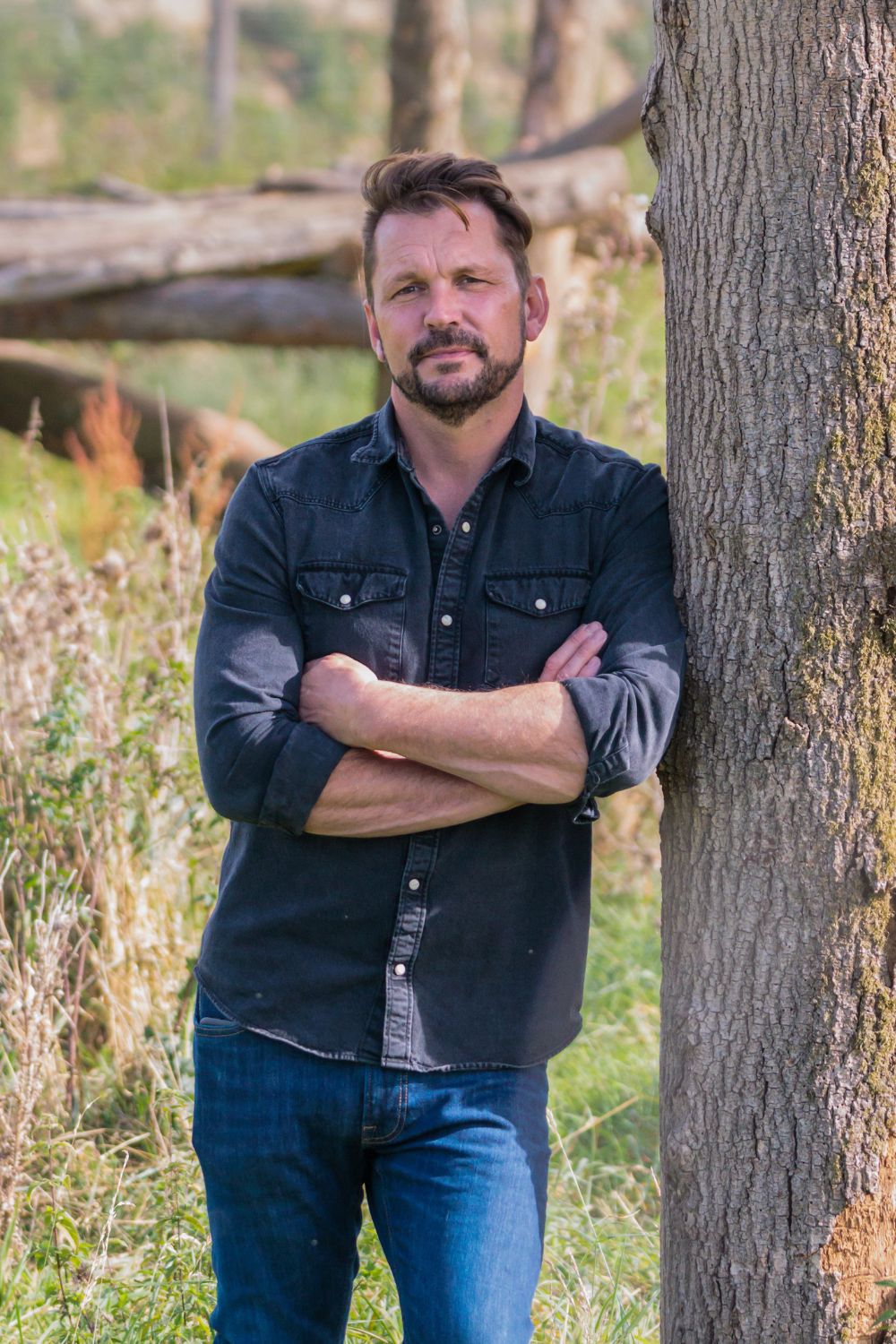
‘Farmers Are The Answer To Our Biodiversity Crisis’: Jimmy Doherty On His Mission To Save Moon Bears
By
3 months ago
Meet the man behind Jimmy’s Farm & Wildlife Park
What farmer and presenter Jimmy Doherty doesn’t know when he jumps on the phone with me is that he’s met me before. He probably wouldn’t recognise me even if we met in person; it was quite a few years ago and only for a brief instant. Plus, I was only seven years old.
Fellow Suffolk locals will probably best know Doherty as the owner of the much-loved Jimmy’s Farm & Wildlife Park – which was recently named England’s best large attraction at the VisitEngland awards. It was the site of my seventh birthday party (forever immortalised by a photo of me, my friends and the eponymous Jimmy – not that I knew he was anything but the owner of my local petting zoo), tyre towers, den builds, school trips and family outings.
Where Jimmy’s Farm was once little more than goats, guinea pigs, and – in my later childhood – meerkats, this once humble pig farm has since expanded into a full-blown production, complete with capybaras, lions, and polar bears that can be spotted from the Ipswich train.
Out of place they may seem, all these animals are here for good reason, having been rehabilitated and rescued by Jimmy and his team. Following on from the polar bears’ starring role in season one of Jimmy Doherty’s Big Bear Rescue (Channel 4), in season two we’ll see Doherty on a mission to save South Korea’s moon bears – a species that were farmed for their bile until the country banned the practice earlier this year. We caught up with Jimmy Doherty to find out more about his project and life on the farm today.
Jimmy Doherty Interview
When I visited Jimmy’s Farm as a kid, it was just a farm. What animals do you have now?
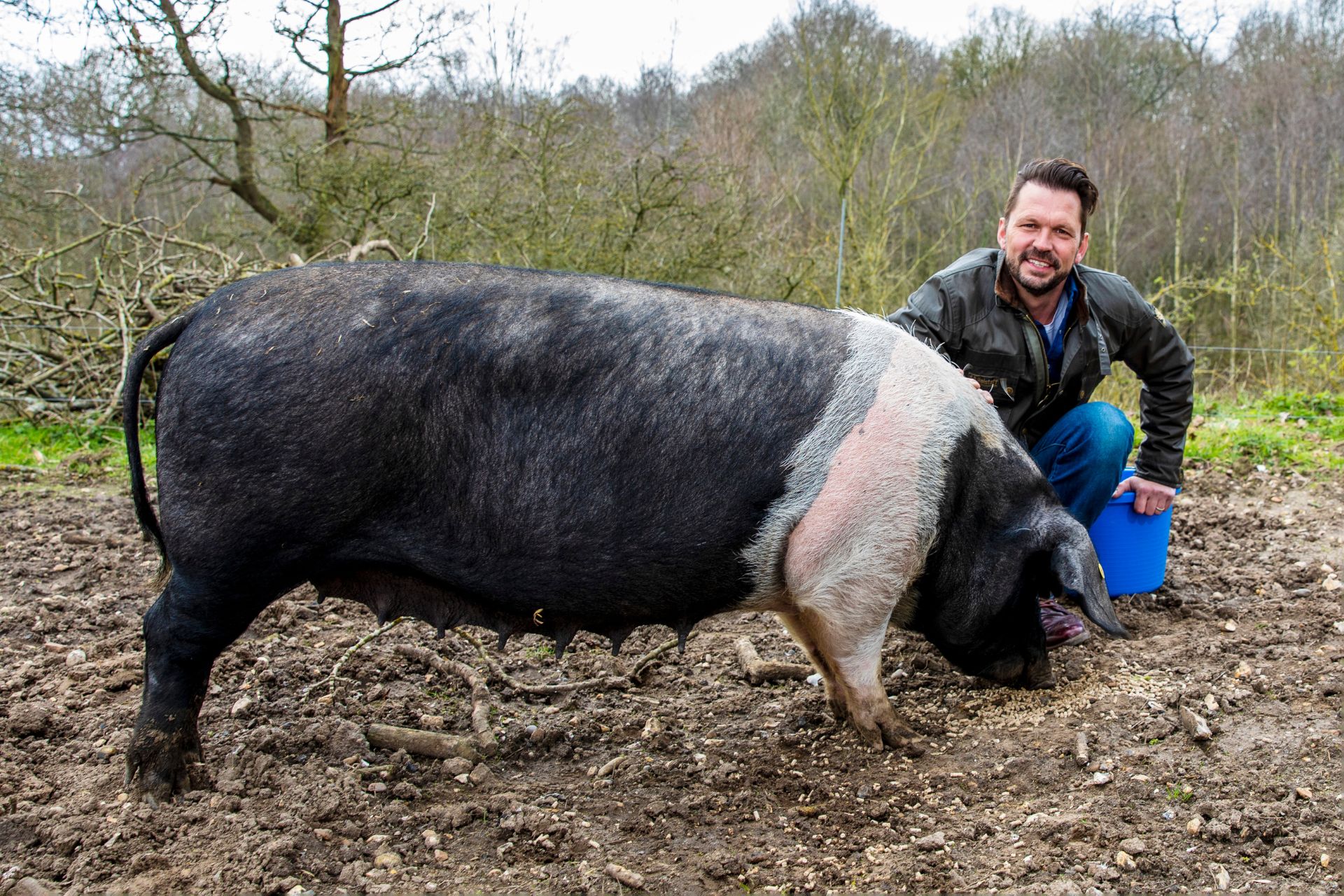
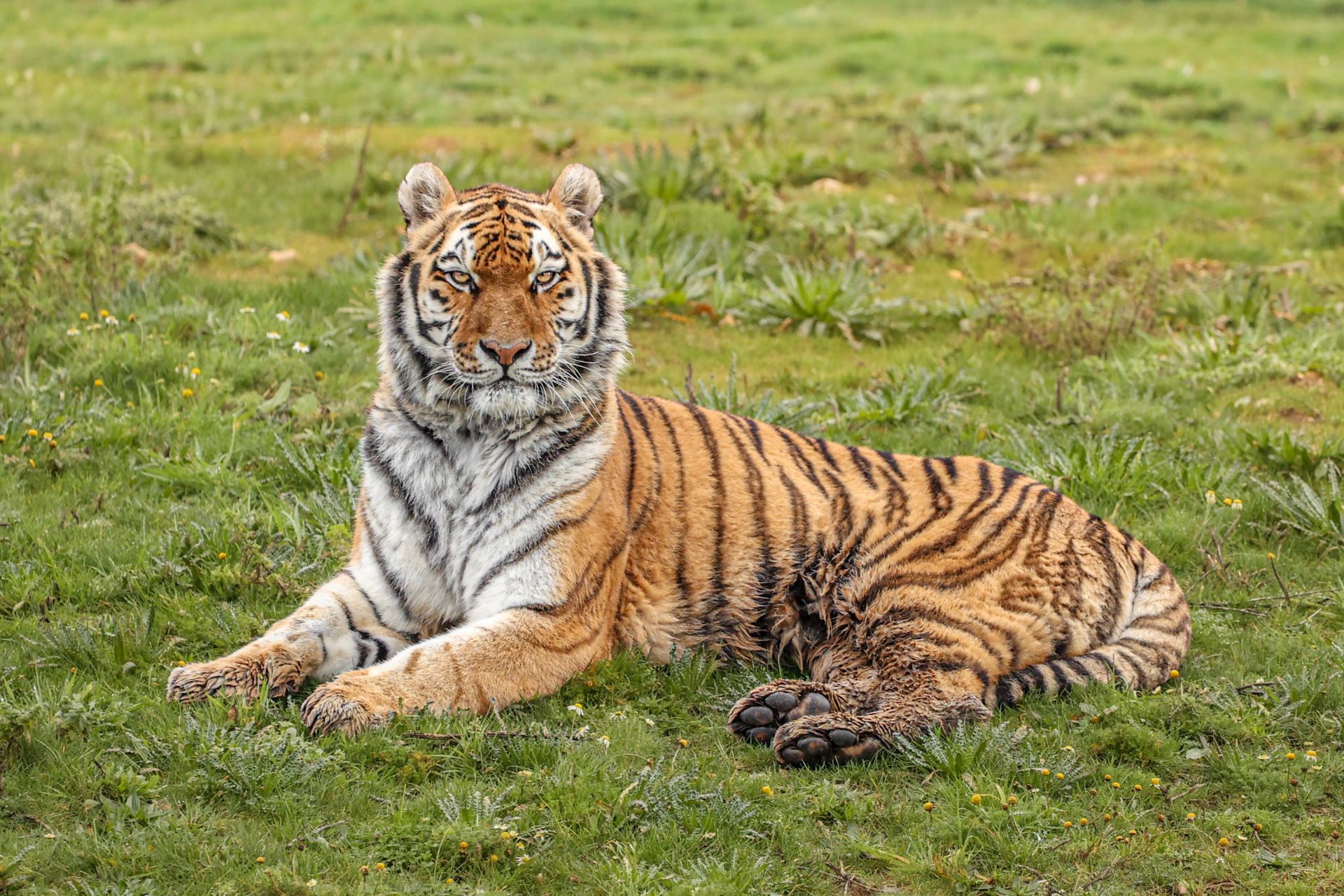
About 10 years ago, we got our full zoo licence. We kept getting so many animals given to us so it’s very different now. We’re now one of Britain’s fastest growing wildlife parks. We’re involved in lots of animal rescues and international conservation projects, and we have everything from all your farmyard favourites to Europe’s largest polar bear reserve. We have our European brown bears, we have Arctic wolves, we have reindeer, we have camels, we have antelope, we have zebras, we’ve got lions, we’ve got a tiger. We are currently babysitting two leopards. We’ve got over 100 different species. We have rescue monkeys and cheetahs, capybaras, a tapir…
I know that one of your polar bears sadly passed away during an emergency surgery. How have you had to adjust yourself to looking after these more complex creatures?
All animals are complex; all animals need exceptional care, be it rare breed pigs, or cattle or polar bears. We’re doing what we’ve always done which is giving the animals as much space as possible. We have Europe’s largest polar bear reserve and our wolves run into the woods – and sometimes visitors can’t see the wolves because they’re in six-acre woodland. We have a great team of experts; we have two great vets and it’s all about having a great team.
I always think it’s crazy that I can see polar bears on the train to Ipswich.
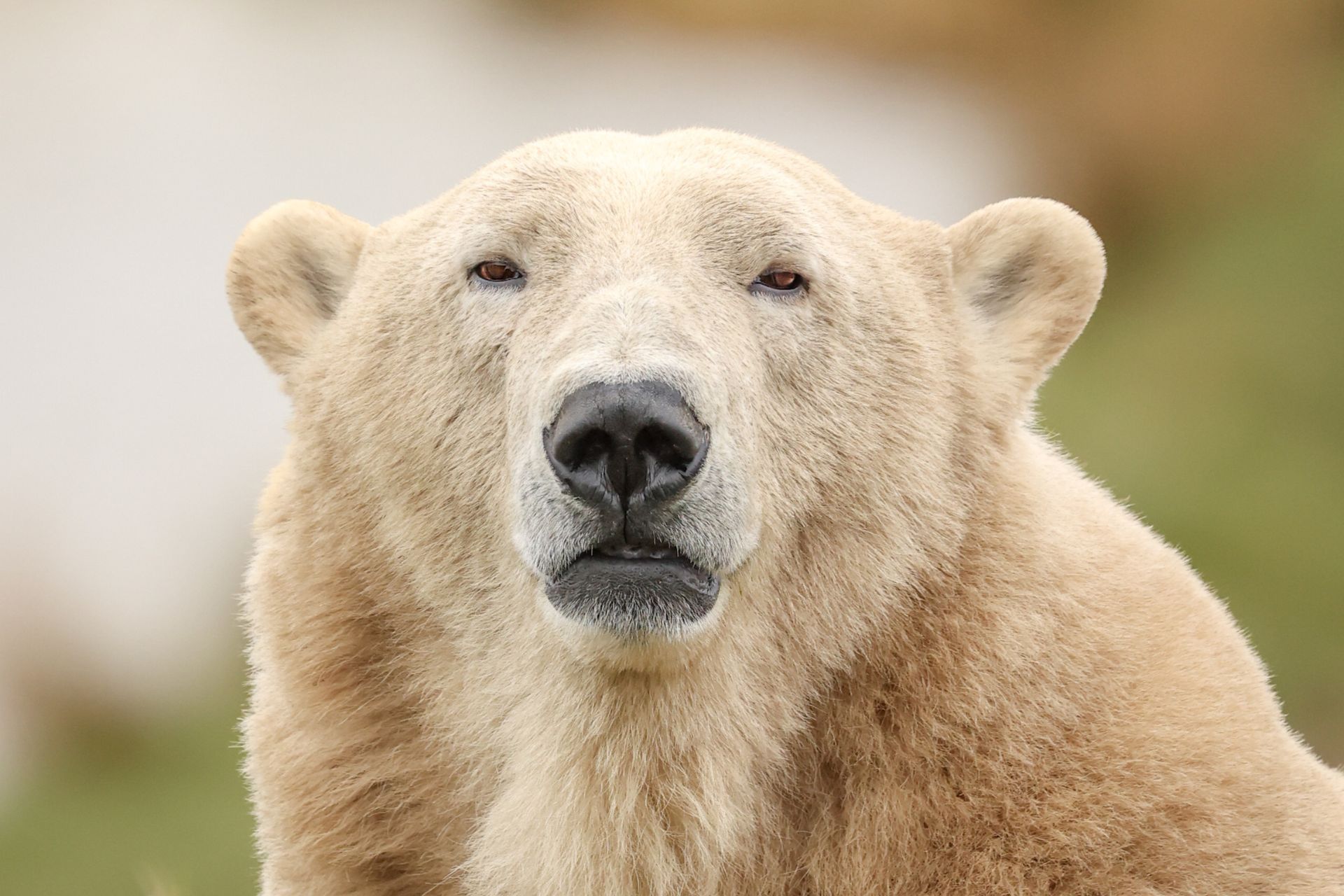
We did a study comparing the temperature of the polar bear’s home turf in Churchill, Canada to all four places where polar bears are kept in the UK. For five years running, the temperature in Canada was higher than our summer temperature in Suffolk. We developed a 16-metre deep pond to keep them cool. The house is especially designed to get the perfect air flow constantly in the lower valley, so you’ve got cold air coming in rather than warm air. And then the woodland is always about five to 10 degrees cooler, as well. It’s a big old space.
How was that transition from a farm to a zoo – one second you’re pig farming, the next you’ve got polar bears?
We still have a working farm. As for the wildlife side, when the farm park was developing with our rare breeds, people would dump endless animals on us. We started getting calls from the RSPCA, where someone had a couple of emus in their shed, or an exotic pet, and so it got to the point that we thought ‘we need to apply for a zoo licence’.
When you get a zoo licence you need an education policy, a research policy, a conservation policy. Once we started down this route, we thought let’s get involved in some amazing projects and do some fantastic research and develop our conservation. We’re involved in all sorts of animal rescues and rehabilitation, from ex-laboratory monkeys to animals that are going to be euthanised; we’re rehabilitating moon bears and breeding endangered species. I studied zoology at uni and I went on to read a PhD in entomology. I’ve always been in love with conservation and I believe farmers are the answer to our biodiversity crisis.
Lots of people would argue that farming does more harm than good to our biodiversity. What would you say to them?
Farmers love the countryside. They also run a business, and we’ve all got to take responsibility. What we buy and how we spend the pound in our pocket directly affects what is grown and how it’s grown. The vast majority of habitats exist on farmland, and so we need to increase biodiversity in our farming. But to do that, we’ve got to pay the farmers to enhance habitats. Farmers have been doing it for years off their own back, because they know the value of biodiversity. Lots of people have denigrated farming, saying ‘agriculture’s destroying the world’. Actually, it’s responsible for less than 17 percent of greenhouse gas emissions, and it feeds the world. We’ve got to see farming as not just producing food. It provides environment protection. We all want clean air and clear water – we’ve got to pay farmers to do that.
What steps are you taking on your own farm to improve biodiversity?
In the lion and tiger enclosures we’ve increased the biodiversity by 30 percent. We did that through clever planting, plant architecture, changing the topography of the landscape to enhance the hedgerows and wild meadows. All these things increase biodiversity. We do that a lot, but more farmers would do that if they got paid to do it. If you pay a farmer for growing a field of wheat, that’s great because it’s a product – but farmers don’t earn any money out of growing a field of wheat. If you were to pay the farmer, not only for growing a field of wheat but also pay him double to grow a field of wildflowers, that’s going to feed our pollinators. That is an environmental service to our country. I’d much prefer to pay for things like that than I would HS2.
As you said, farmers aren’t making any money off a field of wheat. You’ve expanded from farming to TV and a wildlife park. Do you think all farmers will be forced to diversify?
Farmers always diversify. And the industry is so diverse in its own right because the farmer isn’t just someone who grows food – they’re a mechanic, a soil expert, a chemist. But yes, even the big commodity producers are trying to develop brands that give them value. Smaller farms have always had to diversity. Rather than relying on outside markets for our produce, for example, we built a restaurant on site where most of our produce goes to cut out the middle man. We host weddings, we have events, and we have branded products that go out to supermarkets. You’ve got to create a bit more robustness so you’re not just relying on one income stream.
With the drama of the farmer’s inheritance tax, environmental conversations, and shows like Clarkson’s Farm, I feel like farming has entered the mainstream more than ever. Do you think farmers are finally getting more sympathy?
There’s definitely been more sympathy for farmers. What people need to realise is that when we pay farmers, particularly for environmental payments, we’re investing in our landscape. Let’s invest into our landscape, either be it for biodiversity or food security. That’s really important, because it’s not like any other service. Farming is the cornerstone of civilization. When you get a farmer producing food, we don’t have to grow that food at home. It allows us to go off and become social media influencers, bankers, social workers, etc.
You’re currently on a mission to save South Korea’s moon bears, which were previously used for bile farming. Why do they need saving?
These bears have been kept in horrific conditions for over 20 years. Some of them are kept in pairs; some of them kept on their own. They have very rudimentary conditions, often on a wire floor or a concrete floor, not having regular water, not having regular food, sitting in their own excrement – horrific conditions. When we arrived at one of the farms, there were six bears. Unfortunately, we couldn’t take the sick one; we had to put her to sleep. Her back legs were paralysed; her front paw was amputated. She had one good paw and she was just dragging herself around. It was some of the worst welfare conditions I’ve seen. Although the bile’s no longer extracted, it used to go into traditional medicine for human health. But it would also go into all different products – there was even a product to whiten your dog’s teeth; it was bizarre. That’s been banned now, but the plight of these bears continues.
How did this project come about?
We work with lots of different charities, and we also have our own charity called Space in the Wild. We were looking at the work of Animals Asia in Vietnam, who were rescuing moon bears after the trade was made illegal there. And the same has just happened in South Korea. We heard that there’s all these bears that needed relocating and rehoming, and so we started working with an organisation called KAWA – which is the Korean Animal Welfare Association.
They came to us and said, ‘There’s over 200 bears that need rehoming, and the government facility is already full. They’ve got nowhere else to go.’ The trade is now illegal, but there’s still bears in these farms that the farmers don’t want. The government had encouraged farmers to rear them in the first place, and it’s great to ban it, but what’s the solution? We stepped in to try and rescue five of these bears, but what we’re looking at long term is a solution for all 200.
Have there been any significant ups and downs at the park?
More and more people are coming to find out about conservation and agriculture. We’ve had lots of school visits and engagement with lots of young people. The downside has been the government for the last number of years. With extra taxation, minimum wage going up (which I sort of understand), and increased contributions to national insurance, our costs have gone through the roof. We can’t put up our prices anymore so we’ve had to find an extra nearly £800,000 pounds just to stay as we are. I generate quite a lot of my electricity through solar panels, I have well water, and I have my own waste disposal contract. I’m not quite sure what all my business rates go on.
At C&TH we’re all about living a life in balance. How do you live a balanced life?
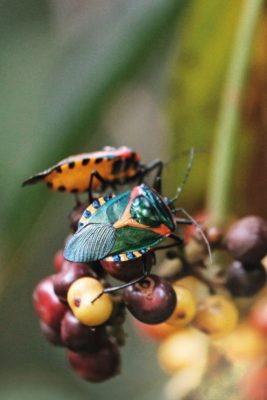
I’m actually away at the moment filming a new Channel 4 series, but I’ve been on my phone all the time. Technology is fantastic because it allows you to dip in and out, but I also think you’ve got to put time aside for family and home. I rear tropical butterflies at home – and part of that’s conservation, but it’s also a bit of stress relief. Sometimes you’ve got to have a barbecue with friends and family, snatch a day here, an hour there, that makes a big difference.
And how do you think we can always live a little better?
Everyone talks about mindfulness, and there’s endless podcasts, and courses you can go on and all the rest of it. But I think a cup of tea and 10 minutes of quiet time, either walking around the garden or local park, listening to the birds, watching a spider spin a web from one branch to another, or a peacock butterfly dipping nectar from a buddleia bush, then you lose yourself. Nature is incredibly healing. And that’s what I believe about these moon bears as well. We can heal them physically but how do we heal them mentally? Nature is the best medicine – and if you allow these bears to be bears again, all of a sudden they’ll heal really quickly.
It must be amazing to have all-hours access to the nature at your own park.
That’s the best part. Sometimes when the park closes in the evening I get a pint of Bear Beer (we make it and if you buy it, it helps us save bears) and sit and watch the animals with the little ones. It’s just so therapeutic to get the place for yourself. It’s almost like when we first arrived 25 years ago, but there are lions and tigers, not just rare pigs.
Obviously your attention is focused on the moon bears right now, but do you have any other species that you’re concerned about?
I’m very concerned about the British swallowtail butterfly that only exists in a limited location in Norfolk. If we have more extreme weather events or more salination of the Norfolk coast, and loss of its food plants, you’ll see massive decline, and that swallowtail butterfly will be gone forever. It’s unique to Britain, though it does have a cousin called the European swallowtail. We work with a great organisation called Nature Safe, and Writtle College which is part of Anglia Ruskin University, where I’m a visiting professor. We have a current research project where we’re looking at the possibility of cryopreserving fertile butterfly eggs. You put them into a deep freeze using liquid nitrogen. Once you’ve treated it properly, and gone through the specific protocols that we’re developing, then one day you’ll be able to take them out of the liquid nitrogen – in two weeks’ time, five years’ time, 500 years’ time – and they will hatch into a little caterpillar. We are going to go through trials of breeding European swallowtail eggs next year, and if it works, we will then breed the British swallowtail and freeze their eggs.