


Water Of Life: How British Distilleries Are Protecting Their Most Precious Resource
By
3 months ago
Drought is putting the spirits industry under threat – but these clever distilleries are ensuring gin and vodka are never off the table
‘That’s like having to choose my favourite child,’ laughs Martin Pieroni when I ask him which alcohol he most likes to drink. The bespectacled Scot, who was ‘semi-raised on campari but [has] always been a gin drinker’, is distillery manager at Glenrinnes Distillery near Keith. The founder, Alex Christou, has a similar palate: a vesper martini made with gin, vodka and a twist of lemon is his tipple of choice.
But rather than a love of spirits, it was the natural environment of 6,000-acre Glenrinnes Estate that led Christou, with his stepfather, to found the distillery in 2019 and create the Eight Lands brand. ‘I knew we had freshwater springs – this wonderful untapped resource we weren’t using,’ says Christou. The original idea was to bottle ‘Adam’s ale’, aka water, but after discovering botanicals like cowberry and native sorrel growing on the estate, upgrading to a booze like gin seemed a natural choice.
Last July, a number of Glenrinnes’ Speyside neighbours were forced to halt whisky production early for the summer as the Spey river – their water source – dried up. Such an event could be fatal for a small-batch distillery: the liquid is vital for multiple parts of spirit production, including mashing (steeping grains in hot water), cooling and diluting. But with ‘somewhere around 50 to 100 times more water coming out of the spring than we’re using, we’re lucky to have a lot of head room’, says Pieroni, who previously spent 15 years working with Scottish distilleries to improve their water supplies. ‘We will be OK in the short-to-medium term, but [drought] is a growing concern for the industry.’ According to the Centre of Expertise for Waters, drought events in Scotland are expected to increase from one in every 20 years to one in every three – a rise of 567 percent – thanks to climate change.
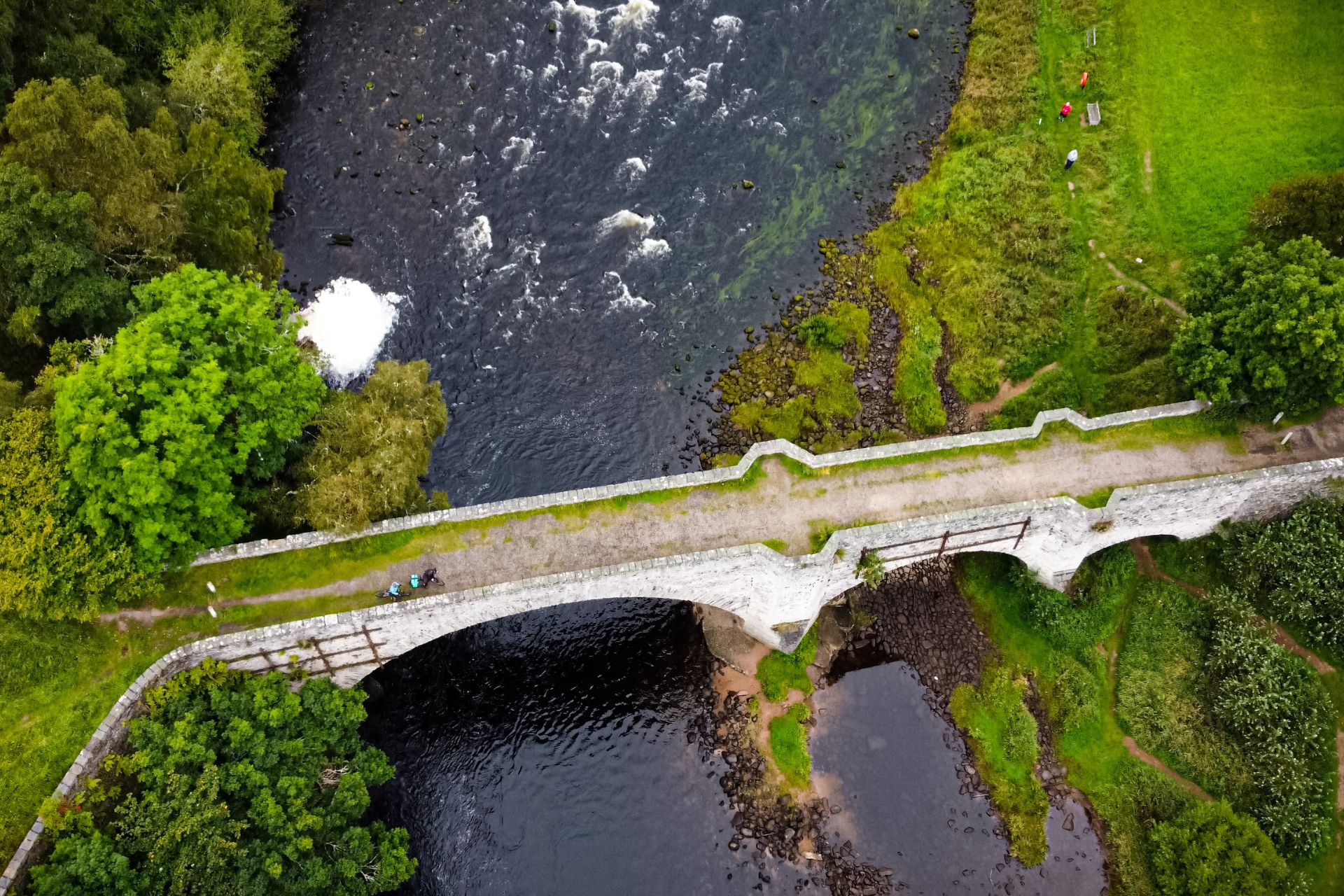
The Spey river in Scotland is a vital water source for local distilleries but has been affected by drought in the last few years. Credit: Getty
Distilleries all across the UK are putting water-saving methods into practice to help future-proof their spirits, and at Witchmark in Wiltshire, protecting the vital resource is key to its identity as a modern brand. As England’s highest-scoring B Corp distillery, ‘not doing things this way was never an option’, says
co-founder Jon Carson. Underneath visitors’ feet lies an aquifer, from which the distillery abstracts just under 16,000 litres per production day through a borehole that previously belonged to the Environment Agency. After being used to create gin, vodka and whisky (the latter is due to be uncasked next year), all leftover water is sent to a nearby biodigester where it generates electricity for the grid by breaking down local organic waste. Both water and waste are then used to feed and grow local crops – including Glass Pharms, Britain’s first legal cannabis farm, located minutes from Witchmark.
‘We set up a resource-hungry business,’ says Carson’s co-founder, Alasdair Large. ‘Soon we want to double our production, and my task is to do that without doubling the water we abstract.’ He is currently planning a wetland system, where two-thirds of the distillery’s wastewater – around 160,000 litres per month, with the other third going to the cannabis farm – will be filtered through reeds before replenishing the aquifer and, in time, finding its way back into Witchmark’s bottles. The surrounding ecosystem will benefit too, Large adds, including local animals who struggle to find enough surface water due to Wiltshire’s chalky landscape, and invertebrates looking for a marshy habitat.
At Greensand Ridge in Kent, founder Will Edge built a wildlife pond six years ago to address the most water-intensive step of creating spirits: cooling. At many older distilleries, hot alcoholic vapour is cooled back into a liquid using a stream of water that is destined for the drain. Edge’s wildlife pond instead minimises much of that wastage (which can account for 80-90 percent of overall water consumption) by recirculating water between the pond and the condenser, in a design inspired by European wild swimming pools. Happier still, the pond is now home to a thriving population of newts, dragonflies and wagtails.
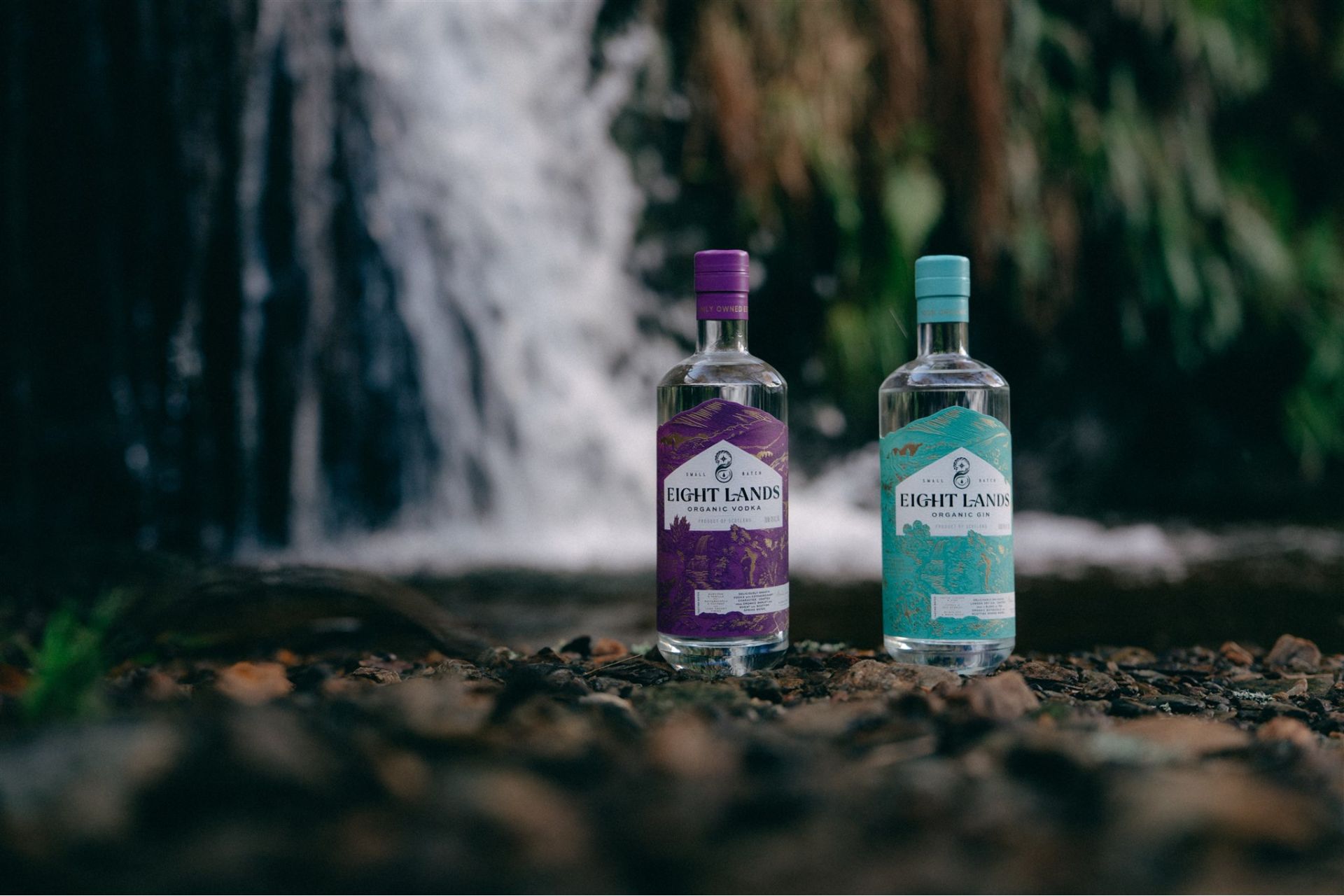
Eight Lands is made at Glenrinnes Distillery, which sources water from its own spring. Credit: Simon Herd
While Greensand Ridge uses mains water for all other parts of the process, at Forest Distillery in the Peak District, using anything other than its own spring is simply not an option. At 1,689ft above sea level, it is the UK’s highest-altitude distillery and so is not connected to a mains supply. But here, the issue of water goes beyond the distillery grounds. The Peak District moors are in crisis: rising temperatures are causing native plants to struggle, including sphagnum moss, which crucially acts as a sponge for rainwater. ‘We work with [partnership project] Moors for the Future to replant this moss, which holds water in the hills and reservoirs and stops the towns below from flooding,’ explains co-founder Karl Bond.
Why is being involved in such a project so important? ‘We’re part of the environment around us; it’s a big aspect of who we are,’ says Bond. ‘Protecting it benefits us all.’ Back at Witchmark, Large puts it simply: ‘We set up in the last few years with the knowledge that resources are not limitless. If a distillery launches in the 21st century without sustainability written right through it, I frankly don’t think it has a place in the future.’