


As Satish Kumar Turns 90, His Radical Idealism Is More Important Than Ever
By
3 months ago
‘What we do to nature we do to ourselves. If we pollute our water, we have to drink it. If we pollute our air, we have to breathe it’
In a quiet corner of coastal Cornwall far from Westminster, the brightest eyes the colour of polished conkers sparkle from a dark corner of a lovely old stone farmhouse. ‘Our crisis is not climate change, not economic growth, but aesthetics. We have lost our sense of balance, proportion and harmony. We don’t use our heart and our hands,’ says Satish Kumar, editor emeritus of Resurgence & Ecologist magazine and founder of Schumacher College, and who this year will be celebrating his 90th birthday. Kumar has been calling for a radical reimagining of our relationship with the natural world for over six decades, arguing that we need to shift our emphasis from economic growth to human and planetary wellbeing.
His influence stretches far beyond the eco-chamber. When Jane Goodall interviewed Paul Polman, the former CEO of Unilever who transformed the corporate giant by placing sustainability at the core of its business model, he quoted Kumar. ‘When they teach economy, they should also teach ecology,’ he said, and, ‘humanity comes from the Latin word humus, meaning earth’.
‘Satish Kumar has changed the world, because he is the catalyst for other people to do things. He articulates possibility, and paints a picture of what could be, filling you with optimism and hope,’ says Louise Chester, who introduced Polman to Kumar. Chester, a high-flying financial analyst who was overseeing billions of funds before she founded Mindfulness at Work, a not-for-profit which coaches compassionate leadership to CEOs, lists a global collective of influential changemakers mentored by Kumar. This includes activist Vandana Shiva, who established seed banks across India to resist the commodification of agriculture. ‘I really don’t think I would be the person I am without Satish. I have a very close relationship with him but so do thousands of others,’ says Chester.
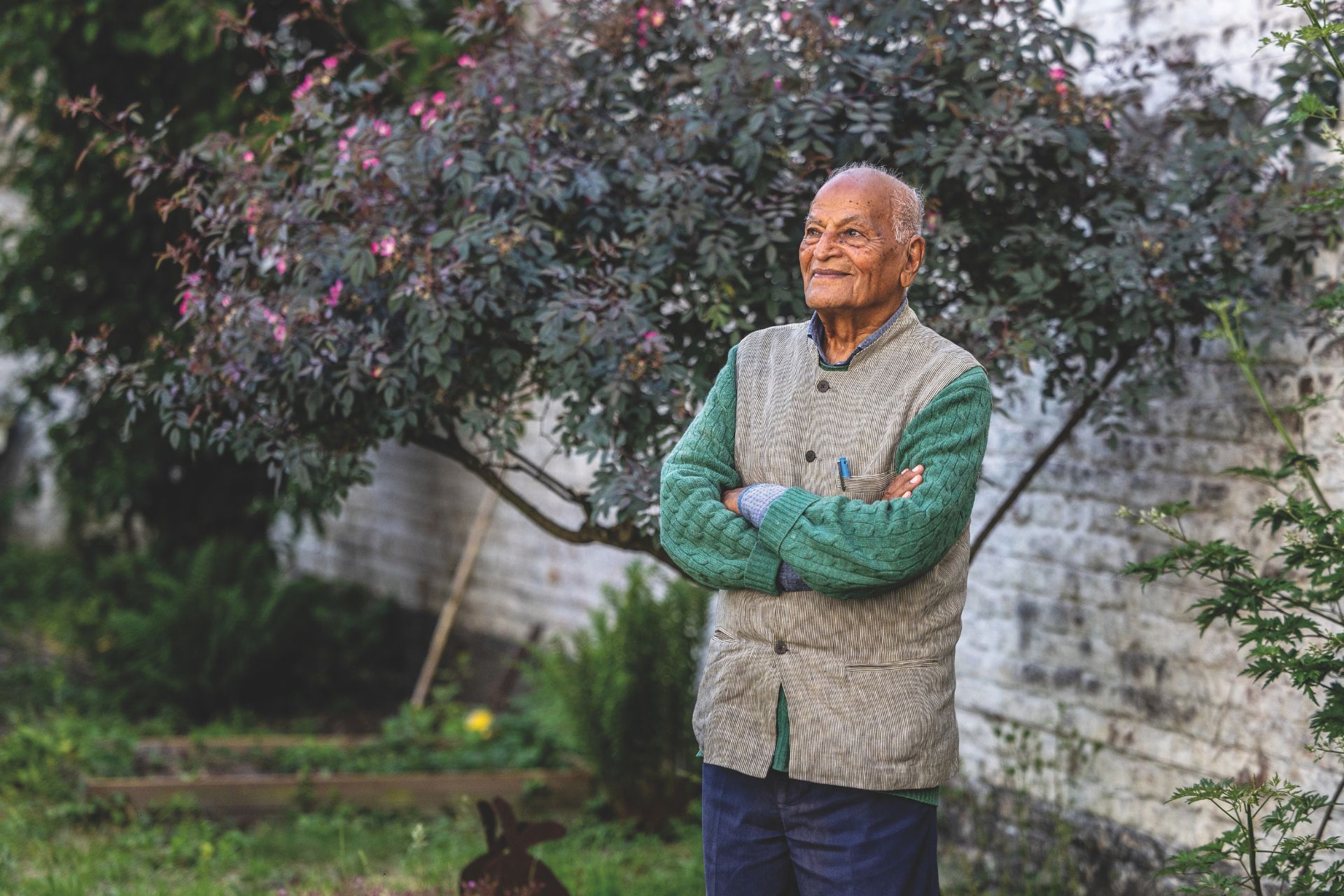
Satish Kumar: ‘We consider ourselves owners of nature. If we seriously want to address the root cause of global warming, we have to shift the paradigm from ownership to relationship.’ Photo credit: Ennio Cameriere
Jonathon Porritt, former director of Friends of the Earth, credits Kumar with inspiring thousands through Schumacher College, which he founded in 1991 to offer a more holistic education through ‘the three Hs’ – heart, hands and head, including the right brain hemisphere valuing intuition and imagination. The college has become a global centre for ecological thinking and environmental humanities, attracting students from more than 60 countries. ‘Satish and I occasionally disagree,’ says Porritt. ‘I’m much angrier about the current situation than he is, and he’s uncomfortable with angry people. He thinks that’s a negative emotion and not helpful, but however choppy the waters we’re all navigating, somehow Satish in his little boat always seems to be sailing along on an even keel. He is imperturbable, which is astonishing.’
Kumar’s views are shaped by experience, conviction and courage. Raised in a Jain family in India, he scandalised his family by running away from a monastery to join the Gandhian movement, realising he could better spread the message of peace in the wider world. In 1962, aged 25, he embarked on his famous 8,000-mile peace walk, inspired by outrage at the imprisonment of the 89-year-old philosopher Bertrand Russell for demonstrating against nuclear weapons. He walked from Gandhi’s grave in Delhi to Washington DC delivering packets of peace tea to the four nuclear capitals, urging leaders to pause and think. Advised by his mentor, Vinoba Bhave, Gandhi’s embodiment who spearheaded land reform in India, to take no food or money, he entrusted himself to the hospitality of strangers. Being vegetarian wasn’t easy among Hindu Kush tribesmen.
It was when he was on his way home after the walk, in 1966, that he met the economist E F Schumacher (after whom the college was named), author of Small is Beautiful. Schumacher persuaded him to become editor of Resurgence & Ecologist (formerly Resurgence magazine), arguing that there were many Gandhis in India but there would only be one in England. Kumar spent the next four decades shaping one of the most influential environmental magazines in the world. He created a platform for pioneering ecological thinkers like James Lovelock, Arne Naess, Fritjof Capra and Joanna Macy, and challenged readers to confront difficult questions around sustainability, economics and population growth long before such debates entered the mainstream.
‘The problem is our attitude,’ he explains. ‘We consider ourselves owners of nature. If we seriously want to address the root cause of global warming, we have to shift the paradigm from ownership to relationship.’ He contrasts Descartes’ duality, ‘I think therefore I am’ with the Sanskrit phrase So Hum, ‘you are, therefore I am’, a philosophy rooted in interconnectedness with the universe outside of ourselves. He calls for a reframing of most aspects of modern life: leadership, education, economics, farming, planning and our relationship with nature, in that when we are killing the planet, we are killing ourselves. He advocates more respect for farmers; that schools should nurture imagination as much as intellect; that children should be ‘eco-literate as well as computer literate’; and that communities should care for one another rather than depend on centralised government.
It’s to nature that we return again and again in our conversation. It’s his spiritual practice, his mentor and his respite. He describes the rolling Cornish coastline and its changeable weather as a metaphor of life and reminds us of the generosity of the soil. ‘Soil is very forgiving. It does not ask if you have a Visa card. Out of one seed comes 50 tomatoes. ‘When I started writing about renewable energy in Resurgence in the 1970s, people said we were “naive, idealistic fools in cloud-cuckoo-land”,’ but what seemed radical then feels only too relevant now after decades of biodiversity collapse, floods and fires, polarisation and blinkered leadership. ‘Our bodies are soil transformed,’ he says, ‘so what we do to nature we do to ourselves. If we pollute our water, we have to drink it. If we pollute our air, we have to breathe it.’
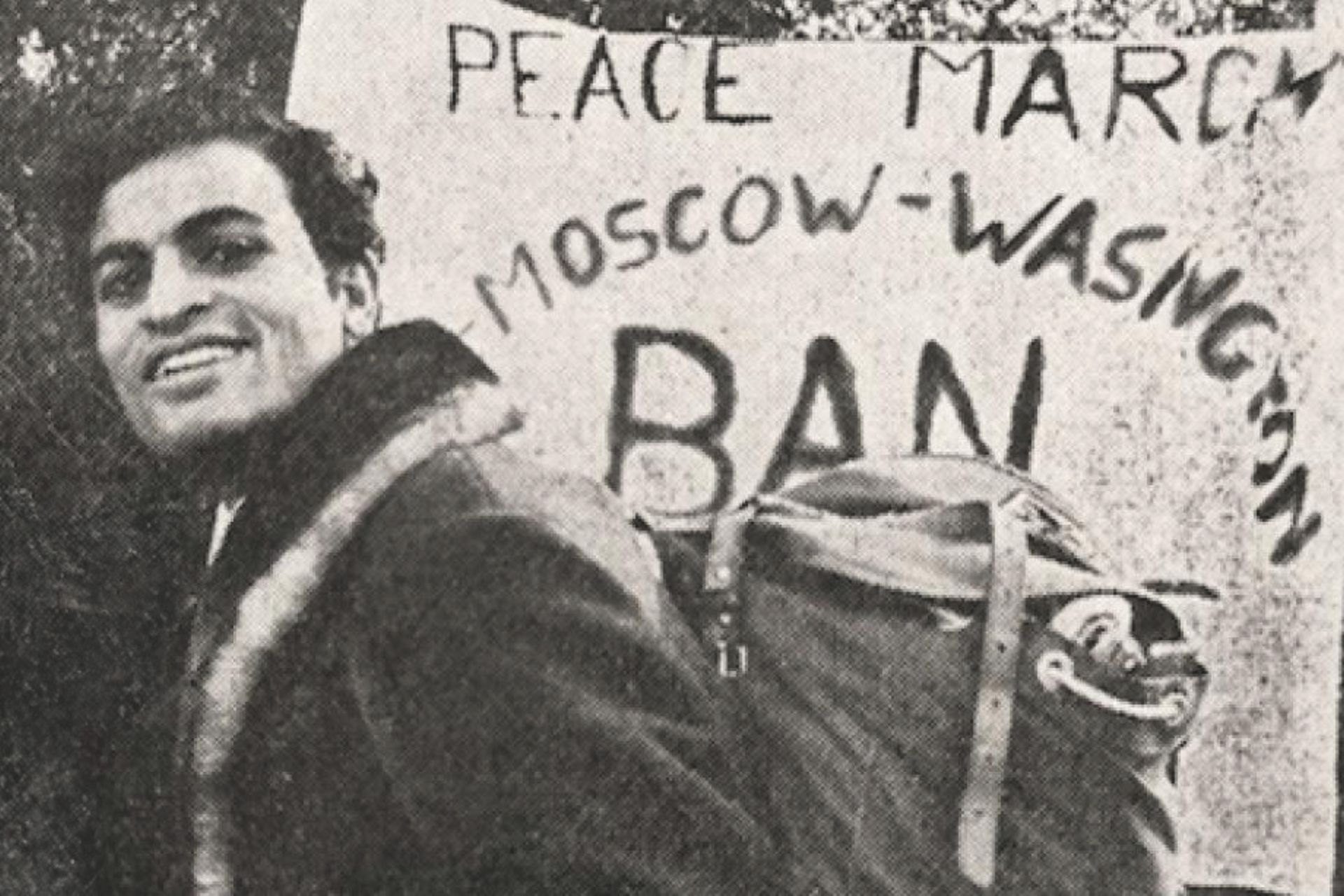
In 1964, Satish Kumar set off on a peace walk from Delhi to Washington
I catch up with Kumar between appearances at the Oxford Union and Darwin College, Cambridge, where he is discussing alternative leadership styles. In June, he spoke at Eton College. His 90th birthday tea party will be hosted by Frieda Gormley, co-founder of the B Corp House of Hackney (which put nature on its board), who persuaded the Oxford English Dictionary to include humans in its definition of nature. His retreats based on his books Radical Love and Soil, Soul & Society are sell-outs. Other books include The Buddha and the Terrorist, No Destination, a memoir about that two-year peace walk, and his ninth book, Peace is Possible, has just been published.
He believes modern society suffers from a failure of courage and trust. ‘We want the world to be nice, but without standing up for it,’ he says. ‘Mahatma Gandhi talked about “[being] the change you wish to see in the world”.’ For Kumar, that means teaching young people resilience, compassion and respect for difference. He worries about a world increasingly shaped by division and intolerance, where people seek to destroy opposing viewpoints rather than understand them. ‘We have to dream and to imagine that a slightly less imperfect world is possible,’ he says. ‘We need to train young people to be statesmen, not politicians, to embrace diversity, not to make everyone like ourselves.’
As the sun falls over the Cornish coast, Satish Kumar turns on a light. The 89-year-old peace activist is no longer sitting in the shadows but glowing with vitality. He leans forward, those brown eyes shining even more brightly. ‘You know, Annabel, I know I sound like an idealist. But what have the realists done for us? Realism is overrated. Realists haven’t given us anything except climate change and wars, and they don’t even win them. It’s time to give the idealists a chance.’