


It’s Cooler Than Ever To Stay On The Farm
By
5 months ago
The great British farm stay is having a moment
Between the UK’s stately homes and country houses, you’ll find a steadily growing brand of luxury stay. Charlie Colville digs deep into Britain’s growing hospitality scene down on the farm.
Inside Britain’s Greatest Farm Stays
It’s no secret that Britain is entering its pop culture renaissance. No doubt you’ll have spent time in the last year securing tickets to the Oasis reunion, bingewatching your way through The Traitors, or tracking down a secondhand Burberry trench on eBay
‘I think people are looking at Britain in a slightly different way now,’ says Olive Guest, co-founder of Glebe House in Devon. ‘There’s this quirky eccentricity – this Britishness – which is seen as something quite trendy.’
Perhaps this is why, on a deeper level, we’re craving experiences that feel authentically British. And where might we find those? Not on the beach or cooped up in a hotel room – but outdoors, on the farm.
‘People are looking for experiences that are grounding and meaningful, and rooted in a specific place,’ Guest explains. Glebe, which serves as a guest house, restaurant and 15-acre smallholding, is one of the UK’s growing population of farming hospitality destinations. ‘Staying on a working farm allows people to slow down and do that. They can observe the rhythms of nature and learn something new themselves – whether that’s how the food is grown, how animals are cared for, or how seasonal cooking really works.’
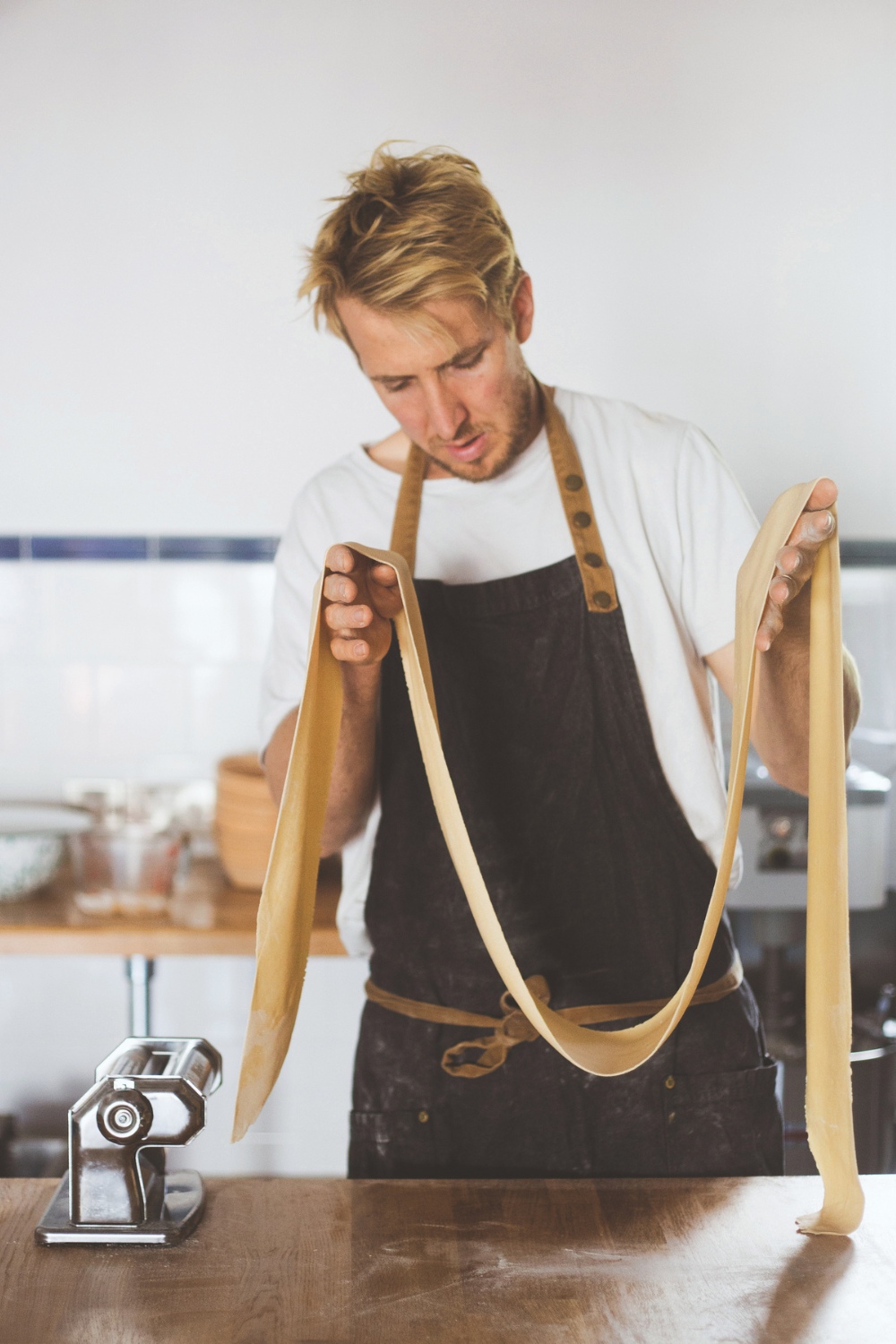
Pasta-making classes are on the menu at Glebe House
‘Holidays now don’t necessarily entail switching off,’ adds Caitlin Owens, founder of recently opened rural retreat Fowlescombe Farm, also in Devon. ‘People are looking to immerse themselves in something that is real, and that’s where the interest in farming comes from.
Farm hospitality isn’t exclusively British – its roots, in fact, go back to the Italian agriturismo – but it’s on UK soil that the concept is really starting to take off.
‘The UK is such an interesting market,’ says journalist Samantha Shankman. She traded her pen for a plough some years ago, moving to the Spanish countryside with her partner to open their own farm hotel. More recently, she’s been working on Farm Hospitality, a directory of international farm hotels and shops – and has noticed a surge in British outposts.
‘There’s this culture of going back to the countryside that’s being revitalised,’ she says. ‘This has created a real mix of properties: wellness retreats with working farms; traditional guest houses with paddocks and kitchen gardens; luxury manors that offer workshops where you can make foodstuffs using produce grown on its grounds. These are world-class examples of what farm hospitality could be. When I think of what the actual most exciting market for farm hospitality is today, it has to be the UK.’
But don’t get them mixed up with country hotels, pubs or inns; with a farm hotel, the experience revolves around the farm itself. It’s not a hotel with a farm attached, it’s a farm with a hotel attached – albeit with the luxury furnishings that make for a top-tier getaway.
‘Working farm stays aren’t really very new – what is new is the posh working farm stay,’ emphasises Owens. ‘You can now find this very elevated offering. There’s still mud on your wellies, but you don’t shuck them off to climb into a tent. You’re greeted by the finest standard of hospitality.’
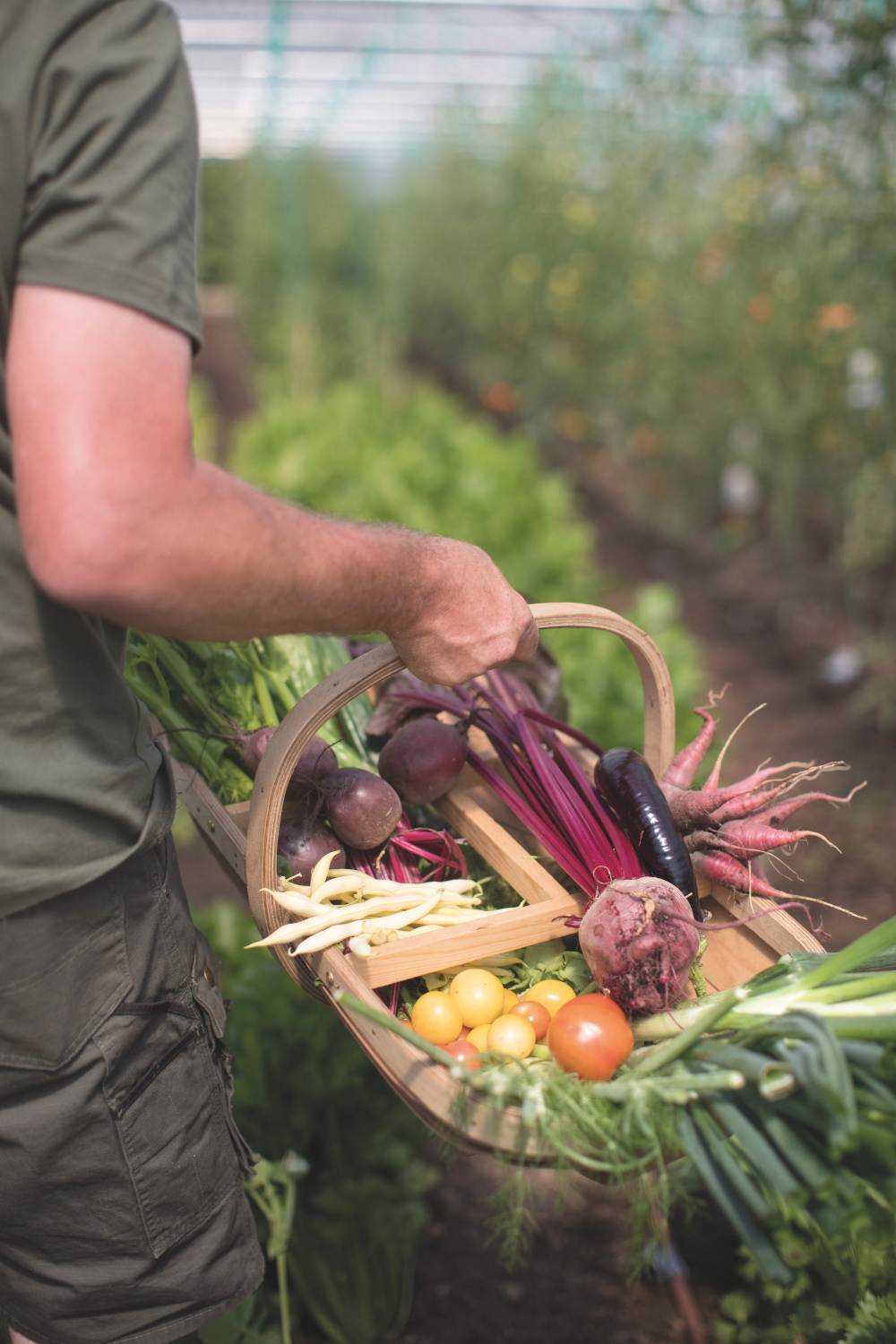
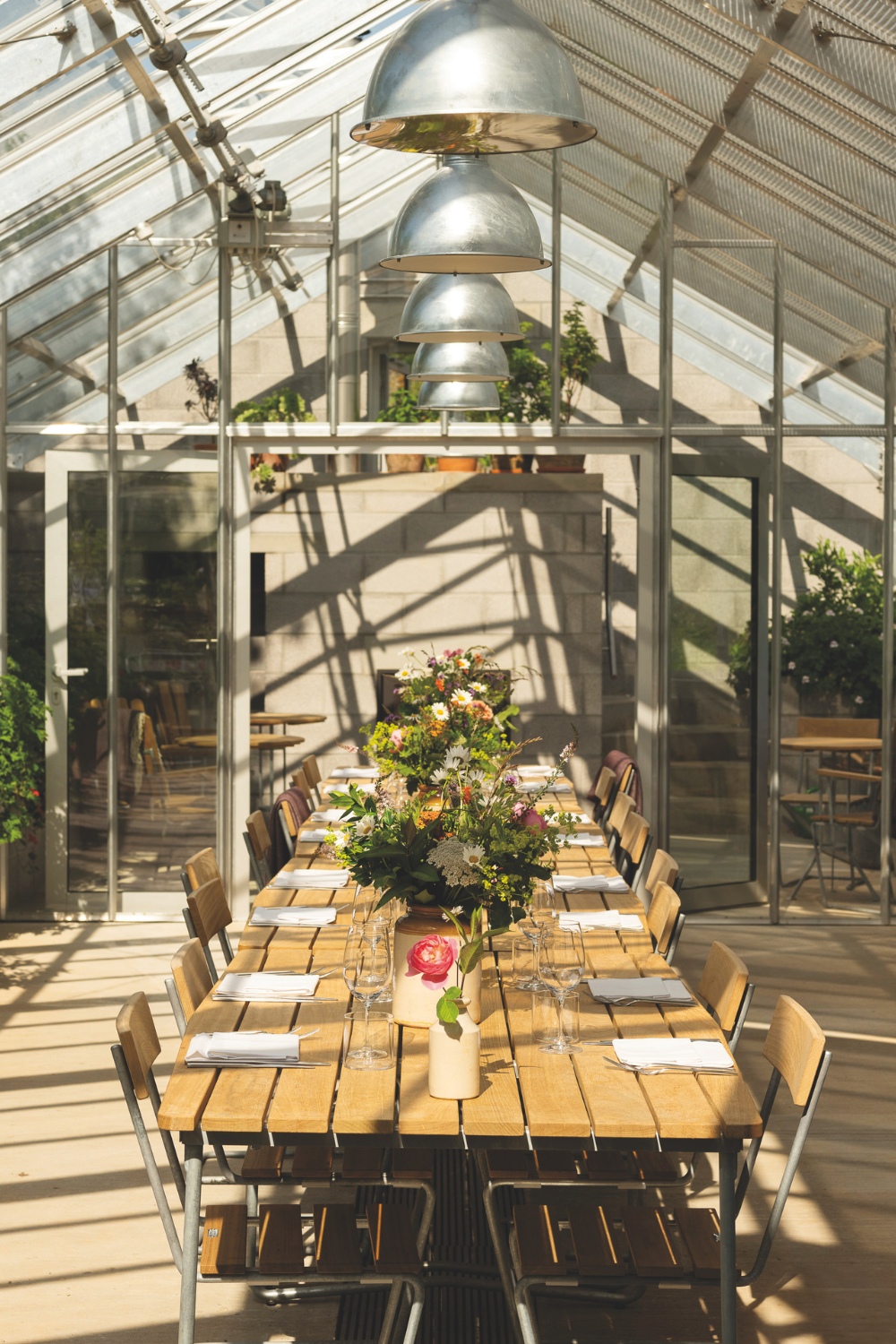
Meals at Heckfield Place celebrate fresh produce grown on-site
The food is also, naturally, a focal point. With produce grown and reared on the farm, then used to create fresh dishes in the kitchen, farm hotels also double up as foodie hotspots. ‘Farming itself is very tangible; you can literally see what’s going on behind the scenes,’ Owens says. ‘Rather than hiding the farming, it’s about showcasing it and making that the essence of the space. It’s functional luxury.’
She adds that people no longer crave experiences that feel ‘anonymous’ – i.e. where we only see and consume the final product. ‘You want to connect with where your food comes from,’ she says. ‘At a farm hotel, a guest can sit and watch someone on the team moving sheep from one field to another, or feeding the chickens, or milking the cows. They can watch the chef doing some butchery or the gardeners sowing seeds.
‘What they see is the real Britain expressed through a farm – and it encourages a confidence in the food that is then served at breakfast, lunch and dinner.’
The new wave of farm hotels also offer their guests more than countryside views or a lap around the grounds. ‘You have to be able to get your hands in the dirt,’ Shankman says. ‘That’s one of the big draws of the farm stay. You go and enjoy the very fun, juicy part of farming: the picking, the harvesting, the making of produce like bread and sausages and jam.’
You might not be able to do all of the classic farming jobs – ‘We still want to give the farm team space to safely and productively get on with their work,’ says Owens – but there are usually still plenty of opportunities to engage with the lifestyle.
Your morning at Fowlescombe, for example, may kick off with yoga session backdropped by birdsong, followed by an afternoon feeding chickens and collecting eggs or picking juniper berries to make the farm’s famous sloe gin.
At Glebe, meanwhile, guests can try their hand at seasonal food preparations. ‘We make our own cheeses; all the salami is made inhouse with the pigs we’ve reared,’ says Guest. Glebe offers courses throughout the year where guests can preserve vegetables and make their own cured meats, fresh pasta and bread. ‘They get to take what they’ve prepared home, too, so it feels like a very rewarding experience.’
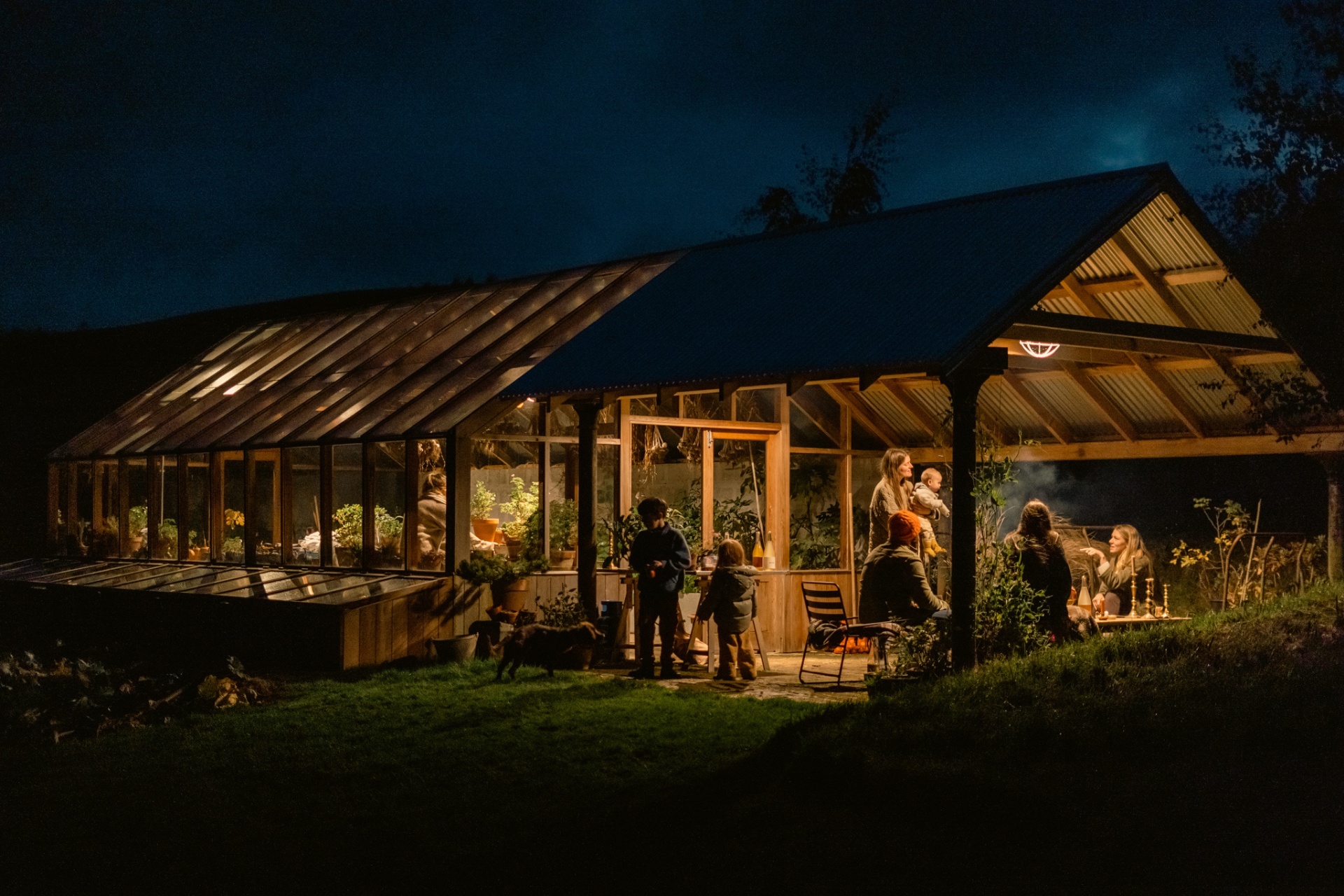
Guardswell Farm is home to a cider orchard, regenerative market garden and several flocks of sheep and cattle
And then there’s Coombeshead Farm. The Cornish guest house is home to cattle, sheep, pigs, chickens and guinea fowl, as well as an orchard and market garden, which supplies the restaurant. Workshops on baking, butchery and printmaking are also on offer.
Larger-scale operations, like Heckfield Place in Hampshire, also showcase how luxury farm stays are redefining the traditional hotel experience. The working estate delivers localism through its food and drink offering – dishes bring together the produce they grow, rear and make on-site – as well as a blend of classic countryside pastimes and modern wellness activities. Think wild swimming, willow weaving or boating on the lake and then a foraged cocktail-making workshop.
Beyond the southern cluster of farm hotels – where many seem to be cropping up – you’ll find Guardswell Farm, a 150-acre grassland farm in Scotland. The family-run business sits on a mixture of permanent pasture and woodlands, and is home to a charming crew of Shetland cattle, Angora goats, Hebridean sheep, and hens. When not sampling the regenerative market garden or cider orchard, guests can learn more practical skills from the farm, including hedge laying, using tools, and habitat-friendly farm boundary management.
‘Experiences with richness – where people can get hands-on and be more involved in what’s happening – is where farm hospitality really thrives,’ says Shankman. ‘Of course, every visitor is going to want to do that to a different degree, but it’s that idea that you’re going somewhere to learn something valuable, something you can take home with you.’