


At Nature HQ: Vivobarefoot’s Galahad Clark Is Rewriting The Rules Of Leadership
By
5 months ago
One step at a time
Step inside the headquarters of footwear brand Vivobarefoot, where they grow team-lunches on-site and host wellness retreats. Fleur Britten catches up with CEO Galahad Clark to find out more about this game-changing business.
Interview: Galahad Clark
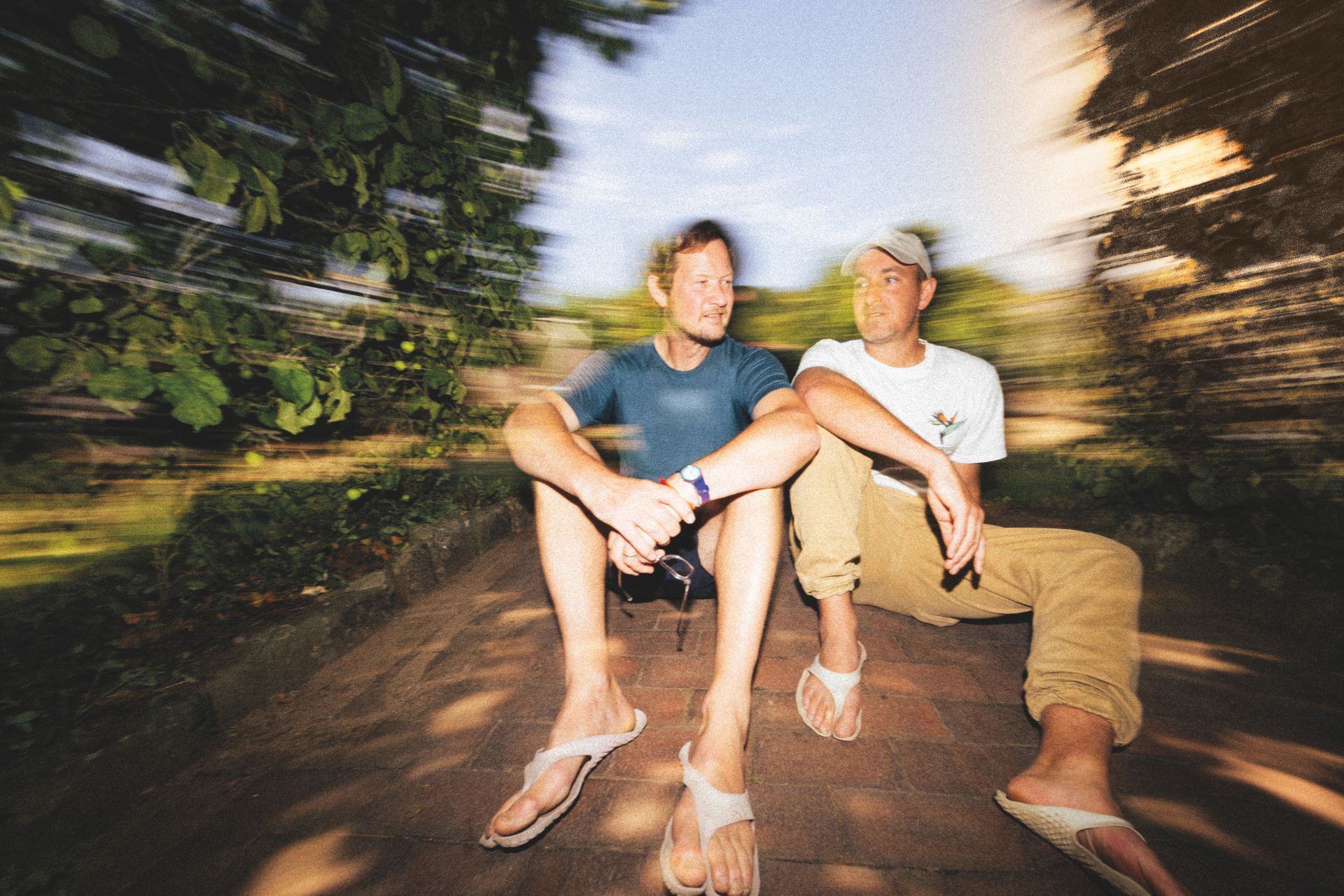
Vivobarefoot co-founders and cousins Galahad Clark (left) and Asher Clark (right)
It is, admittedly, an unlikely-looking office. Overlooking an Arcadian patchwork of fields and woodlands in Somerset’s Yeo Valley, the headquarters of Vivobarefoot – the shoe brand on a mission to ‘free the foot’ from the unhealthy constraints of conventional footwear – is housed within a magnificent Victorian walled garden and glasshouse. In clement weather, meetings, lunch and even parties are held outside, alongside its impressive vegetable garden, in the apple orchard or by the swimming pond.
I’m here to meet Galahad Clark, Vivo’s CEO and seventh-generation shoemaker (he co-founded the pioneering brand in 2012 with his cousin Asher Clark, Vivo’s chief design officer). As we walk past row upon row of rhubarb, curly kale, leeks, parsnips, herbs, etc – all of which are cooked up for team lunches from Tuesdays to Thursdays, sold in the honesty fruit and veg shed or donated to local charities and food banks – I feel the immediate sense of a shoulder-dropping, feet-on-earth nature reset. It’s an extraordinary vision of what a workplace can be.
This is ‘Nature HQ’, and it’s not just about rewarding staff with pretty scenery and home-grown veg. Nature HQ is about bringing Vivo’s team of over 150 employees into alignment with its philosophy, explains Clark, or ‘G’, as everyone calls him. ‘The mission is basically about reconnecting people to nature,’ he says, as we tour the ten acres of land (Vivo also rents the estate’s country house for overnight visitors and staff, which has a 20-acre ancient yew wood).
Eighteen months ago, the B Corp was headquartered in a ‘concrete box’ in Covent Garden, which ‘made less and less sense’, says Clark. That’s because instead of running a company in the usual, ‘mechanistic’ way, where cold, business-y concerns such as efficiency, control and short-term output are prioritised, Clark sees Vivo as a living organism – one that, like nature, is permitted ‘fallow periods’ as well as ‘bursts of growth’, that embraces change over control, and that aims to be regenerative, not extractive. And instead of a ‘military-style hierarchy’, he says, ‘there’s a flatter ecosystem’, as in nature. It’s a modus operandi inspired by the teachings of Sussex-based leadership coach Giles Hutchins, with whom Clark has worked since 2019.
‘One of the simple things we say is, “Make the big decisions in nature, in the woods, around a fire – with the literal sense of being in a living system,”’ Clark tells me, as we sit down in the glasshouse-turned-canteen/workspace for some wild venison stew with Jerusalem artichokes, onions, carrots and leeks from the garden.
Clark gets that most people don’t naturally think like this, so in the past Vivo teams would attend nature-immersion workshops with Hutchins, though these tailed off: ‘As you can imagine, some people thought it was excessive,’ says Clark. (If Hutchins’ coaching is about encouraging honesty and authenticity, Clark clearly got the memo, often starting sentences with, ‘The truth is’. But then he’s also a Quaker, ‘from a family of Quakers’, and those values of integrity, community, equality and stewardship seem central to him.)
‘But you notice when the culture starts to dissipate and people start to misalign and drift apart’ – especially, he adds, ‘in these bloody hybrid, disconnected times’ (Vivo staff are expected in the office two days a week). Nature HQ is, he says, ‘our attempt to bring everyone back together’. So, there’s an ‘innovation barn’ here for R&D – an ivy-clad timber cabin currently full of 3D-printed, zero-waste flip-flops; the design team are housed in another outbuilding, and coming soon are a pond-side sauna and, in another barn, the boardroom – though they often hold meetings outside, sitting on rocks, logs or just the ground: ‘Chairs are almost as bad for you as shoes,’ says Clark.
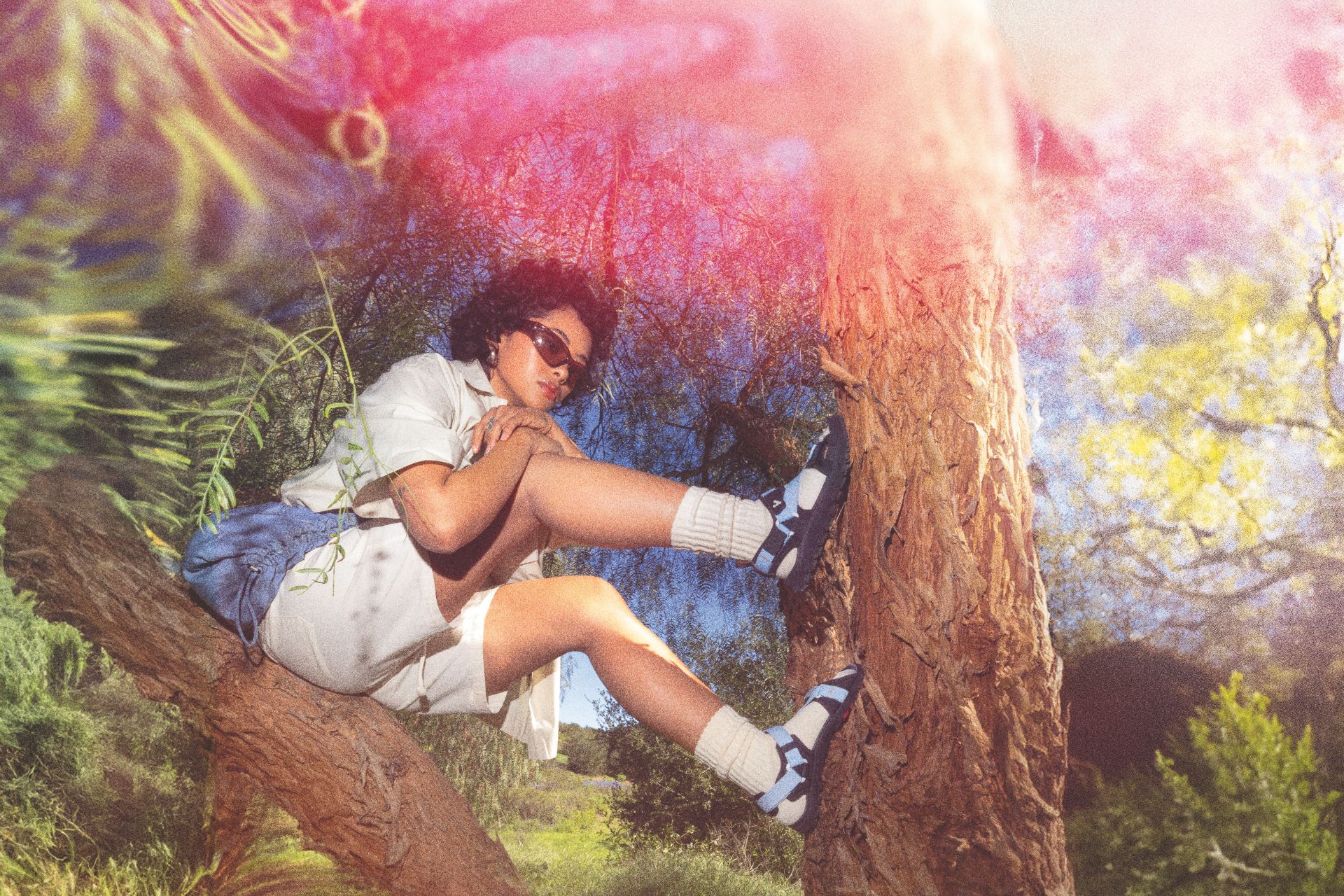
Not all employees are ‘barefoot fanatics’, he admits. ‘Some resist it a bit’ (about 60 remain in the London office). To ease the adjustment, the onboarding process includes nature-based workshops and retreats to Bantham on the south Devon coast (where the Clarks enjoyed barefoot summers as children). There are also quarterly feasts, ‘around the equinoxes and solstices’ (naturally), held in teepees in the orchard, complete with a Vivo awards ceremony. ‘We use the awards to build the culture,’ explains Clark. ‘They’re linked to our values.’ Yes, there’s even a posture prize, because that’s one of the ‘essential tenets of natural movement’ – posture is also symbolic, signifying alignment to Vivo’s mission.
And there’s an annual three-day summer camp in Bantham, with swimming in the Avon Estuary, sound baths, campfires, meditation, dancing and all those other nature-immersing wellness rituals. ‘You can’t underestimate how powerful it is to bring groups of people together in a shared philosophy,’ he explains. ‘Solutions come much more quickly.’ Indeed, ‘business has done well in this period, and gone from £30m to over £100m’. This summer, Vivo is opening its first US store, in New York City. But it’s a system that’s open to abuse. ‘Sometimes people use it to excuse going off the boil – so all of those dynamics are alive all the time.’
When conflict strikes, you can expect Clark to lean into it – though he prefers the word ‘tension’. ‘I’m always in favour of surfacing tension and having messy meetings, because we’re making difficult choices all the time. The more you hold the tension, the better the answer.’
Tension, he explains, is inevitable when the bottom line is about more than just profit. ‘If it’s purely shareholder capitalism, then the answer is obvious – just do whatever makes the most money. But if you’re also trying to do it the right way, there’s always a tension.’
Clark corrects the assumption that Vivo is cushioned by family wealth (Galahad, his cousin and co-founder Asher and immediate family are Vivo’s main investors, holding just under 70 percent of the shares). ‘The truth is,’ he says, ‘that the [wider] Clark family and business have nothing to do with Vivo. My cousin and I inherited some [Clarks] shares, and went all in on Vivo. We both have mortgages – we’re not cash-rich beyond Vivo.’
In the last 12 months, he admits, ‘things have gone relatively unwell. Last year we lost money for the first time in many years. Cash flow is a very real [issue] – we’re sometimes like, “Whew, it’s a little tight.”’ That’s partly down to ‘figuring out how to deal with 100 new barefoot brands’ (no exaggeration), and ‘having the patience to go through those periods’. It’s also partly because, he says, ‘we’ve been braver – it’s harder to coordinate a flatter, more networked organisation than a very strict one. It has not gone perfectly – there’s no question we’ve been a less profitable, less effective, less efficient business through this process, by misstepping and overstepping.’
What Clark most wants to avoid is being at the mercy of ‘impatient capital’ (ie, investment focused on short-term returns). It’s essential, then, that Vivo stays profitable in order to remain independent. Having to court new investors would mean that ‘being a business as a force for good is almost impossible’. Indeed, he adds, ‘There are tens and tens of companies – Pukka Herbs, Farrow & Ball – who built beautiful, purpose-led businesses, which then get sucked into an impatient capital trap.’ (Pukka’s former finance director, John Collins, is now Vivo’s chief finance officer.)
Thanks to Covid, Trump and the woke capitalism backlash, the landscape for sustainable brands is increasingly tough. While the 2010s were a heyday – ‘Adidas was working with Patagonia and Parlay, and was genuinely talking about the triple bottom line,’ says Clark; Nike had Nike Considered, even Walmart was getting involved – it’s now harder for companies trying to do the right thing. ‘People got paralysed in corporate America,’ he says, ‘and now we’re behind where we were in 2016.’
What can we hope for in the next decade? Well, back in the walled garden, Vivo has been hosting other businesses to share their learnings. Clark doesn’t see this so much as mentorship but a two-way support system: ‘There aren’t many independent companies of a certain size that aren’t yet slaves to impatient capital or owned by bigger [corporations]. We need to hold hands and give each other moral support to stay independent.’
The point is, he adds, ‘This should just be normal. Patagonia is one of the only companies that has scaled and stayed true to its purpose. We need a lot more Patagonias. If business isn’t a force for good, then there’s going to be a worse world for all of us.’
Let Them Lead
Riverford Organic Farmers
One hundred percent employee-owned since 2023, Riverford’s ‘co-owners’ get an equal share of the profits (plus free fruit and veg from its grade-out store). A B Corp with a top five percent score, the planet is a key priority: 70 percent of its delivery vans are electric, it’s invested ‘well over six figures’ into agroforestry and is funding the development of peat-free horticultural alternatives.
Faith In Nature
Having pioneered the concept of putting nature on the board, this B Corp has embedded nature-based decisions in all operations. For example, its two UK sites are both powered by renewable energy, staff work four-day weeks, and are given ‘nature connection’ sessions and access to mental health first-aiders, who offer green social prescribing.
House Of Hackney
After making ‘Mother Nature’ a director in 2023, the interiors brand has walked the talk by swapping out feather cushions for regenerative wool, switching to organic cotton, and developing plant-based paint and wallpaper from plant waste. Staff work four-day weeks to enjoy ‘nature Fridays’.
Bowler Collective
A B Corp-certified subscription service for refillable personal care products, each plastic pouch is reused about eight times before being recycled. Nature days for staff are encouraged, with annual beach and river cleans for all; they also donate products to local food banks and charities.