


Where Duty Meets Scandal: A Who’s Who Of The British Royal Family
By
5 months ago
All the names to know
The British royal family doesn’t do understated. Where many other European monarchies keep their profiles carefully controlled, the Windsor dynasty has spent the past decade playing out its most intimate dramas across every newspaper in the world. A marriage falling apart in real time. A son stepping away entirely. A king navigating illness while still learning to reign. And through it all, three children are growing up with unprecedented access to their lives, their education, their first public outings, all documented and discussed in real time. It’s a monarchy learning what it means to exist in an age where privacy is even more of a luxury than the days of yore, and modernity is no longer optional.
At the centre of it is King Charles III, who ascended to the throne in September 2022 following the death of his mother, Queen Elizabeth II, after 70 years on the throne. Charles has reigned alongside his wife Queen Camilla and their complex, occasionally fractious extended family. The British royal family’s story is one of image, reputation, the weight of expectation, the cost of duty and the question of whether a thousand-year-old institution can truly adapt to the demands of the modern world. But of course, we all know this: Netflix made millions turning the Windsor family’s real-life drama into a thick-brushed, often heavily fictitious tale.
Looking for the truth? Here are all the names to know in the British royal family in 2026.
Britain’s Royal Family: A Guide
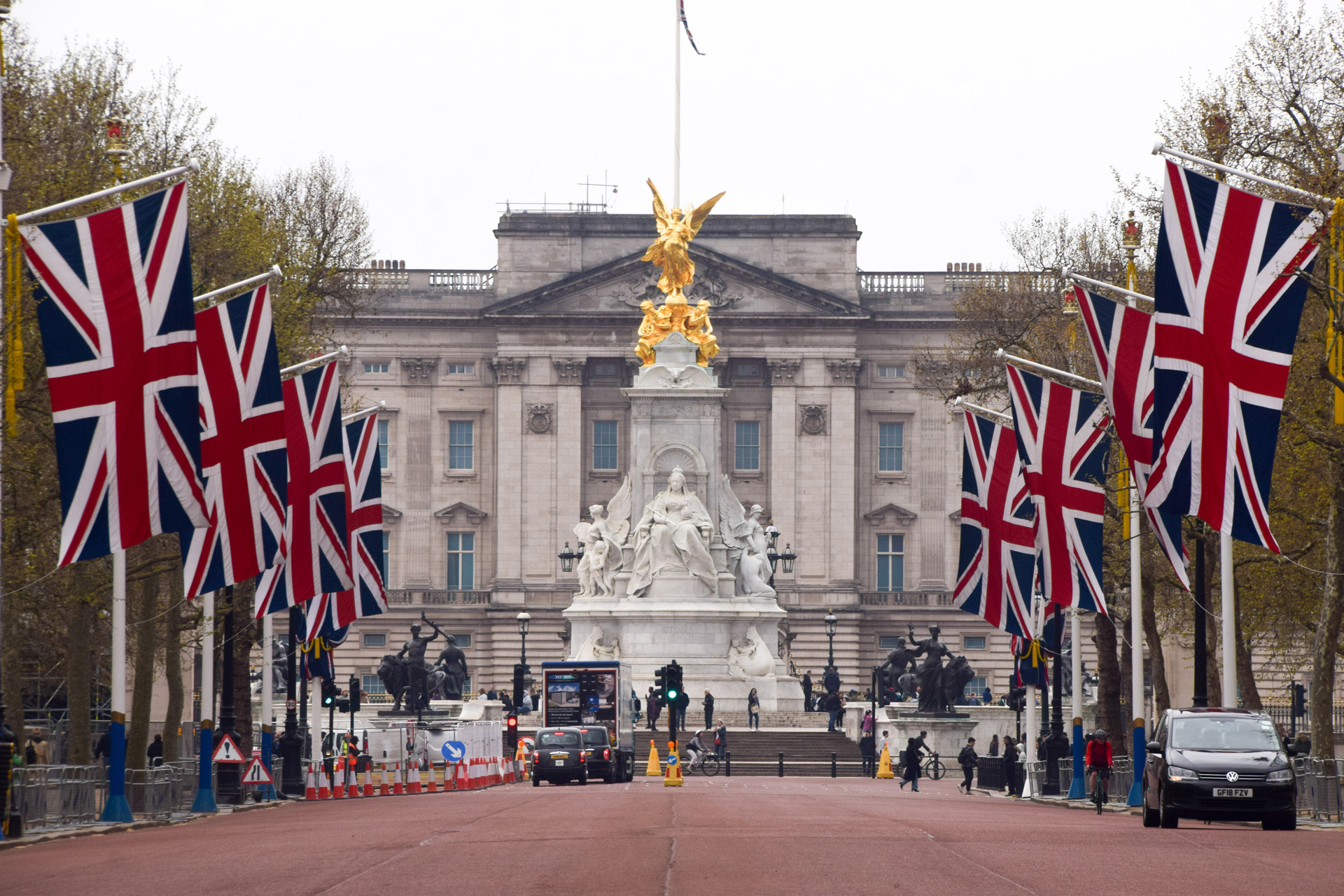
Buckingham Palace
At A Glance
The United Kingdom operates a constitutional monarchy. The royal family doesn’t govern in a political sense, but they hold enormous ceremonial, diplomatic and symbolic power. The British monarchy dates back more than a thousand years, making it one of the world’s oldest continuously reigning institutions. It survived the English Civil War, the Industrial Revolution, two world wars and the decline of empire. What it’s learning now is how to survive social media, competing narratives and the expectation that even the most private moments might end up on Instagram (and, in a sense, the expectation that they should).
King Charles III’s reign was a long time coming. Queen Elizabeth II had been on the throne for 70 years when she sadly died at Balmoral in September 2022 – the longest reign of any British monarch in history. She ascended the throne aged 25; at 73, Charles was almost three times his mother’s age when he was finally crowned, making him the oldest person to accede to the British throne.
Within months of his accession, the King revealed he had been diagnosed with cancer. Soon after, his son, Prince Harry, stepped back from public life. Meanwhile his daughter-in-law, Princess Catherine, has also had health struggles. It’s been a reign defined, from the start, by challenge and adaptation.
The royal family’s primary residences are Buckingham Palace in London and Windsor Castle, though the King himself calls London’s Clarence House home. They family also maintains homes at Balmoral in Scotland and Sandringham in Norfolk, where the family traditionally spends Christmas.
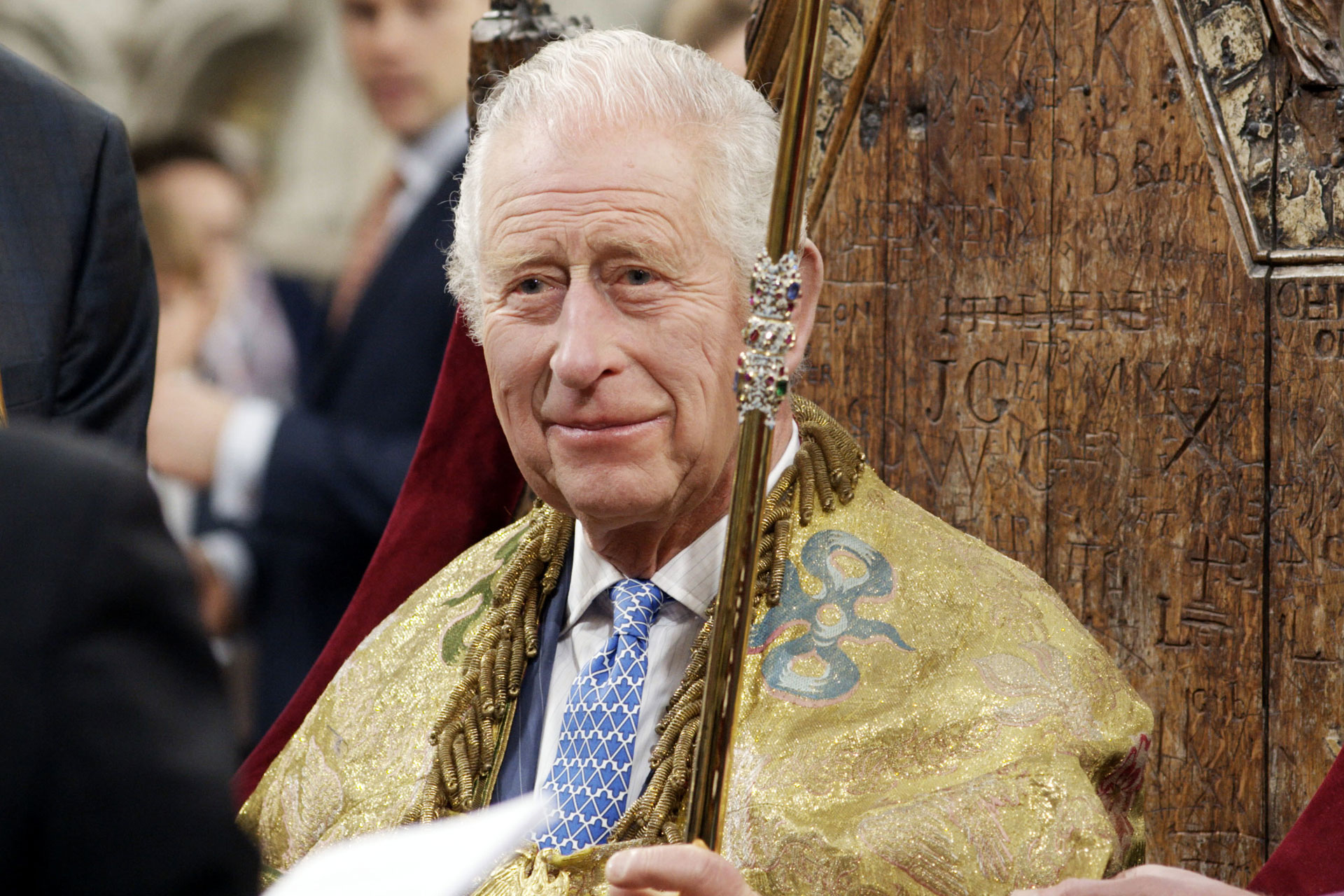
King Charles at his coronation. (BBC/Oxford Film and Television)
King Charles III
Charles Windsor spent longer waiting to be king than any heir in British history. Born in 1948, his is a biography shaped entirely by anticipation and preparation: he was Prince of Wales for 73 years before his mother’s death brought him, finally, to the throne.
His reign opened with health challenges. In February 2024, Buckingham Palace announced that Charles had been diagnosed with cancer following treatment for benign prostate enlargement. Though he has continued with state business and public-facing duties, the diagnosis marked a significant moment: a king learning to reign while managing his own mortality, a vulnerability rarely disclosed in an institution built on stability and endurance.
Before cancer came divorce, the seismic event that defined the then Prince of Wales for decades. His marriage to Diana, Princess of Wales, was a global fairy tale that turned into a tragedy. They met in 1981 and married in a ceremony watched by 750 million people worldwide. They had two sons: William and Harry. But the marriage unravelled publicly and painfully. The two separated in 1992 and divorced in 1996, a rupture that sent shockwaves through the monarchy. Charles wasn’t alone: 1992 would become, for the Queen, her ‘annus horribilis’, her ‘horrible year’, as the marriages of three of her four children fell apart in the public eye.
Diana remained beloved by the public. Her death in a car crash in Paris in August 1997, pursued by paparazzi, crystallised the tragedy: a young woman, divorced from the future king, dead at 36.
In 2005, Charles married Camilla Parker Bowles, a woman he had loved for many years, even before his marriage to Diana. The relationship had been his emotional anchor through the dissolution of his first marriage, and it was largely the cause of that dissolution. Camilla’s presence in his life had been a source of tabloid obsession and public suspicion for nearly three decades. They married quietly, civilly, with a blessing in a church rather than a full ceremonial wedding. She became Queen Camilla when he became king.
Charles is known for his long-standing commitment to environmental causes, urban planning and heritage conservation. He has strong opinions, stated confidently, and a disregard for conventional royal restraint that occasionally makes courtiers nervous. He’s intellectually engaged, well-read, and impatient with what he perceives as waste or complacency.
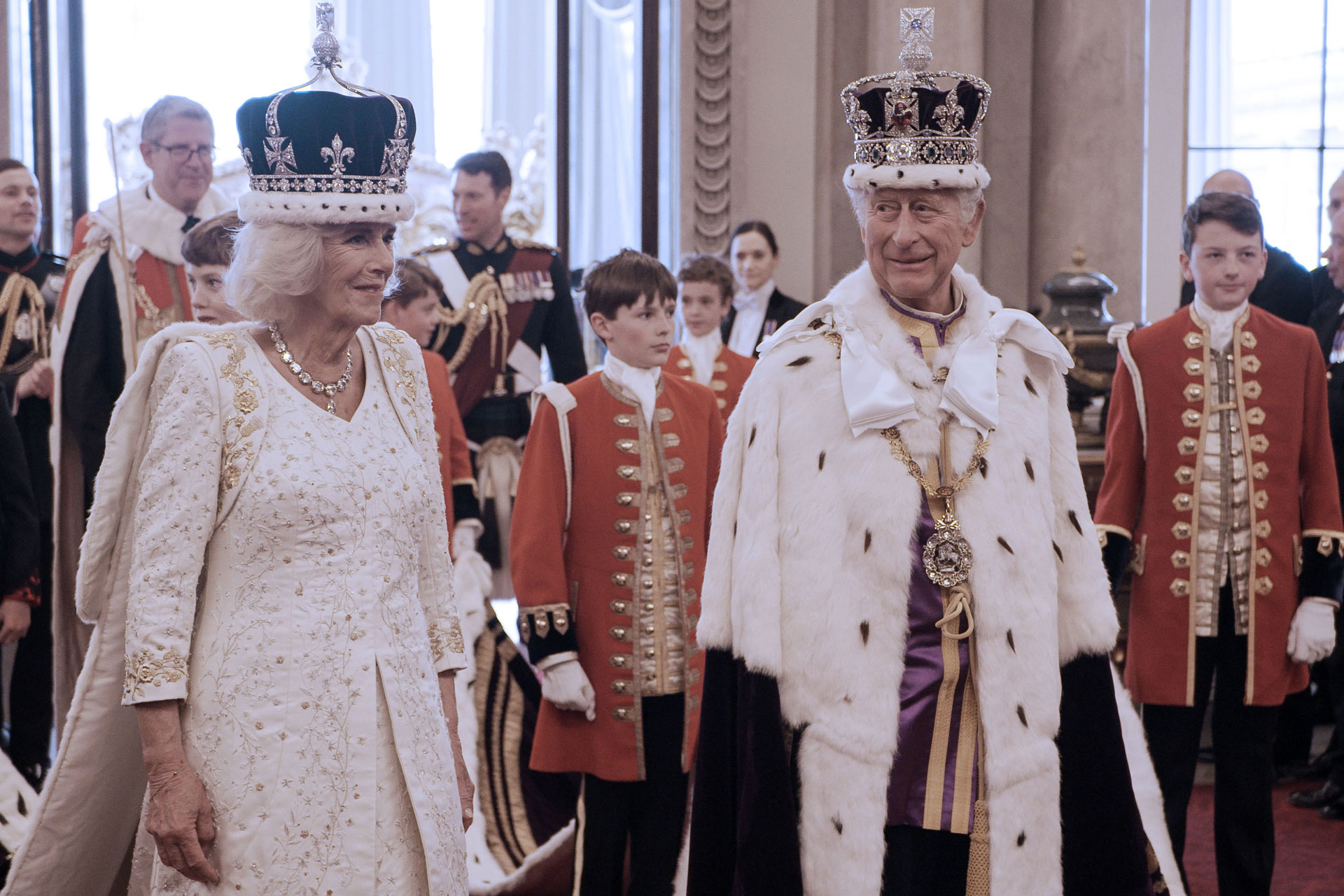
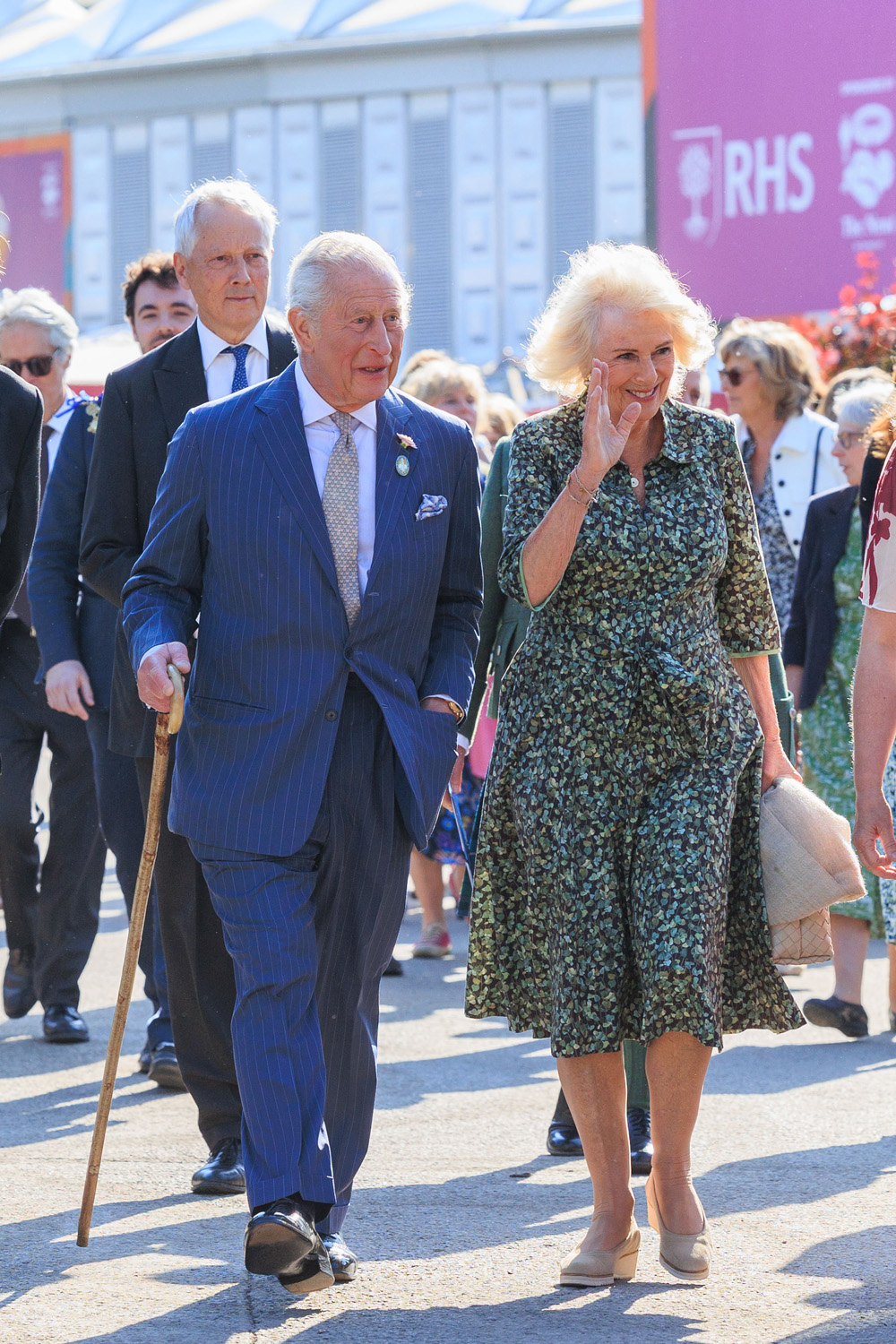
Queen Camilla with King Charles at the Coronation. (BBC/Oxford Film and Television)
Queen Camilla
Camilla Rosemary Shand was born in 1947 and grew up in Plumpton, East Sussex, the daughter of a retired cavalry officer. She met Charles in the early 1970s at a party at Annabel’s nightclub in Berkeley Square, but their attraction was insufficiently aristocratic and not royally approved. In 1981, Charles was pushed toward Diana Spencer instead, a suitable bride of appropriate age and breeding. Meanwhile Camilla married Andrew Parker Bowles, a cavalry officer, and had two children: Laura Lopes and Tom Parker Bowles.
Of course, that was far from the last Camilla and Charles would see of each other. Their love affair lasted through the 1980s and 1990s, spanning Charles’ marriage to Diana. When Diana died, Camilla was vilified by the British public, despite the fact that Charles had separated from Diana years before. For many years, Camilla was viewed as the other woman, the destroyer of the fairy tale.
When they finally married in 2005, the tone was muted. Camilla wore a pale dress and coat, understated by royal standards. But the marriage has endured and evolved. Over nearly two decades, Camilla has reshaped her public image from interloper to stalwart. She is Queen Camilla now, without the title ‘consort’ – radical in itself. She has developed a reputation for warmth, approachability and interest in charitable work, especially concerning health, literacy and supporting survivors of domestic and sexual abuse. She reads voraciously and speaks frankly, and has gradually earned Britain’s respect.
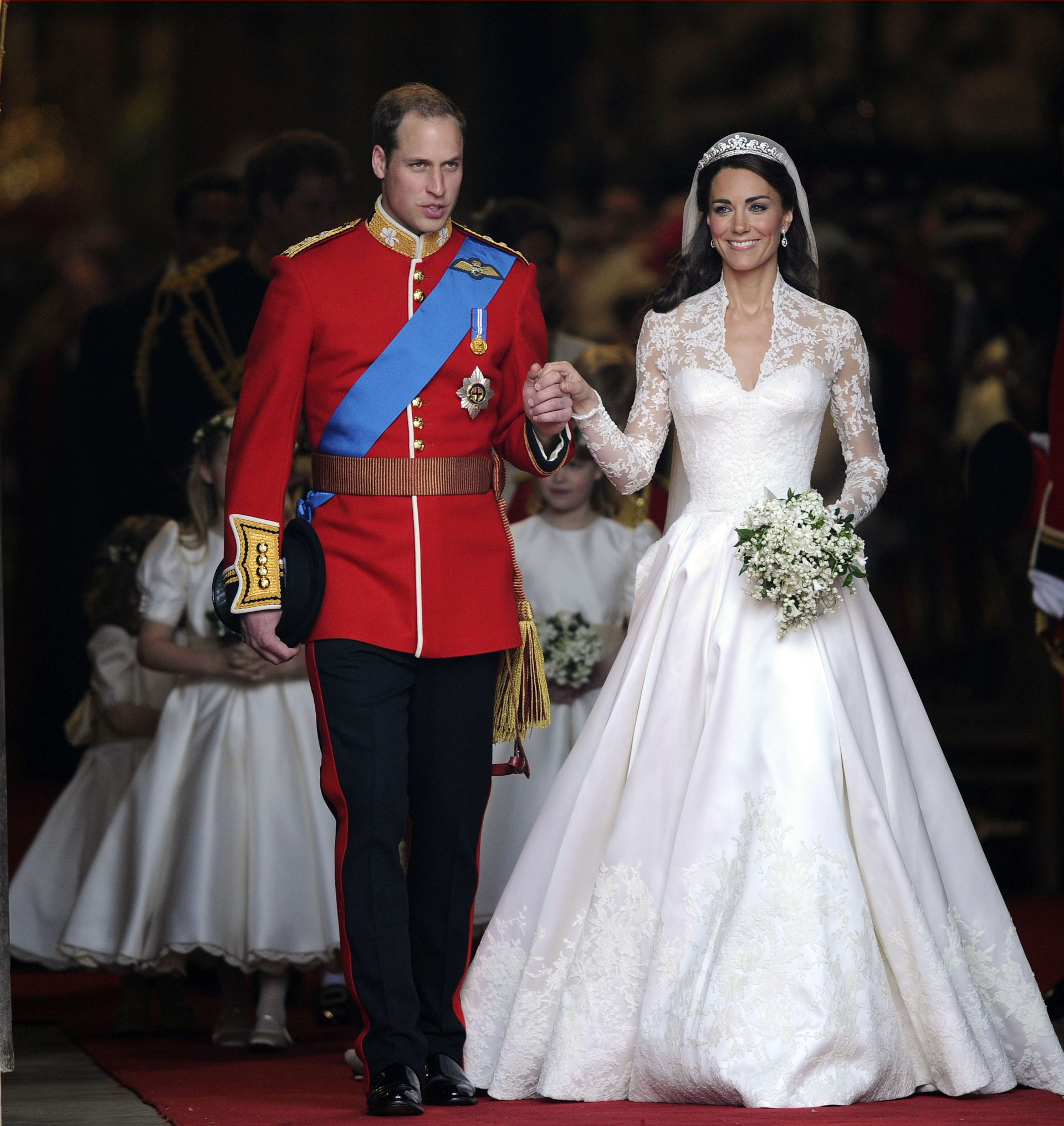
The Wedding of Prince William and Catherine Middleton. 29th April 2011. Prince William, Duke of Cambridge and Catherine.
Prince William
William Arthur Philip Louis was born on 21 June 1982, the first son of Charles and Diana. He is first in line to the throne – ie heir apparent, set to be King after his father, Charles III. In September 2022, when Charles became king, William became was given the title Prince of Wales, the position his father had held for 73 years (since he was just nine years old).
William’s childhood was divided between privilege and chaos. He grew up in palaces and attending grand schools like Ludgrove and Eton, but also amidst the wreckage of his parents’ marriage and watching his mother pursued by photographers, up to the point of her tragic death. He was nine when his parents divorced, and 15 when his mother died.
Diana made a deliberate choice to raise her sons as normally as possible. She took them to McDonald’s, to the cinema and to homeless shelters, so they could understand the world beyond the palace walls.
In 2011, William married Catherine Middleton, a woman he had met while studying at the University of St Andrews. The wedding was global spectacle. They had three children – George, Charlotte and Louis – and have followed Diana’s lead in attempting to raise them as normally as possible.
William is heir to the throne and seems to be learning to be a modernising force within the monarchy, pushing gently but consistently for greater accessibility, better mental health support, and a version of the institution that can speak to the world as it actually is rather than as tradition dictates it should be.
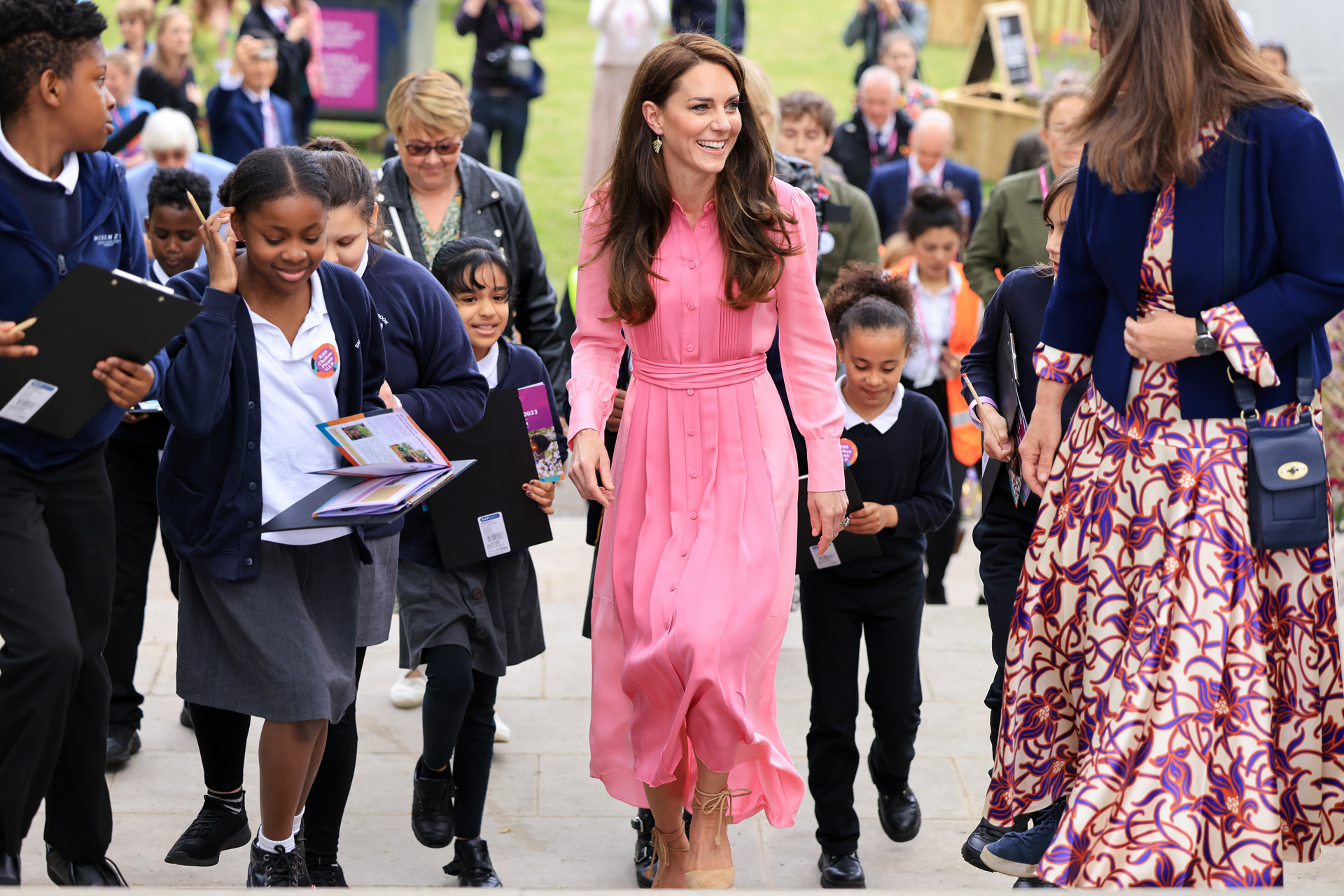
The Princess of Wales Kate Middleton visits RHS Chelsea Flower Show 2023. © Oliver Dixon/RHS
Catherine, Princess of Wales
Catherine Middleton was born on 9 January 1987 in Reading, the daughter of a former airline flight attendant and a retired RAF officer. Her childhood was upper-middle class but by no means aristocratic. She went to boarding school and university, and worked in retail and event planning. Meaning, of course, she was a commoner – never before allowed into the Windsor dynasty.
She and William met at St Andrews University in Scotland in 2001, and dated for nearly a decade before he proposed in 2010. Their courtship was examined, dissected, discussed endlessly by the media and the public. Would they marry? When? What would she wear? When they finally married in April 2011, it felt like a turning point. Here was a royal marrying a modern woman with no aristocratic connections, no ancient lineage, no blue blood. Catherine wore a white dress designed by Alexander McQueen. Two billion people watched on television.
View this post on Instagram
Where previous generations of royal women either disappeared into protocol or rebelled against it, Catherine has quietly and consistently made the role her own. She has built a portfolio of patronages focused on early childhood, mental health, and the outdoors. She speaks carefully but candidly and is a devoted mother, famously hands-on with her children.
In 2024, she was sadly diagnosed with cancer. Catherine underwent abdominal surgery in January and subsequently received a cancer diagnosis. She stepped back from public life for months to focus on her recovery and her family, and has only just started to return to public life gradually, carefully.
View this post on Instagram
Prince George
George William Louis was born on 22 July 2013 and is second in line to the throne. He is William and Catherine’s eldest child and, in many ways, the most publicly visible young royal of his generation.
George has grown up almost entirely in the age of social media and documentary coverage. His parents have made deliberate choices about what to share: official photographs released on his birthday, carefully curated moments at public events, school runs where photographers are permitted but kept at a distance. It’s a delicate negotiation between privacy and public interest, between protecting a child and acknowledging that he is, whether he chose it or not, a public figure.
View this post on Instagram
He attends Lambrook School in Berkshire, where he is known simply as George. However, now he is 13, George will be progressing to secondary school in September 2026, with Eton College and Marlborough College both considered frontrunners.
William and Catherine have ensured he has access to the normal world, to ordinary friendships and to age-appropriate challenges. But of course, George will grow up knowing what his destiny is…
View this post on Instagram
Princess Charlotte
Charlotte Elizabeth Diana was born on 2 May 2015, and is third in line to the throne after her father and older brother. She was named for her grandfather King Charles, and her middle names honour her great-grandmother Queen Elizabeth II and her grandmother Diana, Princess of Wales. Like her brothers, she attends Lambrook School.
View this post on Instagram
Prince Louis
Louis Arthur Charles was born on 20 April 2018 and is fourth in line to the throne. The youngest of William and Catherine’s three children, Louis has appeared at various public events and royal occasions, often with the lack of filter characteristic of a young child. He has been photographed pulling faces at the Trooping of the Colour and seems to find formal occasions tedious. As such, his older siblings are spotted much more frequently. That said, Louis is just eight years old. Like his siblings, he attends Lambrook School.
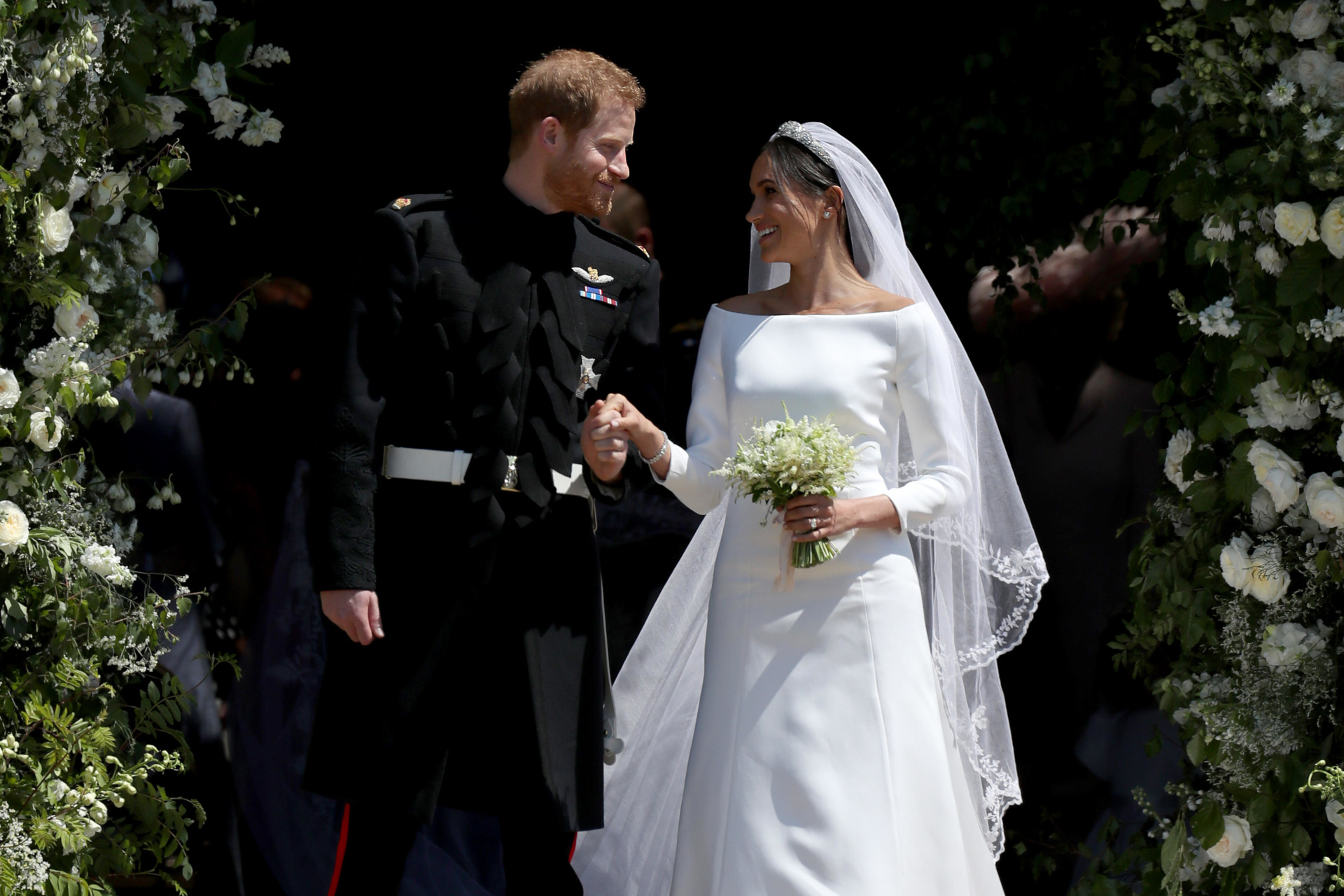
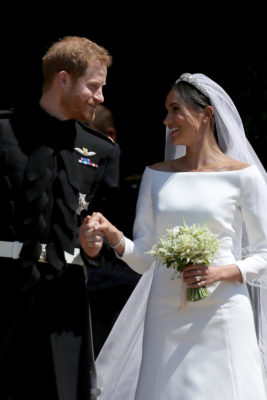
Prince Harry and Meghan Markle on their wedding day (c) Jane Barlow/PA Images Alamy
Prince Harry & Meghan
Henry Charles Albert David was born on 15 September 1984, the second son of Charles and Diana. For 36 years, he was the younger brother, the spare, the one who would never be king but who carried the freedom and burden that position entails. And then, in 2020, he stepped away from it all entirely.
Harry’s story has been well documented (by the press and by himself in his 2023 tell-all memoir, Spare). His was a childhood shaped by privilege and trauma (his mother’s death when he was 12), a young adulthood defined by military service (he served two tours in Afghanistan), and then, increasingly, by a sense that the institution of monarchy was failing him. He met American actress Meghan Markle in 2016, and got down on one knee after only a year of dating. Already they experienced intense media scrutiny and issued multiple statements asking the media to butt out. They wed in May 2018 at St George’s Chapel in Windsor Castle, with 600 guests and an additional 1.9 billion people watching on TV worldwide. This is when the couple were given their Sussex titles.
In 2019, their first child, Archie Mountbatten-Windsor, was born, followed by Lilibet in 2021. But in between, in 2020, the couple decided to step back from their roles as senior royals. Post 2016 Brexit referendum, the term ‘Megxit’ dominated the media. The family fractured in a way that had not been seen in generations. The reasons for their departure were complicated and contested. Harry and Meghan pointed to relentless media intrusion and racism, a lack of institutional support, and what they experienced as a fundamental misalignment between their values and the monarchy’s. The institution maintained that they had been supported, that the media scrutiny was not the royal family’s responsibility, that duty sometimes requires endurance.
The truth, almost certainly, is somewhere in between. But what matters is that Harry stepped away, moved to California, and began a new life outside the framework of royal obligation. He is still Prince Harry, still a member of the royal family, still in line to the throne (though fifth, behind his brother and his children). But he is no longer a working royal.
The couple have, however, continued to feed the tabloid machine. In 2021, they ‘broke their silence’ in a tell-all interview with Oprah Winfrey, and the pair have continued to pump out docuseries peeking behind the royal curtain. In 2023 came the bombshell: Harry’s memoir, Spare, with all of its gory details, from how he lost his virginity to a physical fight he had with William. He reunited with his family for Queen Elizabeth’s funeral and for his father’s coronation, but there is undoubtedly a rift in the family, and Harry only reunites with them sporadically.
Prince Edward & Sophie
Edward Anthony Richard Louis was born on 10 March 1964, the youngest child of Queen Elizabeth II and Prince Philip. He is now 11th in line to the throne, and one of the longest continually serving working royals.
Edward married Sophie Rhys-Jones in 1999. Sophie was born on 20 May 1965, the daughter of a retired tyre company director and a secretary – ie a ‘commoner’. Edward is the only child of Queen Elizabeth II who hasn’t been divorced. They have two children: Louise and James.
Edward has spent his life quietly working away, holding jobs, raising a family, and maintaining a lower profile than his siblings. When his mother died, he was made the Duke of Edinburgh. When his brother became king, Edward’s role shifted again. He is now one of the senior royals tasked with supporting the institution.
Princess Anne
Anne Elizabeth Alice Louise was born on 15 August 1950, the second child and only daughter of Queen Elizabeth II. She is one of the hardest working members of the royal family, with a genuine commitment to charitable work. She carries out more official engagements than any other royal, second only to her brother, the King. She has been President of the British Olympic Association and is a patron of over 300 charities.
Anne has been married twice: first to Mark Phillips, with whom she had two children (Peter and Zara), and then to Timothy Laurence, a former Royal Navy officer, in 1992. Her children have gone on to live relatively normal lives, a testament to her parenting philosophy. Peter Phillips is a sports manager, and was married to Autumn Kelly from 2008–2021, with whom he shares two daughters; he will marry Harriet Sperling in 2026. Zara Tindall is an Olympic equestrian, married to rugby player Mike Tindall; they share two daughters and one son. Neither has formal royal duties.
(c) Instagram @theroyalfamily
Other Names To Know
- Queen Elizabeth II: King Charles’s mother, who reigned for 70 years until her death in September 2022. The longest-reigning British monarch.
- Andrew Mountbatten-Windsor: King Charles’s disgraced younger brother. Stepped back from public royal duties in 2019 following controversy surrounding his friendship with Jeffrey Epstein, and stripped of his titles in 2025.
- Fergie: Not the Black Eyed Pea, Fergie is Sarah Ferguson, ex-wife of Andrew, similarly disgraced due to connections with Epstein.
- Princess Beatrice: Prince Andrew’s elder daughter (born 1988). Married to property developer Edoardo Mapelli Mozzi in 2020. They have one daughter, Sienna, born in 2021. Works in business and maintains a lower profile than many royals.
- Princess Eugenie: Prince Andrew’s younger daughter (born 1990). Married to Jack Brooksbank, a former ski resort manager, in 2018. They have two sons: August (born 2021) and Ernest (born 2023). More publicly engaged than her sister, she works in art consultancy.
- Prince Michael of Kent: Cousin of Queen Elizabeth II (born 1942). A working royal who carries out official duties and patronages, though he’s relatively low-profile. Married to Princess Michael of Kent.
- Princess Alexandra: Cousin of Queen Elizabeth II (born 1936). One of the last surviving children of the King’s grandparents. A dedicated working royal with numerous patronages spanning decades of service.