


Inside Bella Freud’s 34-Year Journey From Westwood Apprentice To Cultural Visionary
By
3 months ago
Ahead of her appearance at Chelsea Arts Festival with Susie Cave, we look back at how Bella Freud – great-granddaughter of Sigmund, daughter of Lucian – built a cult following around the conviction that fashion is a form of therapy
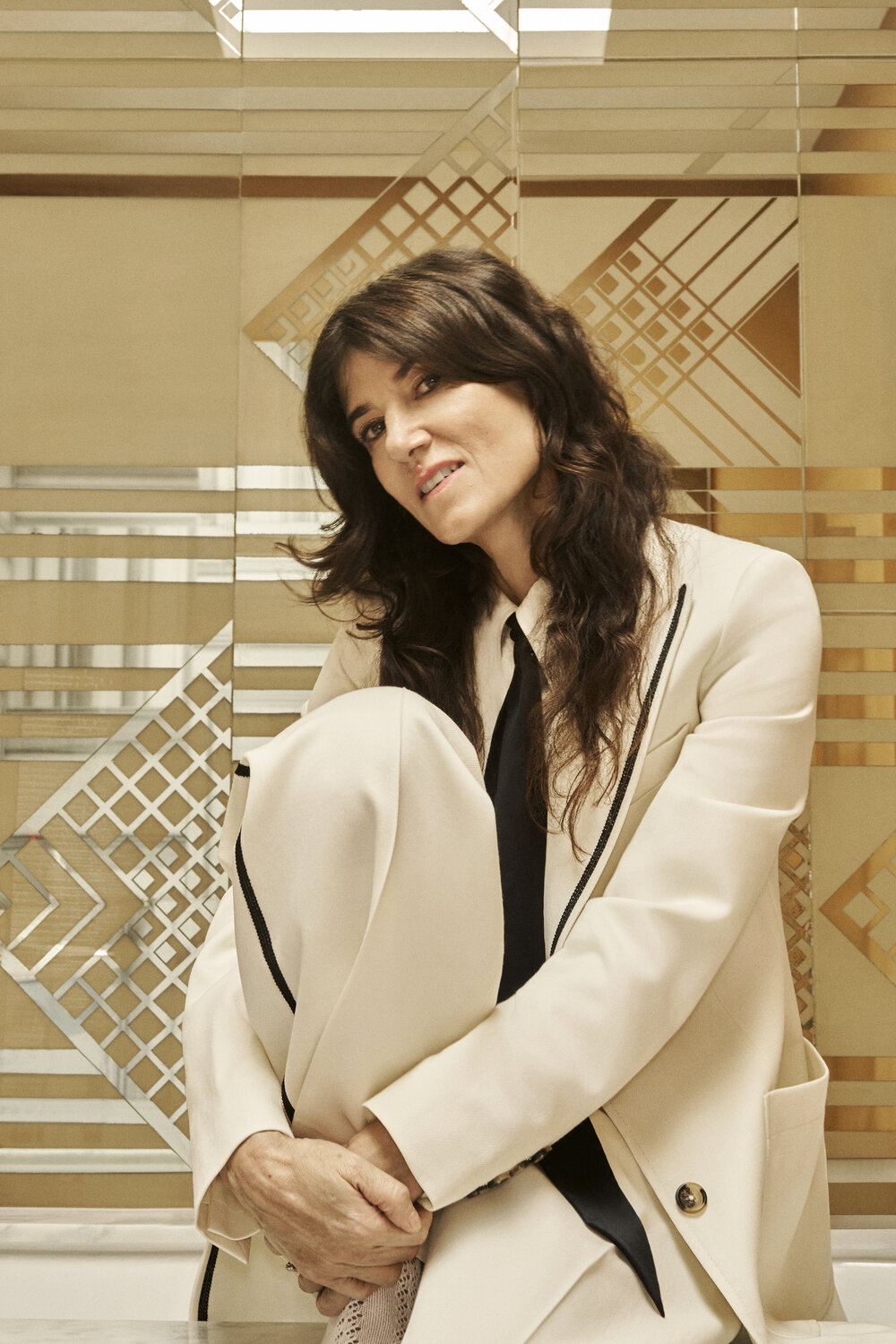
Bella Freud has spent the better part of three decades dressing the mind. As a fashion designer who inherited the combined legacies of Sigmund Freud’s psychoanalysis and Lucian Freud’s raw realism, she has built a cult following around one simple conviction: that what you wear is a direct extension of your inner self.
Her signature slogan knitwear – bearing phrases like ‘Psychoanalysis’, ‘Ginsberg is God,’ and the iconic ‘1970’ – invites wearers to speak their subconscious out loud. Now, as the London designer prepares to take the stage at Chelsea Arts Festival in September, in conversation with Susie Cave about creativity, style, and survival, C&TH is taking the opportunity to reflect on how Freud has evolved from a rebellious apprentice of Vivienne Westwood into a cultural force who has shaped British style for generations.
From her bohemian Moroccan childhood to her latest venture – a therapy-style podcast that puts fashion icons ‘on the couch’ – here’s how one of fashion’s most intellectually rigorous voices came to be.
1. She Inherited One Of Fashion’s Most Formidable Legacies
Born Isobel Lucia Freud in London on 17 April 1961, Bella arrived inside a family tree packed with 20th-century intellectual and artistic achievement. She is the great-granddaughter of psychoanalysis pioneer Sigmund Freud, whose theories fundamentally reshaped how we understand the human mind – and, as Bella would later argue, how we dress it. Her father was Lucian Freud, one of the most influential figurative painters of the post-war era, known for his brutally honest and intimate portraits.
Growing up surrounded by such intellectual firepower – and the weight of such celebrated names – could have been paralysing. Instead, it became her foundation, and Bella has spent her entire career distilling this hefty legacy into something wearable. As she has said herself, fashion is a form of therapy – a way to externalize the internal and turn our neuroses into a statement.
2. Her Father Taught Her That Art Demands Unvarnished Honesty
Growing up as the daughter of Lucian Freud did not a conventional childhood make. Lucian was a man of fierce discipline and uncompromising artistic vision, and his studio was often the centre of Bella’s world. Lucian’s paintings were unflinching – sometimes brutal in their intimacy, and this approach seeped into Bella’s sensibility from an early age, too. Good design, like good art, cannot hide behind decoration or trend – it must be honest.
We can see this translated directly into her crisp and clean tailoring and her use of direct and often provocative language. Whether it’s a sharp-shouldered blazer or a jumper emblazoned with a single word, a Bella Freud piece comes with no apology, nor any attempt to blend in.
3. Her Childhood Was Far More Bohemian Than Her Father’s Studio Might Suggest
While Lucian Freud represented one strand of Bella’s inheritance – discipline, precision, rigor – her mother, Bernardine Coverley, represented something else entirely: freedom and adventure. When Bella was very young, her mother took her and her sister Esther on an 18-month nomadic journey to Morocco. It was the late 1960s, and the family lived a hippie lifestyle, moving between communes and living hand-to-mouth.
The experience left an indelible mark on both sisters. Esther would go on to memorialise this period in her autobiographical novel Hideous Kinky (which was later adapted into a film, and even later earned the sequel My Sister and Other Lovers). Bella’s version of the story naturally lives in her clothes: effortless androgyny, relaxed silhouettes, the not-taking-yourself-too-seriously and a bohemian undercurrent running through it all, all stems from Morocco.
4. Before She Could Design, She Had To Learn From Vivienne Westwood
In the early 1980s, as a young woman finding her way in the world, Bella apprenticed at Vivienne Westwood‘s legendary Seditionaries shop on King’s Road in Chelsea. Westwood was, and remains, one of fashion’s true rebels – a designer who fused punk aesthetics with subversive wit and impeccable tailoring. For Bella, working under Westwood meant learning that fashion could be both intellectually rigorous and visually rebellious; that you could use clothes as a form of protest; and that technique and attitude were not mutually exclusive.
Westwood taught Bella the mechanics of construction, the importance of fit, and the power of using fashion as a vehicle for ideas. When Bella eventually launched her own label, she would do so with both the technical precision of her father and the rebellious spirit of Westwood.
5. She Launched Her Label In 1990
In 1990, at the age of 29, Bella Freud opened her eponymous fashion label in London. Her first collection was deliberately modest: knit dresses, tailored suits and accessories. But embedded in these pieces was something revolutionary for the time: language. Her early slogan knitwear began to gain cult status almost immediately.
The early 1990s were a moment when fashion was beginning to embrace conceptual thinking, but where other designers were exploring deconstruction or irony, Bella was creating what Karl Lagerfeld called ‘intelligent frivolity’ – pieces that could make you laugh and think simultaneously. Her customers weren’t just buying clothes: they were buying permission to be witty, intellectual and fashion-forward all at once.
For Bella herself, the line was also about creating confidence. ‘I was always interested in the power of clothes and how you could use them to seem confident,’ she has said in an interview. ‘I was really shy back then [as a teenager in the 70s] – I am still quite shy – but I knew if I had a good outfit that was like a uniform, that I would feel unselfconscious, and I could get on with things.’
6. Her ‘1970’ Jumper Became The Uniform Of A Generation
If any single piece encapsulates Bella Freud’s design philosophy, it’s the ‘1970’ jumper. This simple knit sweater, emblazoned with the year across the chest, became an instant cult classic. It has been worn by everyone from Kate Moss and Alexa Chung to Poppy Delevingne and Chloë Grace Moretz since it first launched in 2011.
Humble in its construction (high quality wool and a bold typographic statement), 1970 has little emotional resonance for Bella – and that’s part of the allure. Instead the jumper came to be when the designer was playing around with a photocopier. ‘I was flicking through a book and in the corner I saw the date and the font was kind of good, but it was tiny,’ she said in an interview. ‘I had an old photocopier and so I blew it up really big. I thought the white stripe looked quite good as well. It looks kind of punky. The black and white reminded me of vinyl.
‘It also reminded me of a thing I’d read when I first became interested in fashion. I was obsessed with Coco Chanel and I remember reading about how she thought a string of pearls could throw light on a woman’s face. I thought the stripe on my jumper was a bit like a punk version of that. It’s very flattering,’ the designer added. ‘For some reason 1970 seems to resonate with people. They feel attached to it, whether they’re young or old.’
7. Fashion, For Bella, Is A Form Of Therapy
This might be the most distinctly Bella Freud idea of all: that choosing what to wear is an act of psychological self-care. In interviews, she frequently describes her design process as therapeutic for herself, while the result can be flattering, make a statement, process the world and form a sort of emotional armour for both the designer and the wearer.
‘For me, clothes are like an armour,’ Bella says. ‘They’re a softness capable of sending different signals. Because you want someone to notice you, but how much, or where exactly is really interesting. Some people say fashion is superficial, but your clothes are so vital.’
This philosophy deepened when she began exploring sustainability and social responsibility through her work. She has partnered with organisations like War Child and Neal’s Yard Remedies to create limited-edition pieces that blend fashion with activism – all extending her core belief that what we wear matters not just aesthetically, but morally and psychologically.
8. In 2015, She Opened Her First Boutique On Chiltern Street
After 25 years operating through various retail channels and collaborations, Bella Freud opened her first standalone boutique on Chiltern Street in Marylebone in 2015. It signalled an evolution from cult-followed brand into a fully realised lifestyle brand. Intimate and intellectual Marylebone has long been associated with bohemian London, with independent boutiques and idiosyncratic personalities. As well as clothes, the boutique became a destination for the total Bella Freud aesthetic, including fragrance and home goods.
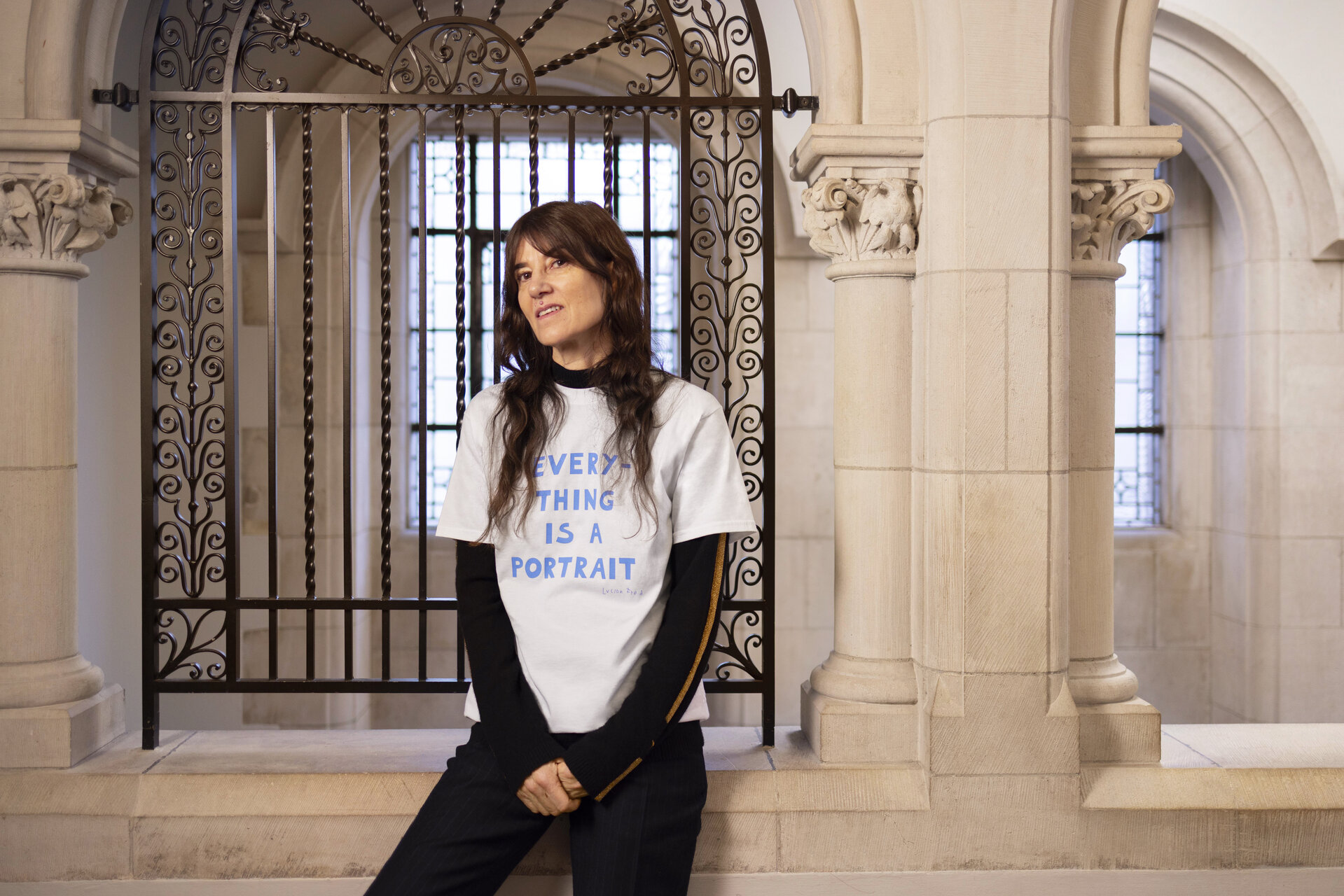
In 2026, Bella designed a special collection connected to an exhibition of her father’s work at the National Portrait Gallery.
9. Intentional Collaborations From High Street To High Art
Over three decades, Bella Freud has collaborated with an eclectic array of brands, from high street giants like Marks & Spencer to J Brand, Fred Perry to Barbour and Cutler & Gross. Most recently, she partnered with the National Portrait Gallery, creating pieces that coincided with an exhibition of her father’s work, blurring the line between fashion and fine art. All are idiosyncratically Bella, and opportunities to reach new audiences with her core message: that fashion can be intelligent, irreverent and transformative.
10. In 2024, She Launched Fashion Neurosis
In October 2024, Bella Freud launched Fashion Neurosis, a podcast that might be her most autobiographical project to date. The concept is simple: guests lie on the couch (literally and figuratively) with Bella for therapy-style conversations about the relationship between personal style and identity. The first episode featured designer Rick Owens, but the guest list has quickly expanded to include an eclectic mix of musicians (Courtney Love, Flea, Charli XCX, Lorde), actors (Cate Blanchett, Kristin Scott Thomas), fashion icons (Kate Moss, Zandra Rhodes), and literary figures (Zadie Smith, Colm Tóibín).
In many ways, Fashion Neurosis distills everything Bella has been exploring for 34 years: Sigmund Freud’s methodology applied to fashion. It’s a space where the psychological weight of style is taken seriously, where getting dressed is understood as an act of self-knowledge.
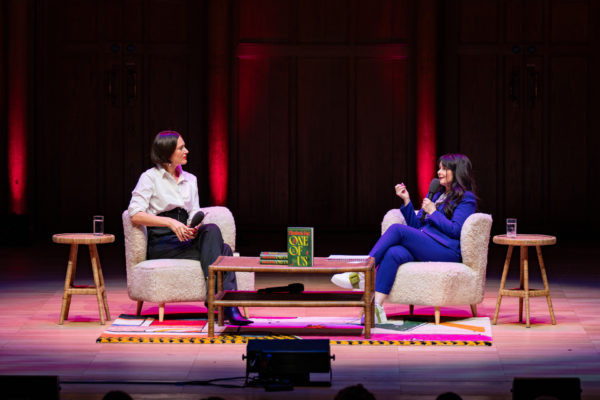
Susie Cave & Bella Freud In Conversation At Chelsea Arts Festival
On 16 September, 5×15 and Chelsea Arts Festival brings together Susie Cave and fashion designer Bella Freud at Cadogan Hall for an exclusive London evening exploring creativity, style, motherhood and the role beauty and art can play in surviving loss.
- Where? Cadogan Hall (5 Sloane Terrace, London SW1X 9DQ)
- When? 7pm, Wednesday 16 September 2026
- Tickets: £34.98 + £1 booking fee.