


‘I Felt Gut Punched’: Suzy Amis Cameron On Veganism & Her New Changemaking Project
By
3 hours ago
Raising the steaks
From Hollywood to a new $300m system-changing venture called Inside Out, Suzy Amis Cameron is asking us all to rethink what we eat, wear and invest in.
Interview: Suzy Amis Cameron
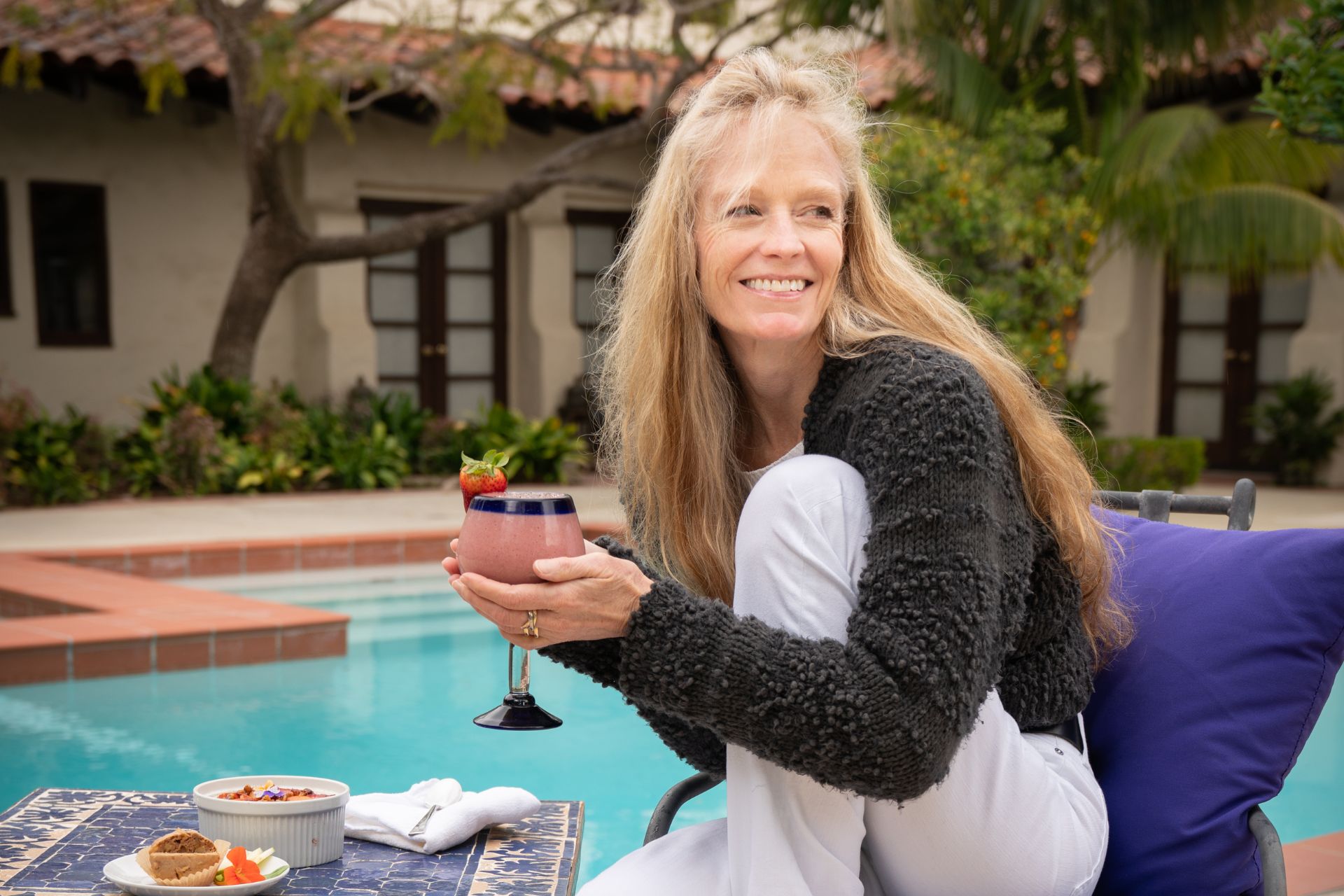
Suzy Amis Cameron is clearly still buzzing from the LA premiere of her husband James’ latest film, Avatar: Fire and Ash. ‘We hadn’t realised just how spectacular the whole thing was going to be,’ she says over Zoom from Paris, a warm smile illuminating her finely boned, pale, freckled face, framed by a mass of tousled, waist-length blonde hair. ‘We were coming up Hollywood Boulevard and there was this huge “A” on repeat – just a single letter in flames. And the first responses have been off the charts, which is great.’
There is very little that this remarkably un-starry but powerful couple do that isn’t off the charts. Alongside James’ well-documented career as one of Hollywood’s leading directors of films – including Avatar and Titanic (two of the highest-grossing ever), as well as Terminator 2 and Aliens, earning him 65 global awards – he’s a deep-sea explorer and outspoken environmentalist.
The person who has helped drive his devotion to the latter is his wife Suzy, whom he married in 2000 and has three children with (alongside one each from their previous marriages). It was Suzy who persuaded him, after watching Forks Over Knives, a movie about the meat industry, that they had to give up eating animal products.
‘An amazing educator, Elliot Washor, was always telling me we had to read the book The China Study [by Dr. T. Colin Campbell], on which the film was based,’ she says. ‘One day I grabbed the DVD and watched it on the treadmill. Afterwards, I literally was just… I felt gut punched.’
The film revealed to her not only the truth about poor animal welfare on farms, but the lies most families had been fed: that eating and drinking animal products was healthy. ‘Growing up in Oklahoma,’ she says, ‘we grew cows, we grew pigs, we ate them. And my mom was constantly saying how much we needed to drink our milk, three glasses a day at least, for our strong bones and teeth.’
And that, she learnt, wasn’t true. ‘Not only is it not good for our bodies, but is actually detrimental to our health. [Dr Campbell found that] casein, the protein in dairy, is a carcinogen.’ She continues, ‘You know when you go to the doctor and they ask you what your family history is with heart disease and cancers and diabetes? Well, now I know that over 90 percent of health issues are because of what you eat. It’s not genes.’
When James got home that night, she asked him to watch the film. Afterwards, they walked into the kitchen and ’24 hours later, our whole pantry and refrigerator was cleaned up’. That was 2012 – and they’ve both been strict vegans (or what James calls a ‘futurevore’) ever since.
Having switched to a plant-based diet, Suzy then made the bold move of doing the same at Muse, the environmental school she’d started in California with her sister Rebecca. By then, James had given Suzy a book to read about the connection between animal agriculture and climate change. She’d had no idea, she adds, that forests were being decimated around the world to produce plant feed for cattle – and that animal agriculture produces more climate-changing gases than planes, trains and cars combined.
‘So that was another gut punch. Previously, I thought I was feeding everyone at home and at school in the most beautiful, perfect way. We had grass-fed beef, free-range chicken, organic dairy, cage-free eggs, la-la-la…’
But if Muse claimed it was an environmental school, Suzy says, it had to change what it was feeding the children. And that meant a plant-based diet. Transforming the school meals wasn’t straightforward, she admits; the parents in particular took some persuading.
‘We took 18 months and every month we had a speaker come in, which might have been a vegan athlete, or author, or chef. We had climate scientists, we had doctors. And then at night, we would have the families and teachers come in, we fed them beautiful vegan food, give them a glass of wine. We literally did that for 18 months.’
She also worked with pro-plant-based doctors, like Neal Barnard and Dean Ornish, to create documents for the families – some of whom were worried their child’s brain wasn’t going to grow properly. What she showed them was that statistically, ‘children have a higher IQ and are taller if they are raised on a plant diet’.
Like most things Suzy does, it took guts. When in the autumn of 2015 Muse announced it was the first plant-based school in North America, it promptly lost 50 percent of its families. Others would drop their children off saying, ‘Good luck, my kid doesn’t eat anything green’, and then pick them up with treats of cheese sticks and beef jerky. But within a month, the children had turned.
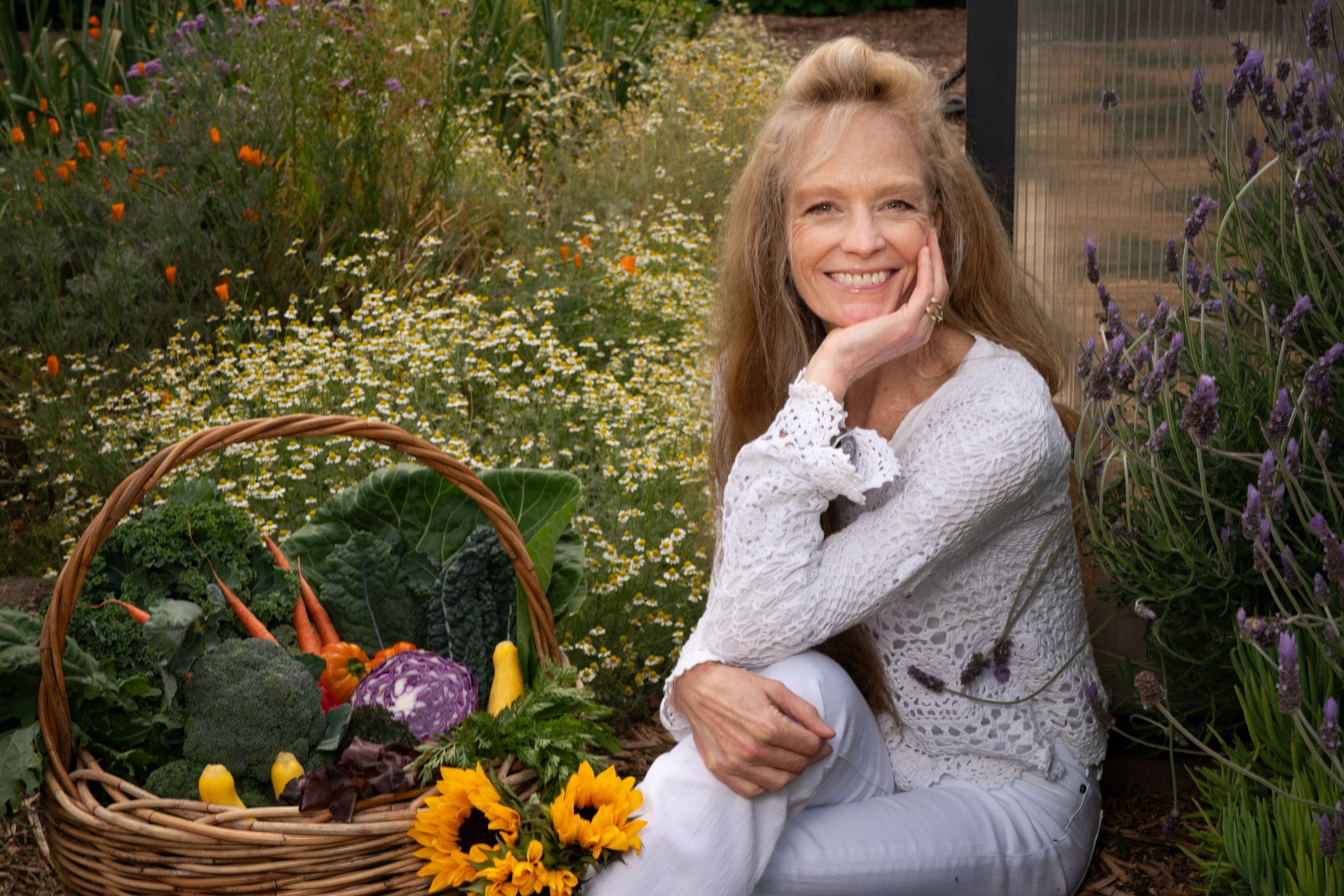
‘It’s positive peer pressure because we’ve got a very robust seed-to-table programme. The children are growing their own food – learning how to plant, nurture and harvest it, and then prepare it and compost it – so it’s full-circle.’ And the food’s delicious, she adds with a grin.
By the following year, the school’s intake was up on the year before. ‘We even had families moving here from Europe.’ And this year, it opened its second campus, in Santa Monica.
A key thing, Suzy adds, was saying to the parents, ‘It’s only one meal a day’ – a mantra that became her bestselling book Only One Meal and then a movement, signed up to by influencers such as Oprah, persuading people to try just one plant-based meal a day.
‘And then they’d realise they didn’t have that afternoon dip after lunch, they didn’t snore at night or have acid reflux, or things like that. And so they’d add a second one.’
She began to understand that people often live with their head in the sand – and only when confronted with facts, with backing from science and people they respect, do they listen.
The problem is, she says, once a mask has been lifted, you question other things – for instance, the sustainability of fashion. When she and James fell in love on the set of Titanic (what they laughingly now refer to as ‘The Love Boat’), few people in Hollywood knew much about sustainable fashion or considered wearing ethical clothing to glamorous events. It’s taken decades, she says, for truths about fashion companies to come out.
It was this constant reaction of people – ‘Oh my god, I had no idea’ – that made her realise her next project should be bringing together all she’d learnt about fashion, film and food into one place.
So in May 2025 she launched her biggest project yet: Inside Out. With backing of $300m – including $65m of her own money – the company was created to bring together ‘a global community of changemakers across food, fashion, education, media, wellness, science and technology, collaborating with some of the world’s top universities and institutions to drive systems-level transformation’.
In essence: to try and make better products for people and planet, with a focus not just on a return on investment, but on integrity and impact too.
Alongside working with institutions such as MIT, the Georgia Institute of Technology, and Texas Tech University to ensure everything from food to fashion has a scientific basis, one of the key drivers of the company is communication, she says: delivering truths to audiences so they can’t say ‘I had no idea’.
So far, she has executive produced the award-winning documentary The Game Changers (about plant-based food), Milked (the dairy industry), Let Them Be Naked (the toxins in clothing) and docu-series Junk (fast fashion).
The charismatic co-author and host of Junk, Matteo Ward, was lured to be head of the fashion, textiles and home division at Inside Out, whose HQ opened last year in Rome. Part of his role is overseeing brands the company has invested in, such as The Simple Folk, which produces ethical clothing for children, and sustainable knitwear brand Sheep Inc., which recently opened its first store in London.
The choice of Rome for the HQ was deliberate, Suzy says, and Ward’s idea. It was there that the textile industry began centuries ago. By planting its sustainable flag there, Inside Out hopes to revive what was a thriving industry but in an ethical way, while sharing solutions in an open-source manner so others can share their learnings.
So there’s a lot going on, the lithe 63-year-old admits with a rueful laugh. As well as accompanying James on his premiere circuit (wearing, in LA, a long dress accessorised with a train made from an old piece of silk, and in Paris, a dress created from deadstock fabric), they have five children and several grandchildren.
At their farm in Wellington, New Zealand, where they’ve lived since 2012, they have the ‘biggest organic veggie operation in the country’ and have launched a beauty range based on Manuka honey. Plus, Suzy is working on a new documentary film about the positive effects of a vegan diet on men’s sex lives titled, appropriately, Hot Sex, Cool Planet, based on research at Montefiore Hospital in New York.
Erectile dysfunction is a topic men don’t talk about but should, she says. ‘They go to the urologist and he gives them a little blue pill, when what he should be saying is: “You need to run to your cardiologist, because erectile dysfunction is the canary in the coal mine for heart failure.”‘
The film won’t be suitable for all the family, she admits, pale skin blushing as she describes the case studies they’ve followed. And the link between meat-eating, cholesterol and poor circulation is something the meat industry doesn’t want advertised.
‘It’s always been, “Yeah, real men eat meat”. But once they go vegan there’s no going back. Sex life is better, for sure.’
And if that doesn’t put more people – men and women – on Suzy Amis Cameron’s vegan pathway, nothing will.