




Meet The CEO Of Mongolian Cashmere Brand GOBI
By
5 hours ago
We speak with Amarsaikhan Baatarsaikhan, GOBI’s CEO, to find out more about how GOBI blends transparency, sustainable practices and Mongolian heritage into every product.
Green Hero: GOBI

GOBI is celebrating 45 years of heritage. Tell us more about where the journey began and how the brand has evolved.
For 45 years, GOBI has worked with one rare fibre: Mongolian cashmere. Our heritage is built from the land where the fibre begins, the herders who raise the goats, the people who craft each piece, and the customers who carry GOBI cashmere into everyday life. We have grown and evolved – utilising technology, origin tracking and herder partnership projects – into a company that supports the herder community, our employees and customers with more sustainable production lines and facilities.
Talk us through how each piece is made and the dedicated production stages.
Every GOBI piece begins with raw cashmere sourced from Mongolian herders and goes through a process that we manage entirely in-house. From fibre to finished garment, production spans 5 factories, 15 divisions and more than 150 individual steps. It starts with carefully sorting the raw cashmere by its natural colour and quality, and is followed by washing and dehairing to separate the fine cashmere fibres. We combine generations of Mongolian knowledge with specialised technology from countries including Japan, Italy, Germany and Switzerland. From there, the process varies by product. The final stages are all about refinement. Each piece is washed, steamed, shaped and finished before going through detailed quality checks. We monitor quality throughout the entire journey, from the raw fibre and yarn to the stitching, fit and finished garment.
How are you supporting the people, animals, land, and natural resources behind GOBI?
A quarter of Mongolian households are still herder households and the cashmere & wool industry makes up 50% of the herder households’ yearly income. So as the largest Mongolian cashmere company, we provide support and regular income to herders that have been living this nomadic way of life for thousands of years. The herders & goats live a symbiotic life in harmony: they depend on one another for protection, food and prosperity, especially as cashmere can be taken year over year, similar to dairy and milk.
What other initiatives does GOBI promote or is involved with?
Gobi is one of the top ten employers in the country, with 70%+ of our workforce being women. We have a kindergarden for our employees’ children, as well as free lunch for all our employees. Then our trilateral project works with herders & the University of Agriculture to provide herders with a buck (male goat) that has the highest quality of cashmere, helping herders make a living through providing us with cashmere.
What green business practices are you most proud of?
We have our recycled cashmere line ‘CashmereReborn’. We were also the first cashmere company in Mongolia to implement a wastewater treatment plant at our factory in 2025.
Tell us more about the GOBI Nature Colour Cashmere Collection and its impact so far.
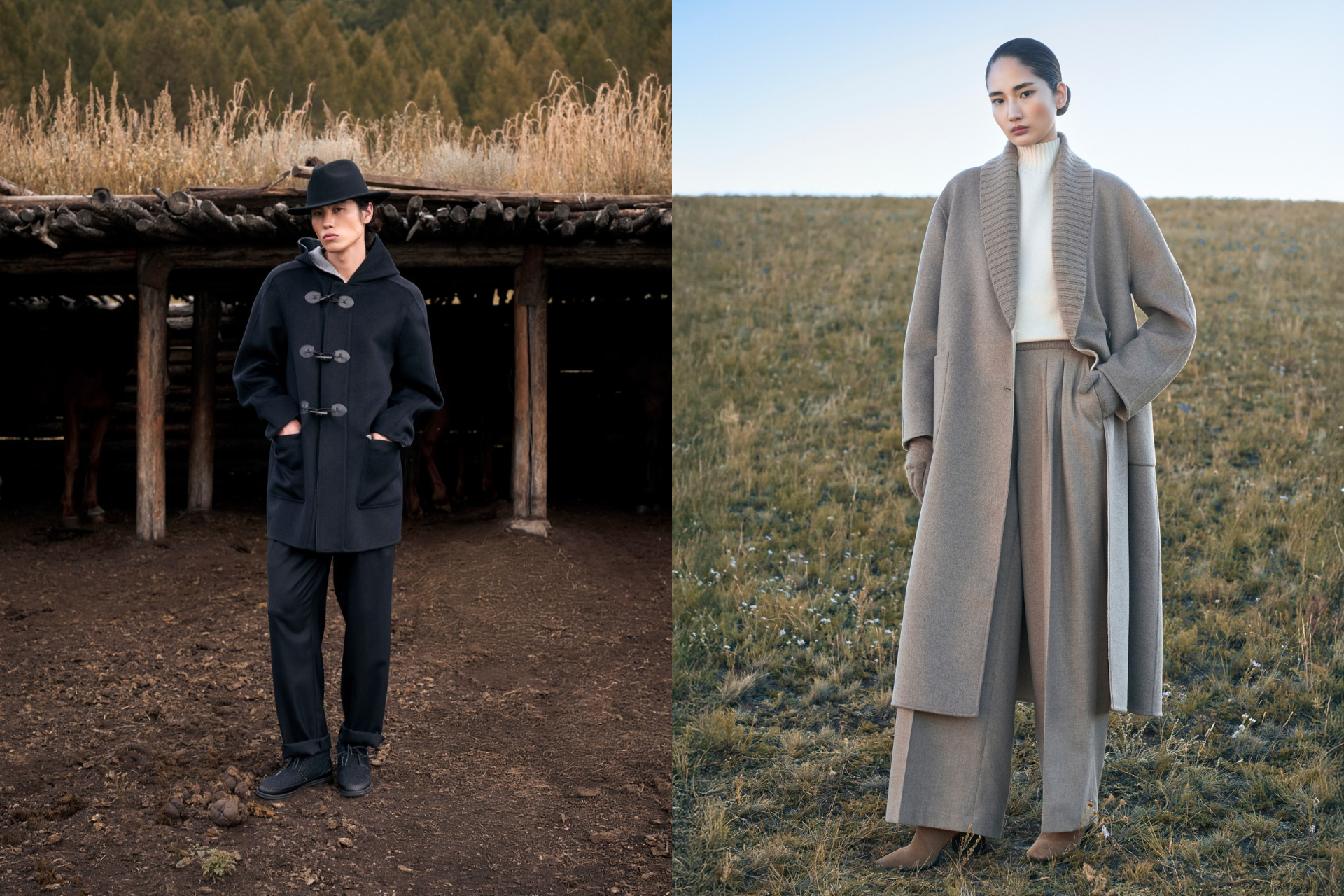
Both collections reflect our efforts to reduce environmental impact in different ways, while staying true to the natural qualities of Mongolian cashmere. Our Natural Colour Cashmere Collection works with the four natural shades of Mongolian cashmere: white, beige, taupe and warm grey, without adding dyes. Warm grey is particularly special, as this natural cashmere shade is found only in Mongolia. By letting these natural colours become part of the design, we can reduce the water and chemicals associated with the dyeing process. Compared with conventional production, we have recorded water savings of 88.75 percent, a 74.9 percent reduction in chemical use, a 21.75 percent reduction in CO₂ emissions and 2.07 percent energy savings. Beyond the figures, the collection celebrates Mongolian cashmere in its natural form, with its colours coming directly from the goats themselves.
And how about the CashmereReborn Collection and its current impact?
CashmereReborn approaches sustainability from another direction: circularity. Launched in 2023, the collection takes technological waste generated during our own manufacturing process and gives it a new life as new cashmere products. Because we can reuse this material without going through primary raw material processing or dyeing again, the environmental savings are significant: 92.8 percent less water, 99.78% less chemical use, 25.98 percent lower CO₂ emissions and 8.99 percent less energy use compared with conventional production. For us, the impact of these collections goes beyond the individual products. They allow us to explore two important possibilities for the future of cashmere: making better use of what nature already gives us, and finding ways to bring materials already within our production cycle back into use rather than treating them as waste.
Can producing anything really be called sustainable?
In terms of cashmere, it grows naturally, alongside wool on the goat’s undercoat. Then every spring it is critical for the goat to be combed so that it can be cool during the summer heat. Hence, this process is for the betterment of the goat and, in turn, it supports the herders while they are taking care of their livestock.
What makes you feel positive about a sustainable future?
At Gobi we are making sure that the Mongolian herders and employees are being supported, not multinational large conglomerates that are involved in greenwashing.
And what are the facts that make you feel fearful?
Whilst some of the largest multinational conglomerates are investing more into cashmere, the majority of the Mongolians are, unfortunately, still not feeling the benefits of this.
What are the biggest challenges in running a sustainable business?
Due to the higher cost associated with this it can still be difficult to produce a profit.
Tell us more about The Sustainable Cashmere Trilateral Project.
This is one of GOBI’s most important long-term sustainability initiatives. Launched in 2020 and continued through 2025, the project brings together GOBI JSC, the Mongolian University of Life Sciences and participating herders. It’s implemented in two regions: Ikh-Uul soum in Khuvsgul province and Jinst soum in Bayankhongor province. The project is based on a “science–industry–herders” model. Its purpose is to improve cashmere quality and herder livelihoods while also addressing the environmental pressure caused by increasing livestock numbers. Rather than treating sustainability as only a factory issue, the project begins at the source of cashmere: the herding communities and the goats themselves, by focusing on three connected aims; improving livestock genealogy and preserving suitable local breeds, enhancing the yield and quality of raw cashmere, supporting herder income through better raw material value and direct procurement.
A key idea behind the project is that improving the quality and productivity of each animal can reduce the need to increase herd size. And when each goat produces better-quality cashmere, the herders can achieve more value from fewer animals. Therefore, In the long term, this can help reduce pressure on pastureland while protecting herder livelihoods. Onto of that participating herders receive guidance on sustainable raw material preparation, animal welfare, pasture management, and gender awareness.
What advice would you give to other businesses aiming to do better?
Own your history, your authenticity, and your story yourself.
How do you feel about the climate crisis?
It’s a real challenge and we all need to deal with it together.
What are three things we can all do as individuals to help in the climate crisis?
Don’t buy from companies that hurt the environment. Your spending habits are powerful.
How do you think the media and governments could help the climate crisis?
Help to promote and support companies that are helping the environment more.
Find out more at uk.gobicashmere.com