


Brighton College’s Richard Cairns: How To Build A Global School Empire
By
43 minutes ago
The secrets behind the pioneering headmaster's success
Over two decades, Brighton College became a global powerhouse at the hand of Richard Cairns, who transformed the school into a name recognised and respected around the world. Today he is principal and CEO of the Brighton College Group, which encompasses schools from Sussex to Singapore, London to Lisbon. So how did Cairns build such an unstoppable empire? Julia Llewelyn Smith travels to the seaside to find out.
How To Build A Global School Empire
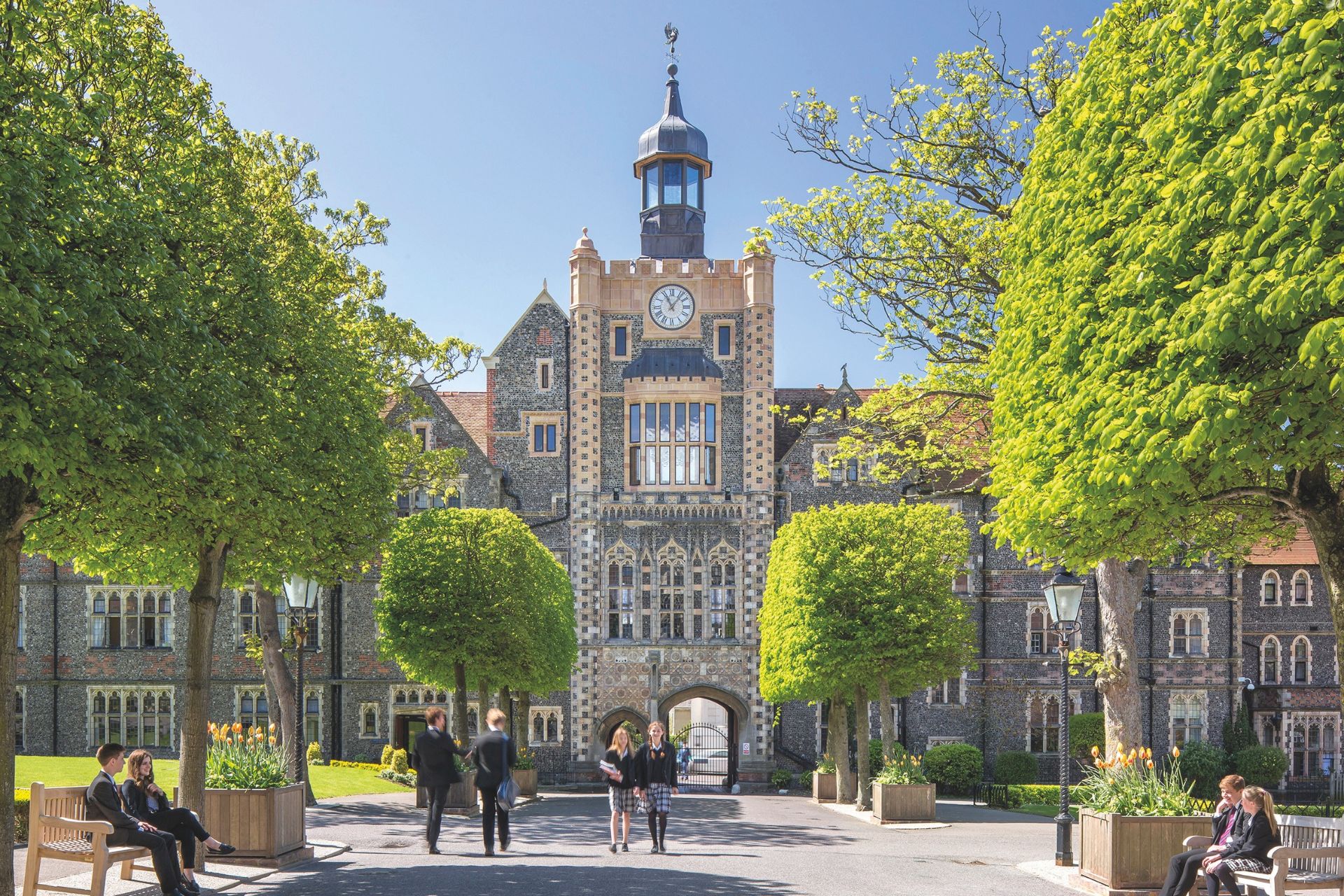
Brighton College in Sussex
Richard Cairns occupies a vast, stylish office with views in one direction across the English Channel, and in the other of pupils coming and going across the school quadrangle. It lies within a Victorian Gothic gatehouse tower at Brighton College – at least, the style is Victorian Gothic; it was designed in 1880. ‘During building, they ran out of funds and it became a home for the seagulls,’ says Cairns. But in 2014, an anonymous donation allowed the building to finally be finished. ‘It was a physical sign. Brighton College was back.’
There could be no better-fitting monument to Cairns, who over the past 20 years has transformed Brighton ‘from a middle-ranking Sussex school’ to a highly sought-after, league-topping, international institution. ‘When I started here, Brighton ranked 147 in the league tables,’ he says. ‘Now we’re always in the top ten. It’s very, very unusual for a school to break out of where it’s sat for the past 50 to 100 years. We are the exception.’
The walls leading to the Harry Potter-esque dining hall are lined with plaques celebrating successful Oxbridge candidates. In 2006, there were five. This year 45 pupils won places, while another 30 went to US universities including Stanford, Yale and Columbia. Academics aside, more than 30 Old Brightonian sportspeople have represented their country in the past decade, including England Rugby player Marcus Smith, England cricketer Matt Prior, and Clare Connor, who captained the England women’s cricket team. Brighton has twice been named The Sunday Times’ Independent School of the Year, and in 2020 was declared its UK School of the Decade. Cairns, meanwhile, is the only person to twice receive Tatler’s Head of the Year award.
Parents have more than taken note and, despite the recent imposition of VAT on independent school fees, Brighton is flourishing. Since Cairns arrived, pupil numbers have almost doubled, soaring from 697 to 1,295. Boarders have quintupled from 100 to 500 (two new boarding houses, currently being built, plan to take another 150). Of these, around 300 are weekly boarders, many from London. ‘A lot of schools were very slow to move towards weekly boarding, keeping Saturday lessons and chapel on Sundays. But for working parents it’s ideal, and kids love it. They spend Monday to Thursday here and go home to their families on Friday evening.’
The Reputation Of The British School
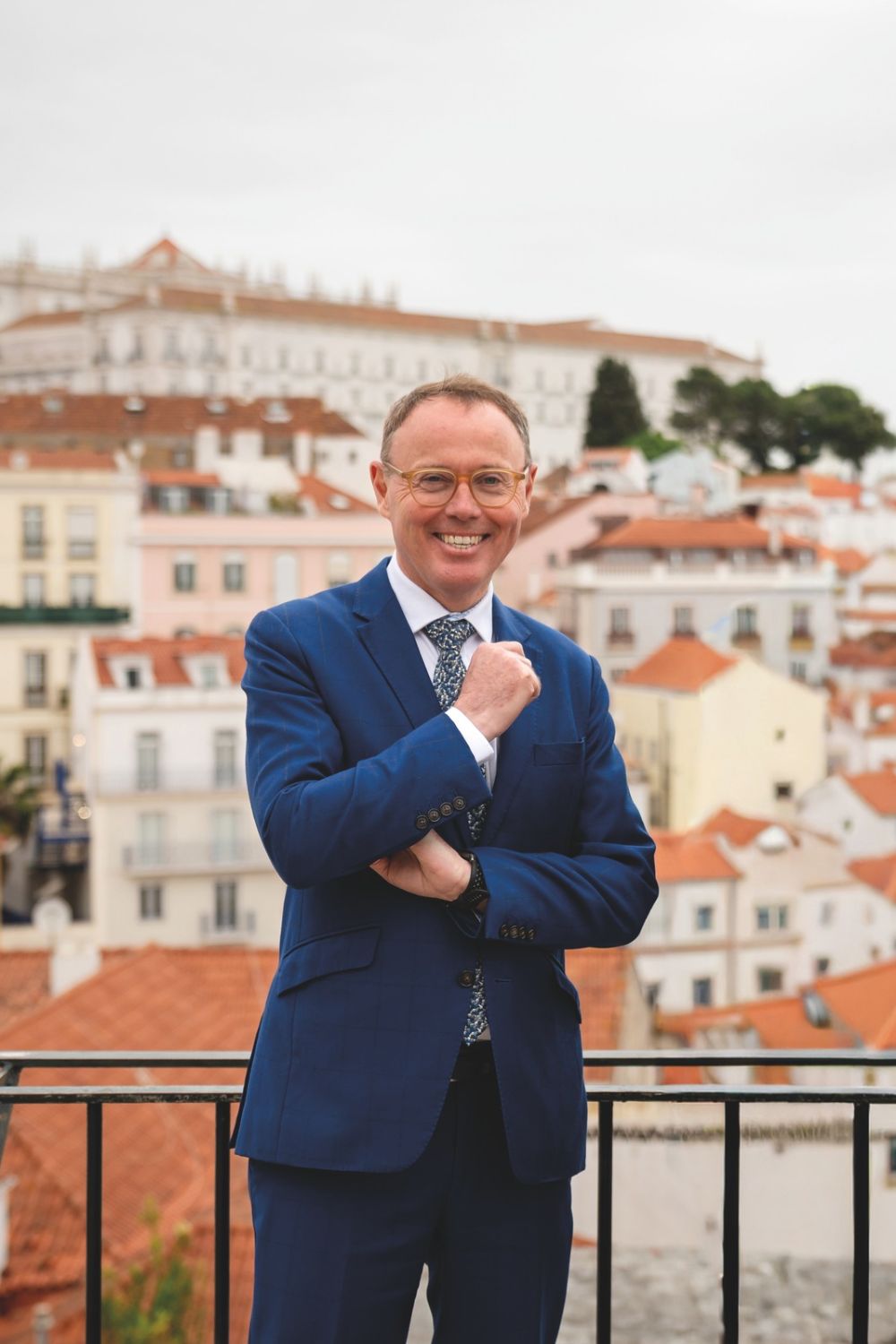
Cairns, 60, is now principal and CEO of the Brighton College Group, which encompasses three prep schools in Sussex and one in London – not to mention three campuses in the United Arab Emirates, two in Bangkok, one in Vietnam, one in Singapore, and three more opening next year in Rome, Lisbon and Madrid. Just after Cairns and I meet, it is announced that yet another three are in planning, in India, Japan and Riyadh.
‘Countries all over the world are asking us to set up Brighton Colleges,’ says Cairns. ‘When you think of a quality car, you think of a German car; when you think of a quality school, you think of a British school.’ He is frustrated the government isn’t making more of the UK’s ‘quality brand’. ‘The British economy is not in a great shape. It really should be thinking: “How can we celebrate this? How can we monetise it?” Organisations like ours are effectively major exporters. Equally, international boarders are spending money here on British services, shops and people.’
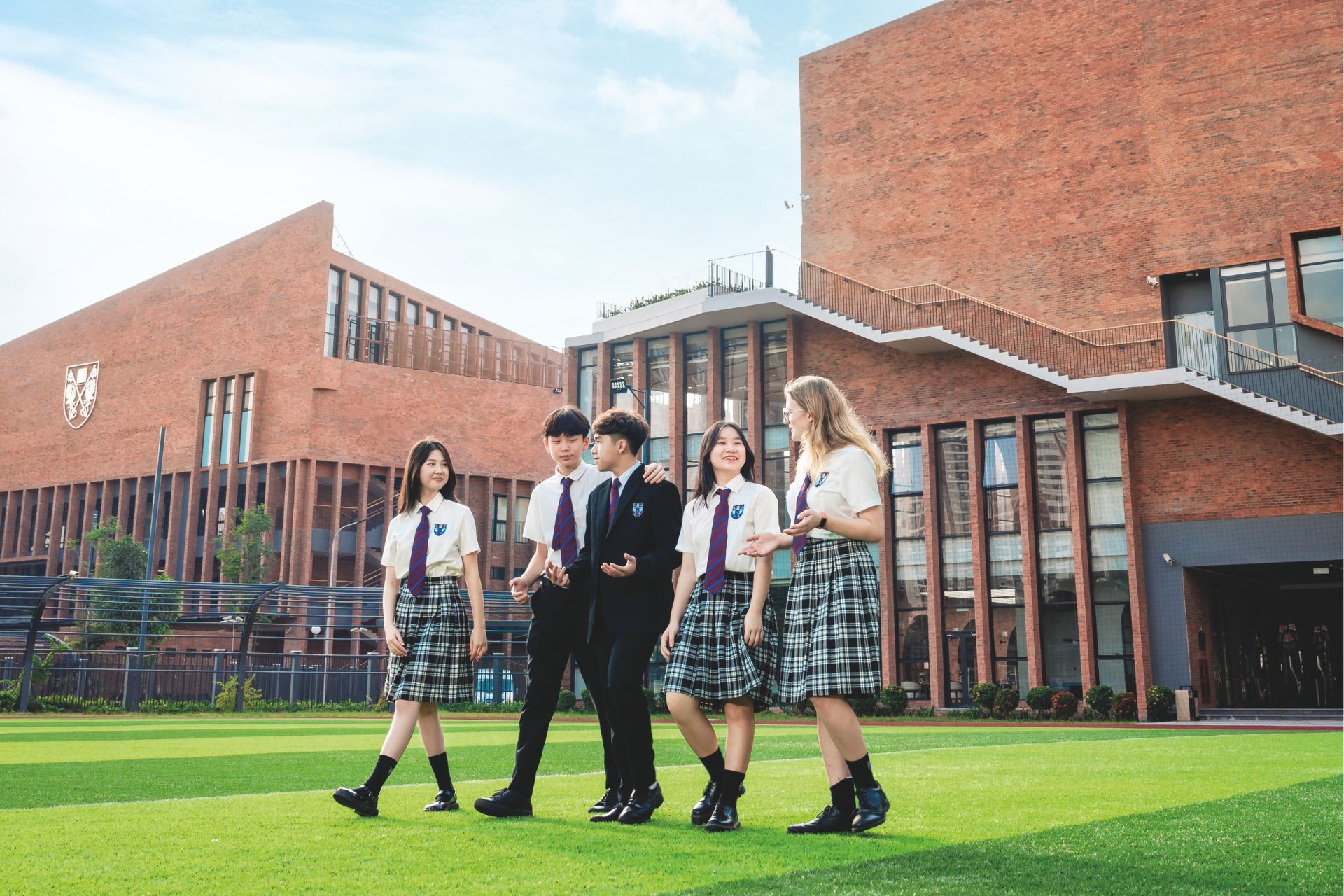
Brighton College Hanoi
Lessons From Schooldays
Curious yet relaxed in manner, Cairns, who likes to spend school holidays walking in the mountains, is a passionate believer in uncovering each pupil’s potential. The second of four boys, he was born in Nairobi, Kenya, where his father was working as a banker and his mother at the British embassy. The family moved every few years, so aged eight Cairns was sent to Winterfold House Prep (now Bromsgrove School Winterfold) in Worcestershire. ‘It was Dickensian. We never had enough to eat. It was cold. The teaching was variable, but I made some good friends.’ He shrugs. ‘You just got along with it, didn’t you?’
After this, he moved on to The Oratory School in Berkshire. ‘What I learned from both my schools was that I want the kids to be happy and fulfilled, so what environment do I need to create? I wasn’t disadvantaged, but I definitely did not have inspiring teachers or an environment that encouraged you to be yourself, in which you were not constantly watching out for bullying, for unpleasantness.’
When Cairns applied to Oxford to read history, he chose the formerly all-female college Lady Margaret Hall, one of the very few at the time with a 50/50 gender balance. ‘It wasn’t a fashionable college, but I didn’t care. It was the best thing I ever did. Being with girls meant a whole world of conversation and interests opened up.’ On graduating with a first class degree, Cairns received a letter inviting him to come for a chat at the Secret Intelligence Service, aka MI6. He had fun with the ‘intellectually challenging’ application process, but by the time he was was invited to the final stage he was enjoying teaching back at his old school. ‘I thought, why jump into something that sounds glamorous but probably isn’t really, when I was doing something I loved and also felt I was good at?’
He moved on to another then-all-boys’ establishment, Stewart’s Melville College (now Erskine Stewart Melville) in Edinburgh, and then to Magdalen College School in Oxford. But it was when he arrived at Brighton – already ahead of most schools of its kind, having gone fully coeducational in 1988 – that Cairns finally found his fit. ‘As a coed school, Brighton was a less pressured place, more natural. At boys’ schools, boys create a social hierarchy based around whether you’re in the first XV, whose boys are demigods. That’s very hard to budge. Even though schools say, “we value music, we value drama”, the boys always think differently. I’ve always found that difficult – then I came here and saw girls weren’t that interested in whether a boy was in the first XV.’
Radically Inclusive
Cairns continued by jettisoning several public school traditions in favour of a more inclusive ethos. ‘We’re an academic school; we’re smart and tidy, but we’re liberal. We were the first school in the UK to have a float in a pride parade.’ He continues: ‘We’ve tried to create a world in which being in a play or a music performance is equally good as being in an A-team for sport. We don’t have special stripy blazers or ties or anything for the first teams. A mother contacted me yesterday to say, “My daughter’s got a netball first VII jumper, but she’s not allowed to wear it at school.” I wrote back, “That’s good. Glad to hear it.” We’re trying to tell every child that whatever you’re doing, do it to a high level – push yourself. But being the head of robotics club is as important as anything else.’
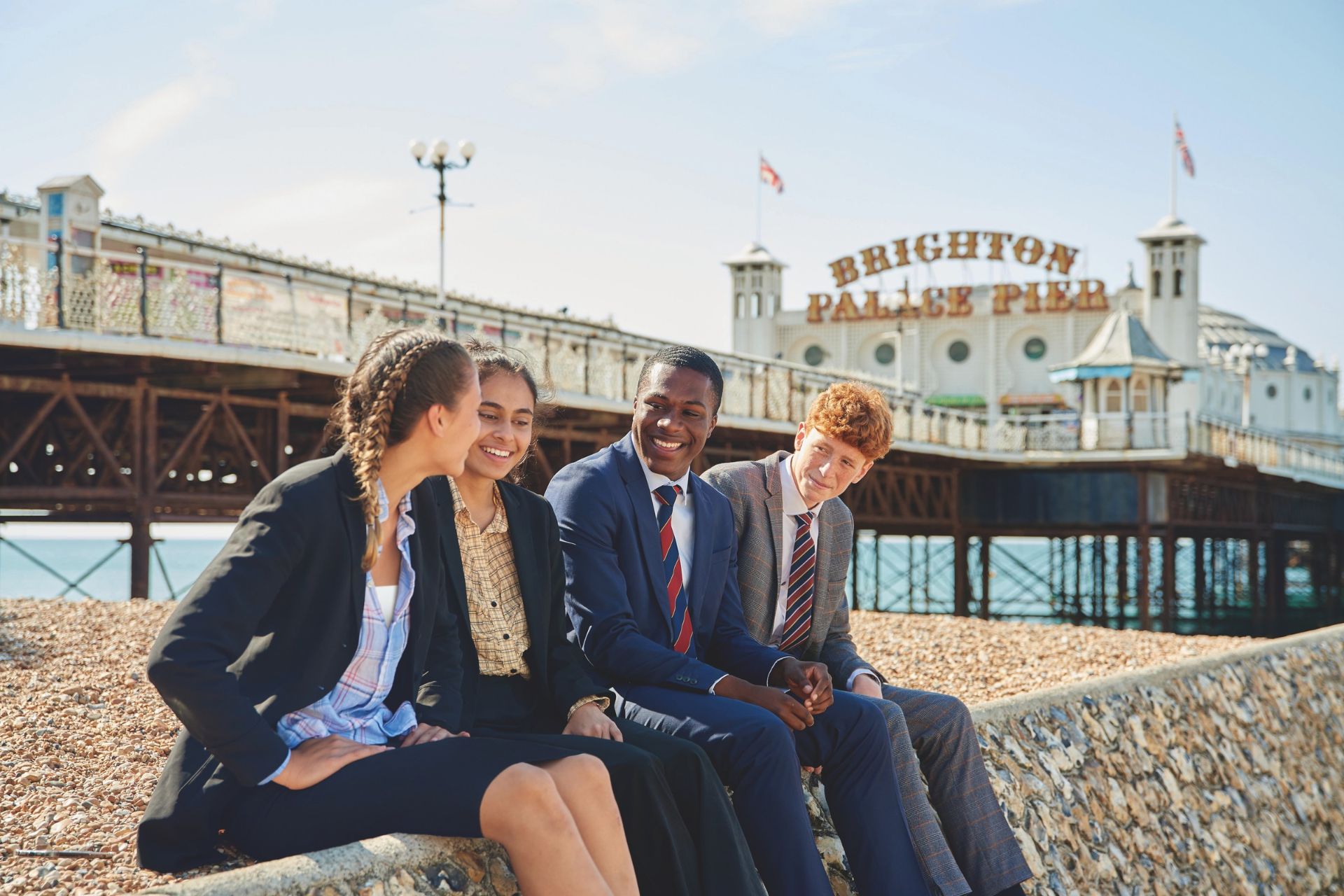
Brighton College in Sussex
This isn’t to say sporty children won’t fit in at Brighton; the school’s fabulous facilities include a 25m pool, a double-height indoor hall and an 80m rooftop running track. Yet there’s also university-standard science labs, an atrium dominated by a whale skeleton and a greenhouse of rare plants. And the Richard Cairns Building, opened two years ago, houses a 400-seat theatre, dance studios and a music department (arty alumni include Oscar-winning film director Chloé Zhao). All occupy a series of stunning school buildings that have garnered multiple Royal Institute of British Architects awards. Cairns, whose partner is an architect and who admits to a passion for design, funded the building project through increasing boarding numbers and international expansion.
‘When I arrived, the facilities were appalling. Embarrassing,’ he says. Prospective sixth formers are wooed with a café and common room that looks like a boutique hotel lobby; Cairns explains such gloss is vital to prevent defections to excellent local colleges. ‘But it’s also about potential teachers. The first thing I built was a nice teachers’ common room as a way of saying, “you matter”.’
The People Behind Brighton
Inspirational staff are key to Cairns’ mission. He’s capitalised on the city of Brighton’s lively reputation to lure bright young teachers. ‘When I arrived we were a bit embarrassed about Brighton. It can be a bit scruffy; someone once said it was a city that’s permanently helping the police with their inquiries. But I thought, “Let’s focus on the fact it’s a young city.” If you’re 23 and right out of university, you want to be somewhere happening – not in a country estate boarding school miles from anywhere, where your only friends are your colleagues and you’re sharing the pub with the sixth form.’ During his first year as head, he went around local pubs
sticking up recruitment posters, as well as student bars in Oxford, Cambridge and London. ‘We said, “You don’t need qualifications – we’ll train you.”’
Having helped establish the London Academy of Excellence – a state-funded sixth form in London’s most deprived borough, Newham, which this year received 62 Oxbridge offers – Cairns is unimpressed by the government’s mission to insist all teachers receive official training. ‘Schools improve when heads are given the freedom to do what they want, including employing who they like. It’s made such a difference.’ And making a difference is what Cairns is all about.